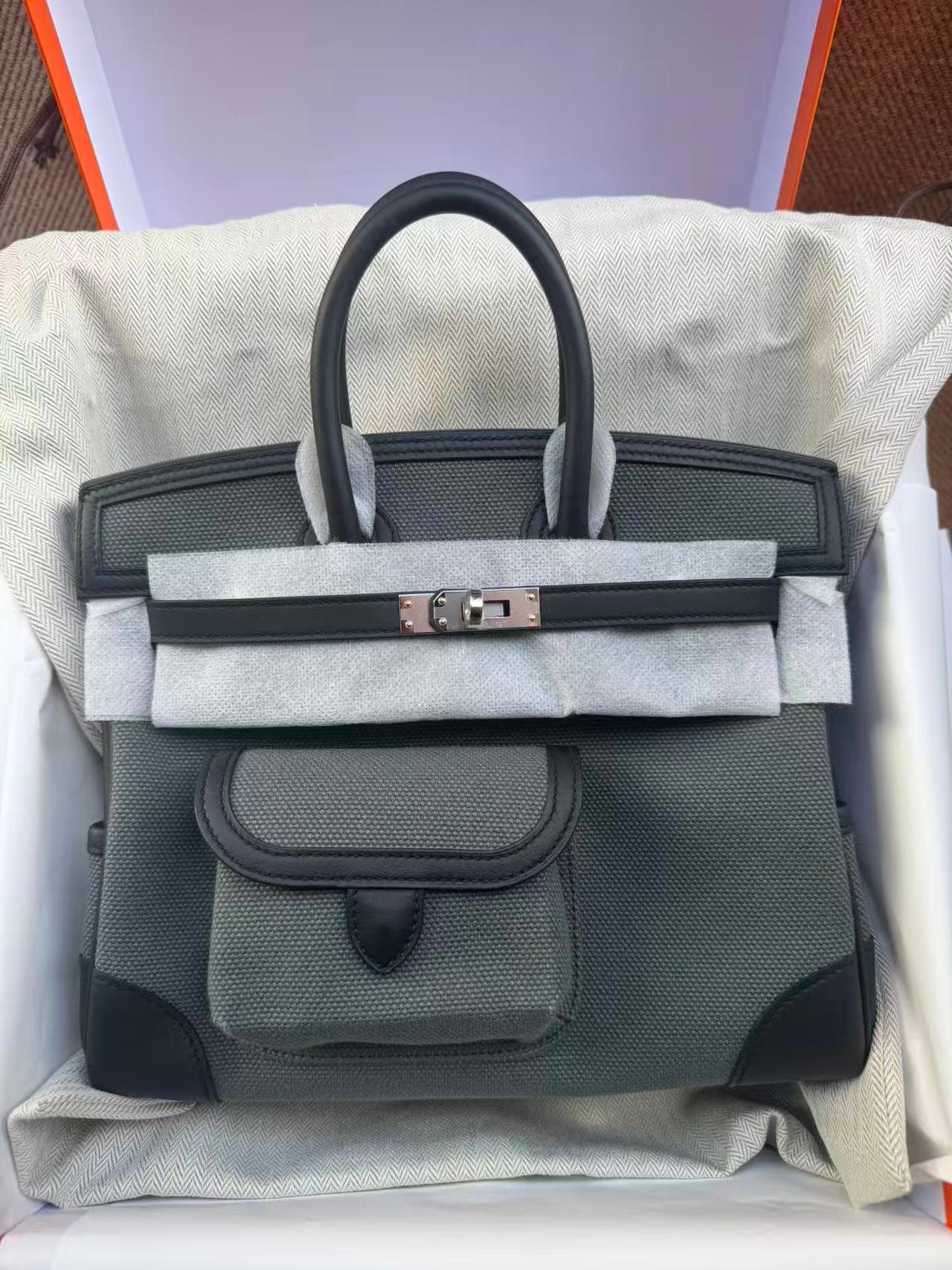
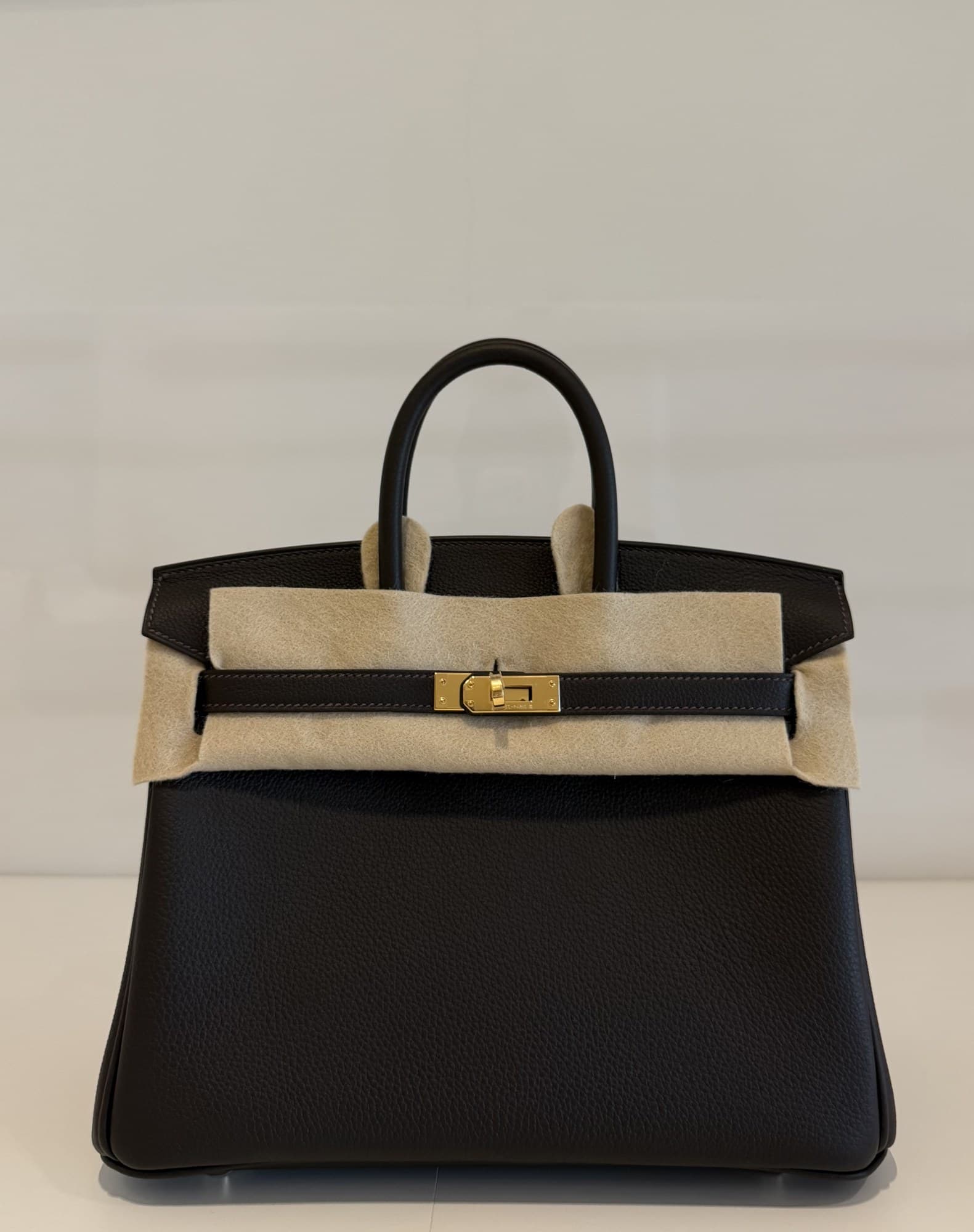
Somewhere on every Hermès bag — pressed into the leather so lightly you may need to tilt it against the light — is a single letter that tells you the year it was born. Collectors call it the blind stamp, Hermès calls it nothing at all publicly, and counterfeiters get it wrong more reliably than any other detail. Learn to read it and you can date any bag in seconds, sanity-check any seller's claim, and — as we'll show — catch a fake before you've opened the interior.
What the Blind Stamp Actually Encodes
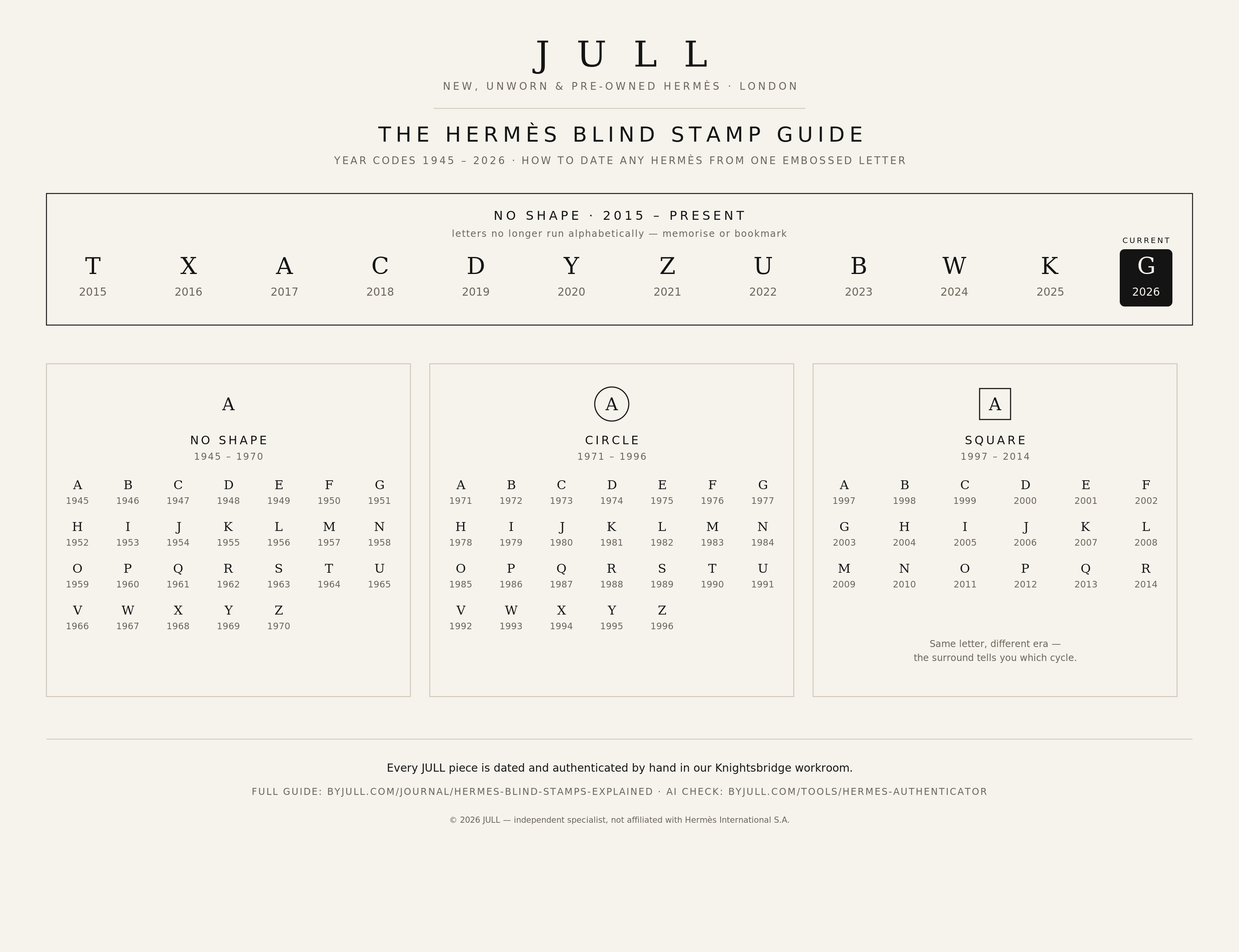
The stamp system marks production year and, alongside it, craftsman and workshop identifiers — Hermès's internal traceability, decades before the word became fashionable. The year letter is the collector's key: letters cycle through the alphabet across four visual eras, so the same letter recurs — an "A" could be 1945, 1971, 1997 or 2017 — and the era marking around the letter tells you which cycle you're in. That two-part read (letter + era style) is the whole skill.
The Four Eras
1945–1970 — the naked letter. A plain letter, no surround. Rare in the wild; bags of this age are collector objects with their own market.
1971–1996 — the circle. Letter inside a circle. The era of the great vintage Kellys and the Bolides that fill the value end of the vintage market.
1997–2014 — the square. Letter inside a square. The largest population of pre-owned bags in circulation today sits in this era.
2015–present — the naked letter returns, shuffled. No surround again — but the letters no longer run alphabetically. Hermès deliberately broke the sequence, which is why memorising the modern letters (or bookmarking the table below) is the only way to date recent bags.
The Year-Code Reference
| Year | Code | Era |
|---|---|---|
| 1945–1970 | A–Z, in sequence | Naked letter (no surround) |
| 1971–1996 | A–Z, in sequence | Letter in a circle |
| 1997 | A | Square |
| 1998 | B | Square |
| 1999 | C | Square |
| 2000 | D | Square |
| 2001 | E | Square |
| 2002 | F | Square |
| 2003 | G | Square |
| 2004 | H | Square |
| 2005 | I | Square |
| 2006 | J | Square |
| 2007 | K | Square |
| 2008 | L | Square |
| 2009 | M | Square |
| 2010 | N | Square |
| 2011 | O | Square |
| 2012 | P | Square |
| 2013 | Q | Square |
| 2014 | R | Square |
| 2015 | T | No surround (modern) |
| 2016 | X | No surround (modern) |
| 2017 | A | No surround (modern) |
| 2018 | C | No surround (modern) |
| 2019 | D | No surround (modern) |
| 2020 | Y | No surround (modern) |
| 2021 | Z | No surround (modern) |
| 2022 | U | No surround (modern) |
| 2023 | B | No surround (modern) |
| 2024 | W | No surround (modern) |
| 2025 | K | No surround (modern) |
| 2026 | G | No surround (modern) — current production |
Bookmark this section — it is the reference we use at the authentication bench, kept current season by season, and the full letter-by-letter version also lives in our Hermès glossary.
Where to Find It, Model by Model
The stamp migrates by model and era, and knowing where to look is half the trick. Birkin and Kelly: most commonly on the front panel beneath the flap area or near the strap fittings on modern bags; earlier examples stamp inside near the pocket or on the strap itself. Constance: typically inside, along the top edge. Picotin, Lindy, Evelyne: interior stamping, usually near seams or hardware anchors. Small leather goods and belts stamp on the reverse or interior faces. On grained leathers like Togo the impression can be faint — raking light at a shallow angle is the specialist's habit worth stealing. Since roughly 2016, some pieces carry the markings less visibly (including inner placements you shouldn't dig for) — absence of an obvious stamp on a very recent bag is not, by itself, alarming.
Reading a Stamp Like an Authenticator
The letter dates the bag; the consistency authenticates it. Four cross-checks we run on every piece: Does the year match the model's production run? (A stamp predating a model's launch is an instant fail — the first check we run on any bag offered to us.) Does it match the leather and hardware generation — colours and finishes have known first-years too. Does it match the seller's story — "bought new in 2019" with a square-era stamp is a conversation-ender. And is the impression itself right — crisp, correctly sized, properly placed? Counterfeiters routinely stamp the right letter in the wrong place, the wrong font, or suspiciously deep. The stamp is one of fourteen markers in our full authentication guide — and no single marker, this one included, decides a bag on its own.
One warning that earns its own paragraph: a correct blind stamp proves nothing alone. Superfakes copy current-year stamps within months of each cycle. The stamp is a fast way to catch bad fakes and false claims — the good fakes require the full fourteen-point read, in hand.
Why the Stamp Moves Money
Dating isn't trivia — it prices bags. A vintage-era Kelly with a circle stamp trades on different mathematics than a square-era one; "store fresh, current letter" supports top-of-range asks; and provenance claims — first owner, receipt years, special-order stories — stand or fall on stamp consistency. When we value a bag for purchase, the stamp read is minute one.
A related confusion worth clearing up: readers searching for a Hermès serial number are almost always looking for this stamp. There is no serial number, no registry and no authenticity card — a card is a sign of a replica, not a reassurance. We explain the paperwork question in full in Hermès authenticity cards and serial numbers, explained.
Frequently Asked Questions
What is the blind stamp on an Hermès bag? A small embossed marking encoding the production year (a letter, styled by era) plus craftsman/workshop identifiers — Hermès's internal dating system, and the fastest way to date any bag.
How do I find out what year my Hermès bag is? Find the blind stamp (locations vary by model — see above), read the letter and its surround: no border pre-1971 or post-2015, circle 1971–1996, square 1997–2014, then match the letter in the year table.
Where is the blind stamp on a Birkin? On modern Birkins, most commonly on the front panel area beneath the flap or near the left strap fitting; older examples vary. Tilt against light — it's embossed, not printed.
Can a fake Hermès have a correct blind stamp? Yes — good counterfeits copy current stamps quickly. A correct stamp is necessary, never sufficient: authentication rests on consistency across stamp, stitching, hardware and leather together.
Do all Hermès bags have blind stamps? Effectively all leather pieces carry dating marks, though very recent production places them more discreetly. An unfindable stamp on a new bag warrants care, not panic — and professional eyes.
---
JULL is a specialist Hermès personal shopping service in Chelsea Harbour, London. Every bag we sell is dated, authenticated and documented in our workroom before it is offered. Browse available bags, read the full authentication guide, or get a valuation.