Colour is one of the most significant factors in determining the resale value of a pre-owned Hermès bag. Two identical Birkin 25 bags in the same leather and hardware — one in Noir, one in a discontinued seasonal shade — can trade at dramatically different prices. Understanding which colours hold value best, which are rising, and which carry liquidity risk is essential for both buyers and sellers.
This report analyses the current state of the Hermès colour market on the secondary market in 2026, covering the top-performing neutrals, the strongest fashion colours, seasonal risks, and practical guidance for choosing a colour that balances personal style with value retention.
The Tier System
In the pre-owned Hermès market, colours operate in an informal tier system based on demand, liquidity and premium over retail.
Tier 1 — Permanent Neutrals. These are the colours that have been in continuous production for decades and consistently command the highest premiums and fastest sale times. They are the safest choices for long-term value retention.
Tier 2 — Strong Fashion Colours. These are popular colours that generate strong demand but may not have the same universal appeal or longevity as Tier 1 neutrals. They hold value well but may take slightly longer to sell.
Tier 3 — Seasonal and Limited Colours. These are colours produced for one or two seasons only. They can achieve high premiums initially — driven by novelty and scarcity — but carry more liquidity risk. Finding a buyer may take longer, and prices can be volatile.
Tier 1: The Permanent Neutrals
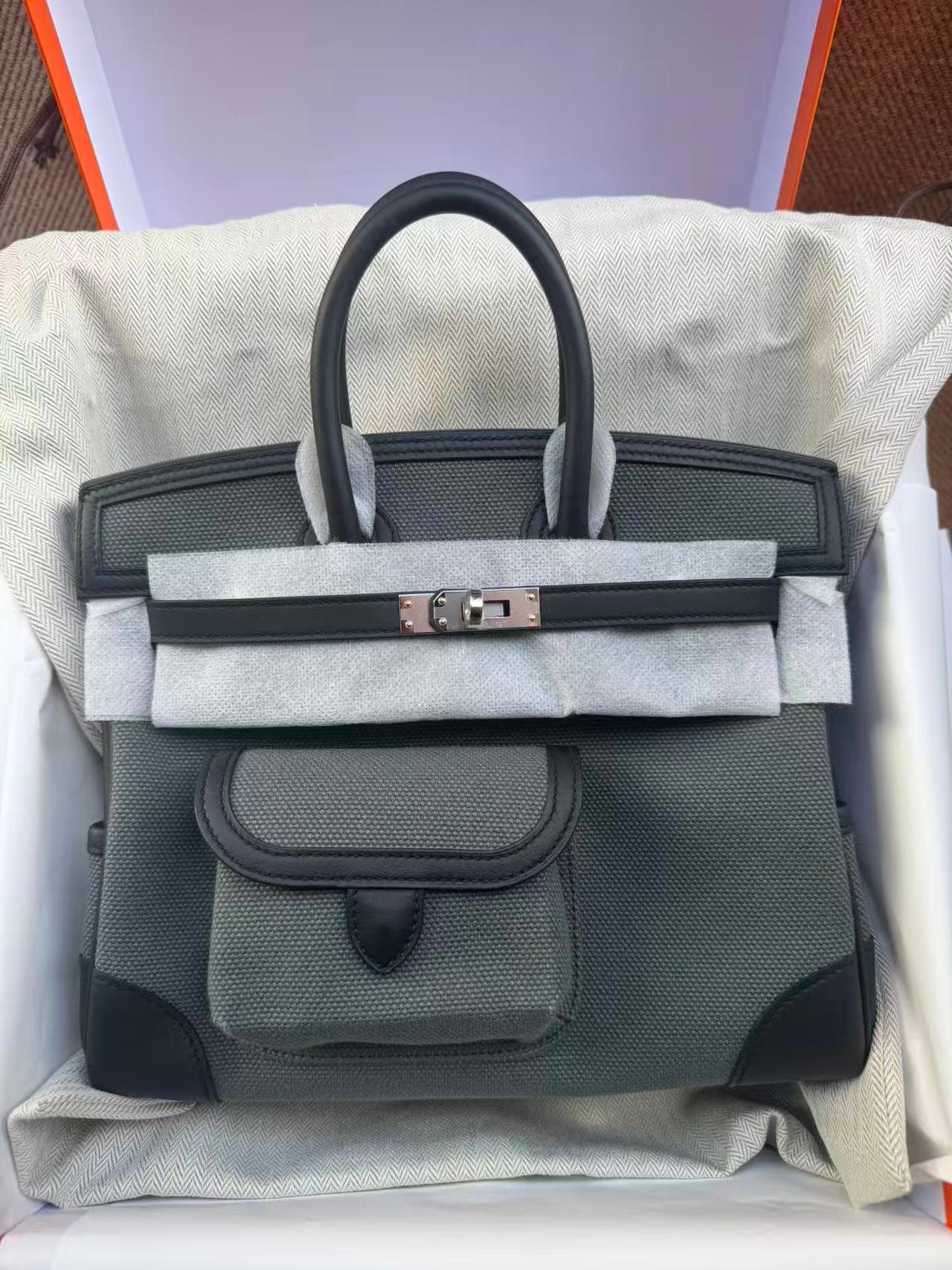
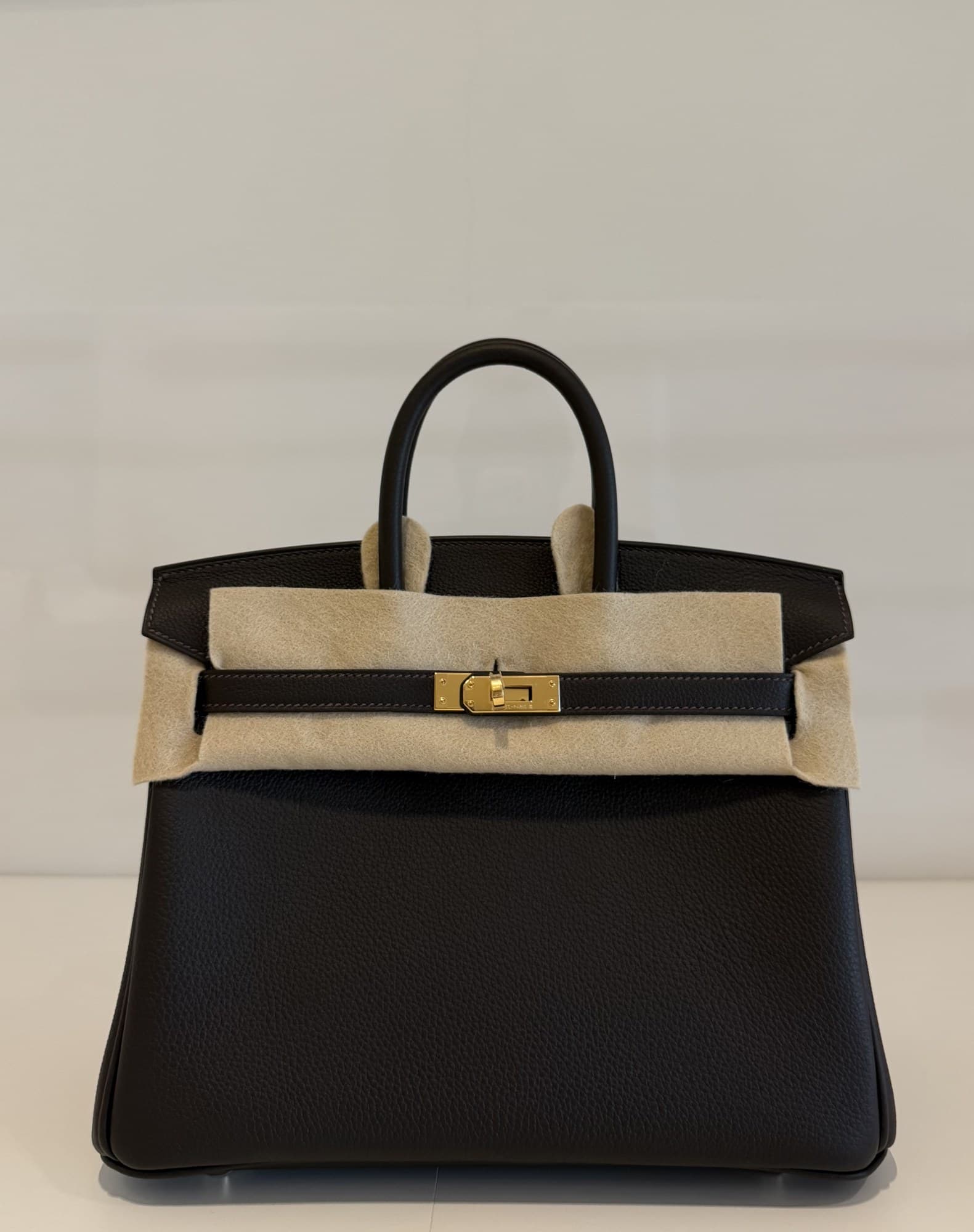
Noir (Black). The single most liquid colour in the Hermès range. Noir works with every wardrobe, every season, every occasion. A Birkin 25 in Noir Togo with gold hardware is the benchmark asset in luxury resale — it sells faster and at more consistent premiums than any other configuration. Noir achieves approximately 140–170% of retail on the secondary market in store-fresh condition.
Gold. A warm, medium tan that has been a Hermès signature for decades. Gold is the quintessential Hermès colour — immediately recognisable and universally flattering. It pairs exceptionally well with gold hardware, creating one of the most iconic combinations in the range. Gold achieves approximately 130–160% of retail.
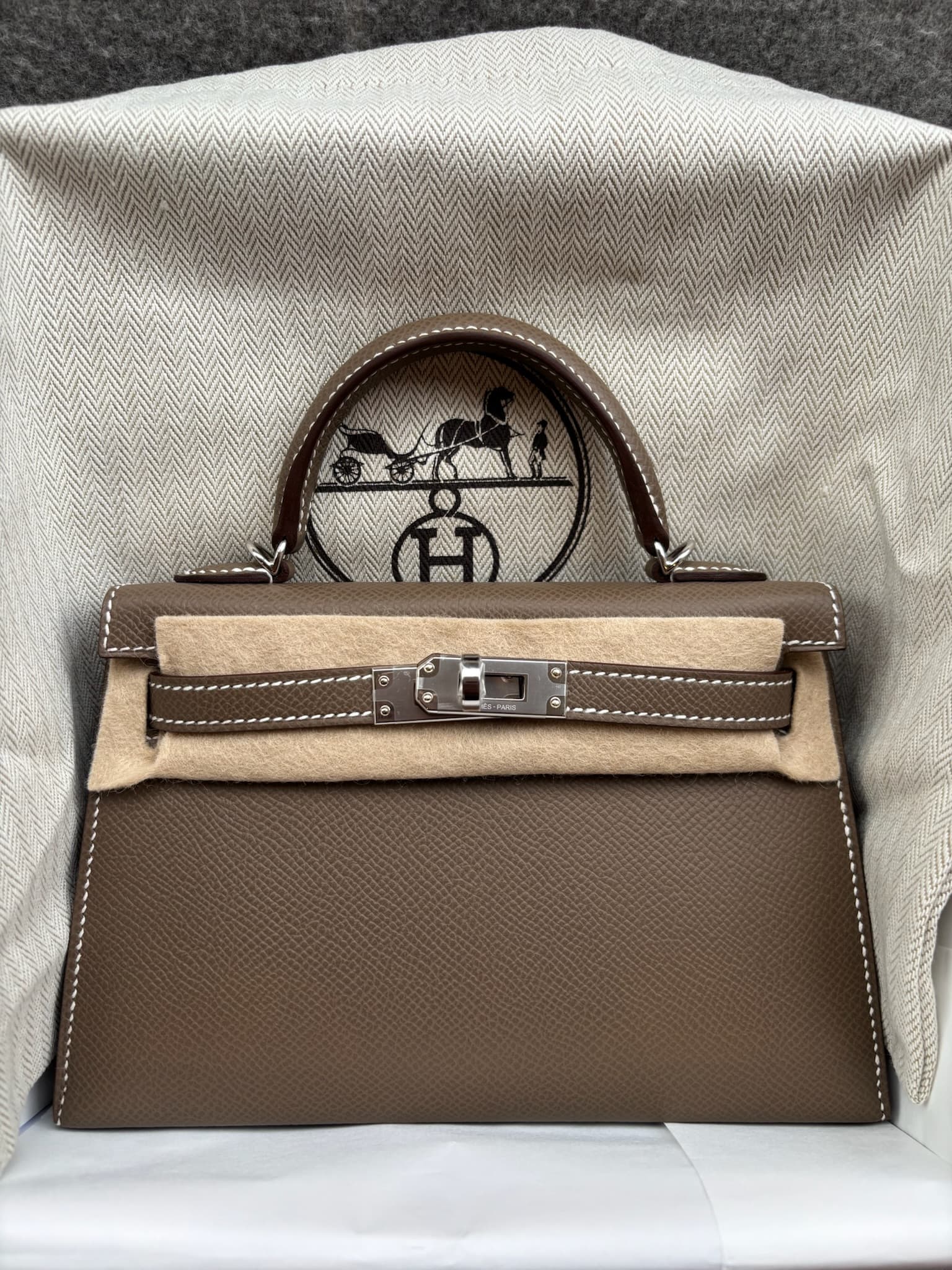
Étoupe. A sophisticated grey-brown that straddles warm and cool tones. Étoupe is arguably the most versatile colour in the Hermès palette — it complements virtually every outfit and works year-round. It has become increasingly popular with collectors and now rivals Noir and Gold in liquidity. Étoupe achieves approximately 130–155% of retail.
Craie. A soft, warm white — not stark or clinical, but creamy and elegant. Craie has surged in popularity over the past three years, particularly in the Birkin 25 and Kelly 25. It photographs beautifully, which has driven significant social media demand. Craie achieves approximately 125–150% of retail but carries a slightly higher care burden — light colours show marks more easily.
Tier 2: Strong Fashion Colours
Bleu Nuit. A deep, rich navy that serves as a versatile alternative to Noir. Bleu Nuit works well in both casual and formal settings and pairs beautifully with both gold and palladium hardware. It achieves approximately 120–140% of retail.
Rouge Casaque. A bright, true red that makes a bold statement. Rouge Casaque is the strongest performing red in the Hermès range and has been in production long enough to establish consistent demand. It achieves approximately 115–135% of retail.
Gris Asphalte / Gris Meyer. Cool-toned greys that offer a modern alternative to warmer neutrals. These colours have gained traction with younger collectors and perform well in Epsom leather. They achieve approximately 110–130% of retail.
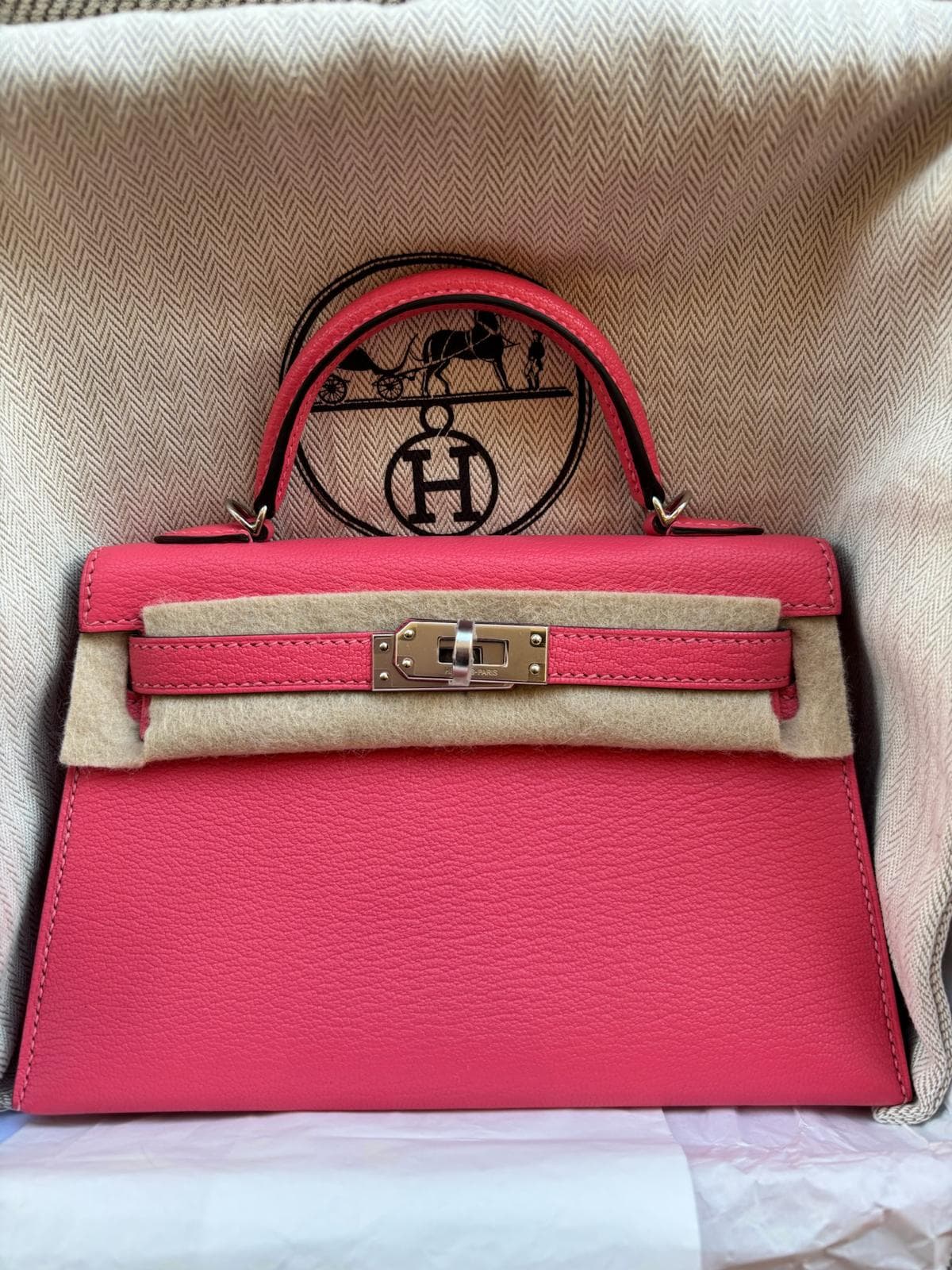
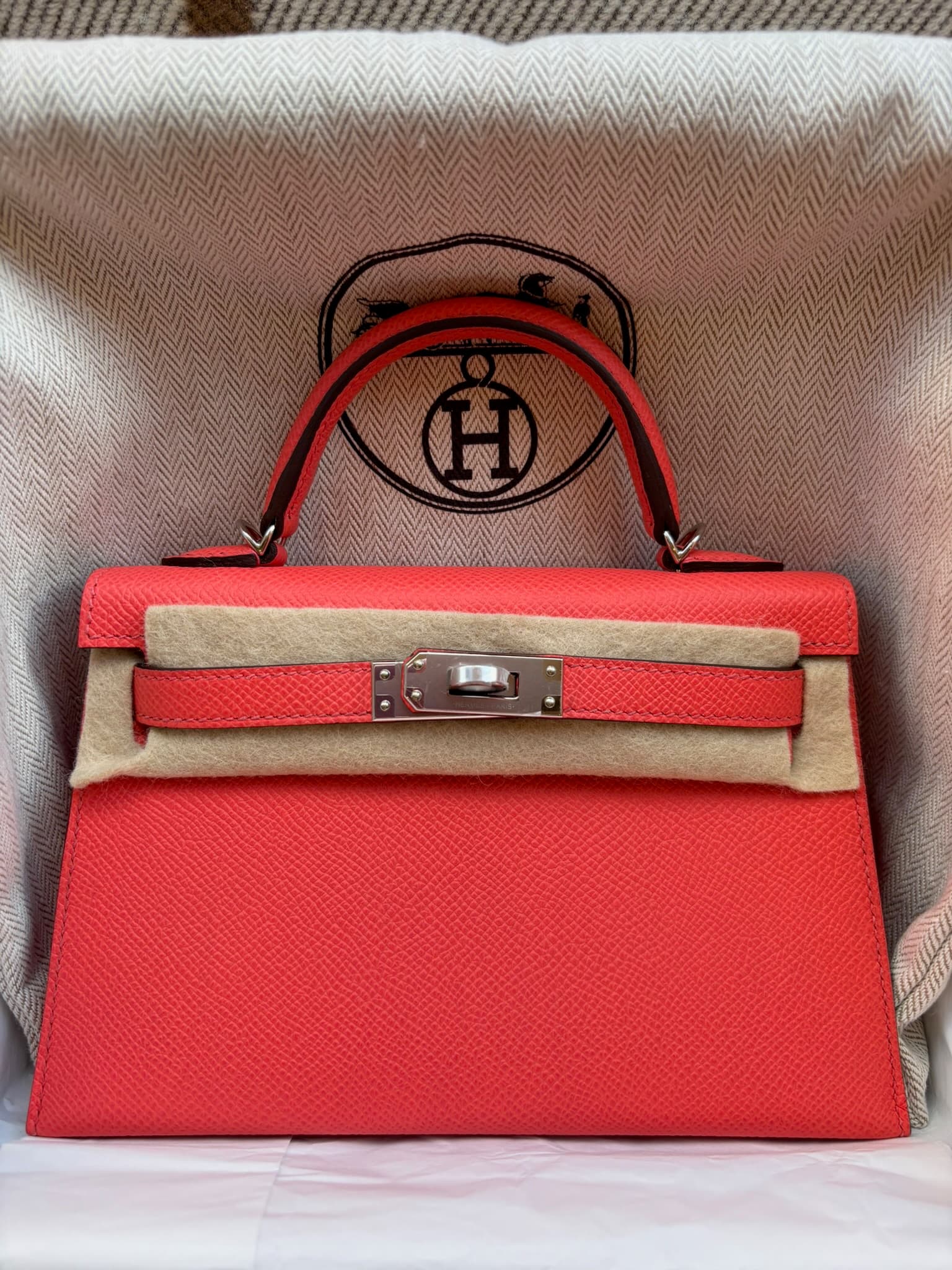
Rose Sakura. A soft, powdery pink that has become one of the most sought-after colours in the Kelly Mini and Constance 18. In these smaller formats, Rose Sakura can achieve premiums comparable to Tier 1 neutrals. In larger bags, demand is more moderate.
Vert Cypress. A deep, forest green that has emerged as a strong performer over the past two years. It offers a distinctive alternative to blue and black without being overtly flashy. Vert Cypress achieves approximately 110–125% of retail.
Tier 3: Seasonal and Limited Colours
Hermès introduces new seasonal colours each year, many of which are produced for only one or two seasons before being discontinued. These colours can generate intense initial demand — collectors and fashion-forward buyers seek them out specifically because of their limited availability.
However, seasonal colours carry meaningful liquidity risk. Because fewer bags exist in any given seasonal colour, the buyer pool is smaller. A Birkin in Mauve Sylvestre may take weeks or months to sell, whereas a Birkin in Noir may sell within days. And if the colour does not resonate with the broader market, resale prices can fall below retail.
Examples of strong-performing seasonal colours in recent years include Bleu Brume, Mauve Sylvestre, Vert Jade, and Nata. These achieved premiums during their initial scarcity window but have settled to more moderate levels as the novelty subsided.
Colour and Hardware Pairing
The hardware finish — gold (GHW), palladium (PHW) or rose gold (RGHW) — interacts with colour to create the overall aesthetic, and certain combinations perform better than others on the resale market.
Gold hardware pairs best with warm-toned colours: Gold, Étoupe, Craie, Terre. It creates a classic, traditional look that appeals to the broadest audience.
Palladium hardware pairs best with cool-toned colours: Noir, Bleu Nuit, Gris Asphalte. It creates a modern, understated look that is increasingly popular with younger buyers.
Rose gold hardware is versatile and works well with both warm and cool tones, particularly Rose Sakura, Craie and Étoupe. It is the least common finish, which gives it a degree of exclusivity.
In general, gold hardware commands a small premium (5–10%) over palladium in equivalent configurations. However, certain colour-hardware combinations — such as Noir with palladium — are so popular that they match or exceed gold hardware premiums.
Practical Advice for Buyers
If you are buying a Hermès bag with value retention in mind, the safest choice is a Tier 1 neutral — Noir, Gold, Étoupe or Craie — in a Birkin 25 or Kelly 25 with gold hardware. These configurations offer the highest liquidity, the most consistent premiums, and the lowest risk.
If you are buying primarily for personal enjoyment and are less concerned with resale optimisation, choose the colour that makes you happiest. Every Hermès bag holds value well relative to other luxury brands. The difference between a Tier 1 neutral and a well-chosen Tier 2 colour is meaningful but not dramatic.
Avoid buying seasonal colours at large premiums above retail unless you are genuinely passionate about the colour and comfortable holding the piece long-term. The initial scarcity premium on seasonal colours often softens over time.
The Impact of Colour on Sale Speed
Beyond price, colour has a dramatic effect on how quickly a bag sells on the pre-owned market. This matters enormously for sellers who need liquidity rather than maximum price.
A Birkin 25 in Noir Togo with gold hardware — the single most liquid configuration — typically sells within one to five days when priced at market value through a specialist dealer. Gold and Étoupe in the same specification sell within one to two weeks. Craie may take two to three weeks, depending on condition (light colours must be pristine to achieve full value).
Tier 2 colours generally sell within two to six weeks. Tier 3 seasonal colours can take one to three months or longer, depending on how niche the shade is and how well it has held market interest since its initial release.
For sellers, this means that pricing strategy should account for colour liquidity. A Noir Birkin can be priced at the top of its market range and still sell quickly. A seasonal colour may need to be priced more competitively to attract the smaller pool of buyers who specifically want that shade.
Colour decides how fast a bag sells, and consignment is where that speed pays you directly: a Tier 1 neutral placed with JULL on consignment usually finds its buyer within weeks, at a payout figure agreed in writing before listing, with the bag insured in our custody until it does. See Consign your Hermès with JULL for the terms.
Colour Trends to Watch in 2026
Several emerging trends are worth noting for both buyers and sellers in the current market.
Warm neutrals are strengthening. Colours like Biscuit, Trench and Chai — soft, warm tones in the tan-to-camel range — are seeing increasing demand, particularly in the Kelly and Constance. These colours complement the quiet luxury aesthetic that continues to dominate fashion.
Cool greys are diversifying. Hermès has expanded its grey offering beyond Étoupe and Gris Asphalte to include shades like Gris Meyer and Beton. These cool neutrals appeal to buyers who find Étoupe too warm and Noir too stark.
Bright colours are polarising. Very bright seasonal colours — lime, orange, fuchsia — generate strong social media interest but more moderate resale performance. They photograph well but require careful wardrobe coordination, which limits their buyer pool.
At JULL, we carry pieces across all colour tiers and can source specific colours on request. Contact us via WhatsApp to discuss your ideal configuration.
If you are selling rather than buying, see how JULL buys Hermès bags: a firm offer within 24 hours, outright or on consignment.