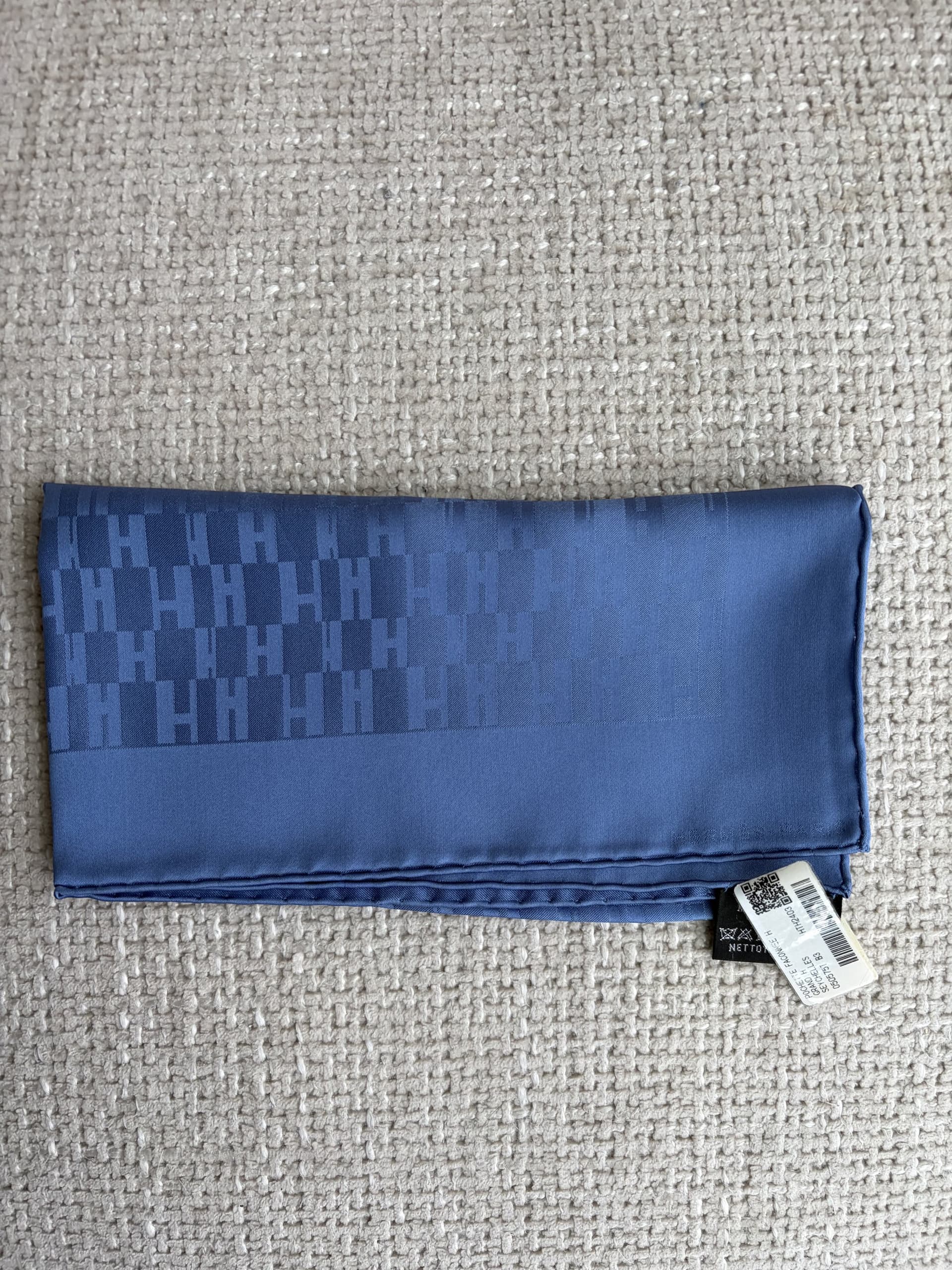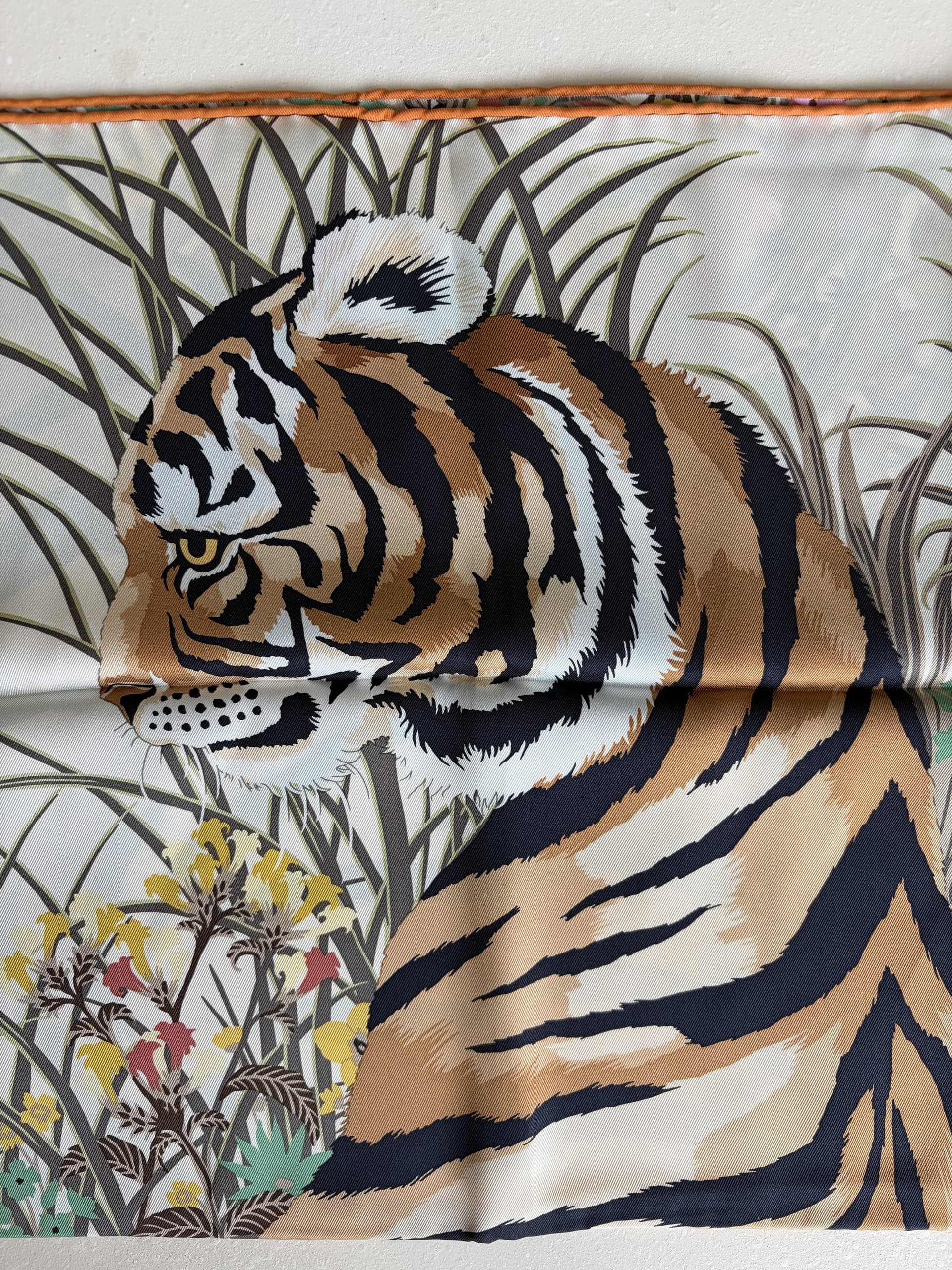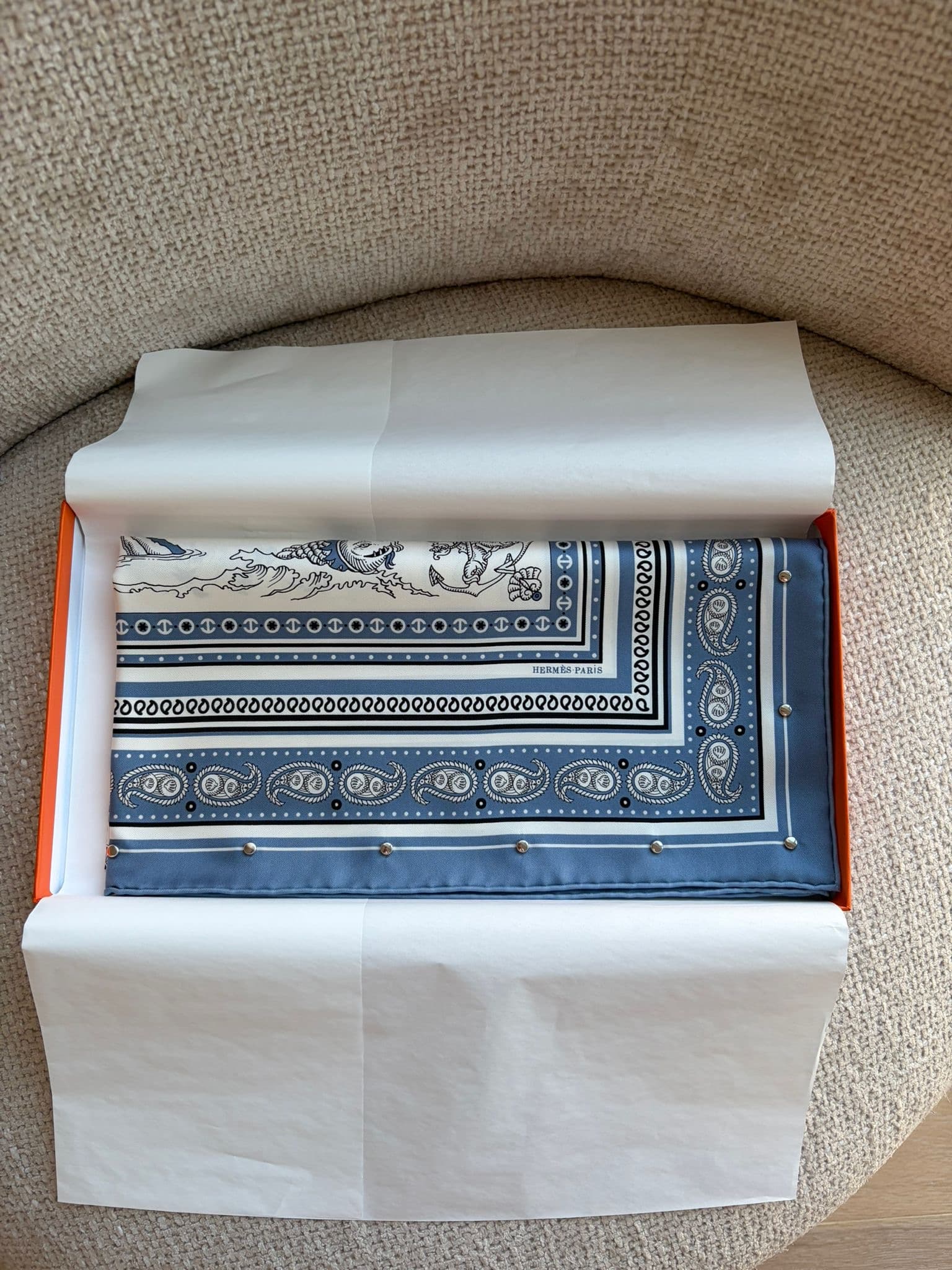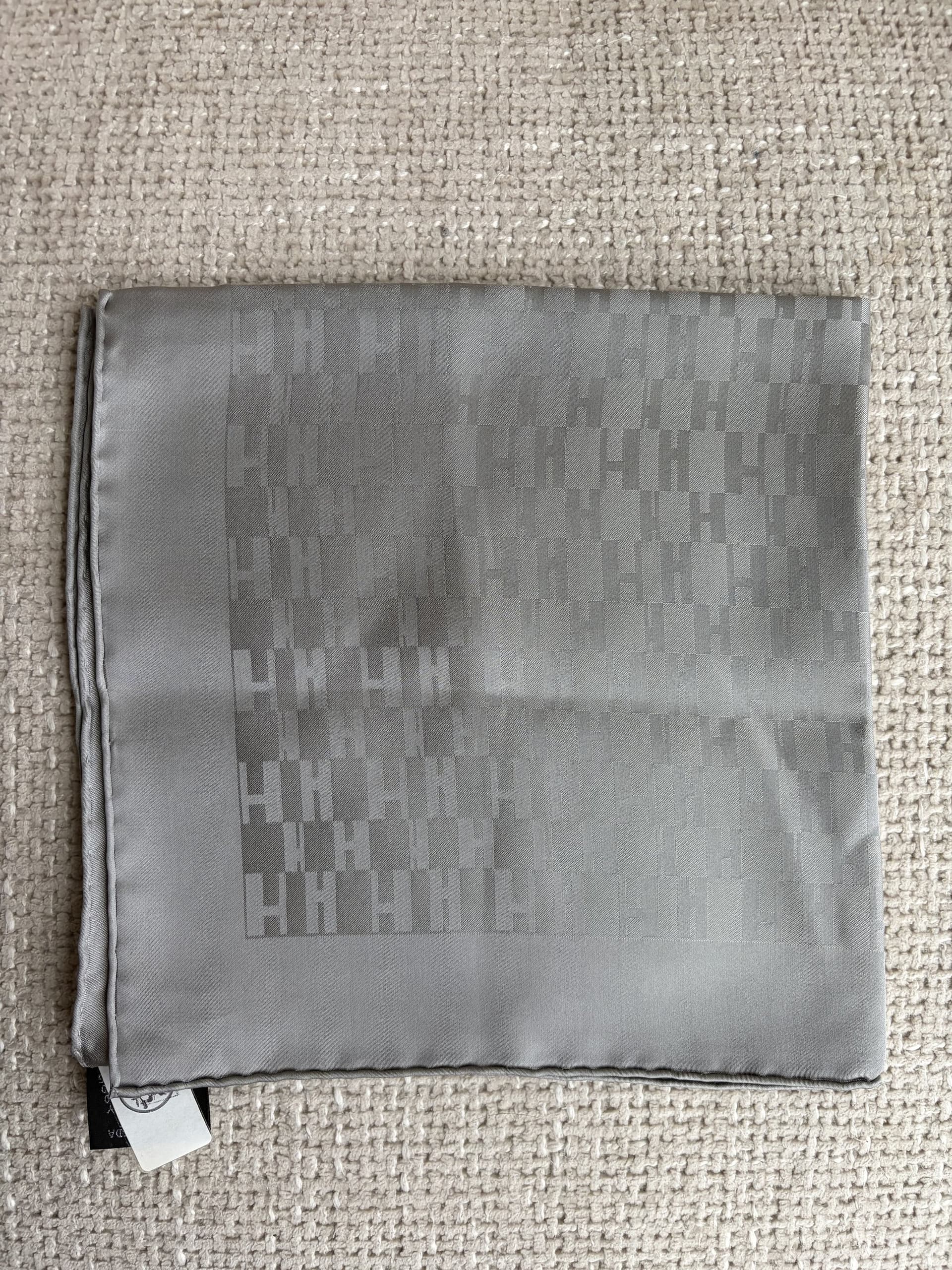
Hermès silk is where many collectors begin their relationship with the house — and where seasoned collectors continue to return long after acquiring their dream bags. The Hermès scarf is not simply an accessory. It is a piece of wearable art, printed on some of the finest silk twill produced anywhere in the world, using techniques that have remained essentially unchanged for over eighty years.
Whether you are considering your first Hermès purchase or adding to an established collection, understanding the different scarf formats, materials and styling possibilities will help you make a confident choice.
A Brief History of Hermès Silk
Hermès produced its first silk scarf in 1937. The original Carré — French for square — measured 90 by 90 centimetres, a format that remains the house's signature to this day. Each design begins as an original artwork, which is then translated into a series of printing screens. A single Carré 90 may require up to 45 individual screens and over 750 hours of engraving work before a single scarf is printed.
The silk itself is sourced from Brazil and woven in Lyon, France, where Hermès owns its own twill weaving facility. The resulting fabric weighs approximately 65 grams per square metre — heavier and more luxurious than most commercial silk scarves. This weight gives Hermès silk its characteristic drape, lustre and hand feel that collectors immediately recognise.
Since 1937, Hermès has produced over 2,500 original scarf designs, with approximately 12 new designs introduced each season. Vintage designs are regularly reissued in new colourways, creating a collecting universe that spans decades.
The Main Formats
Hermès produces silk in several standard formats, each suited to different styling preferences and occasions.
Carré 90. The original and most iconic format. Measuring 90 by 90 centimetres, the Carré 90 is large enough to wear as a headscarf, drape over the shoulders, tie as a halter top or display as a framed artwork. It is the format with the most extensive design library and the one most collectors focus on. Retail price in 2026 is approximately £490–560 depending on the design complexity.
Carré 70. A slightly smaller square at 70 by 70 centimetres. The Carré 70 is more versatile as a neck scarf and sits beautifully when folded into a bias triangle. It is lighter, less imposing and often favoured for everyday wear. It also works beautifully as a handbag accessory, tied around the handle of a Birkin or Kelly. Retail price is approximately £350–420.
Twilly. A narrow silk band measuring approximately 5 by 86 centimetres. The Twilly is designed primarily as a bag accessory — wrapped around handles to protect leather from hand oils and add a pop of colour. It can also be worn as a headband, wrist wrap or choker. Twillies are often purchased in pairs, one for each handle of a Birkin. Retail price is approximately £200 per piece.
Maxi Twilly. A larger version of the Twilly, measuring approximately 20 by 220 centimetres. The Maxi Twilly functions as a lightweight scarf or wrap, bridging the gap between a Twilly and a full Carré. It is particularly popular in summer and transitional seasons. Retail price is approximately £490–560.
Bandana. A triangular format that eliminates the need to fold a square scarf. The Bandana is ready to wear straight from the box and appeals to those who prefer simplicity. It sits naturally around the neck without the bulk of a folded Carré.
Materials Beyond Silk Twill
While silk twill remains the house standard, Hermès produces scarves in several other materials.
Cashmere and silk blends offer warmth and softness for autumn and winter. These are typically produced in the Carré 140 format — a generous 140 by 140 centimetre shawl — and in the Carré 90 format with a slightly different texture and drape than pure silk.
Cashmere scarves and stoles are produced for colder climates, offering the warmth of pure cashmere with Hermès design sensibility. These command higher prices than silk equivalents, typically £800–1,200.
Cotton and linen scarves appear seasonally, offering a more casual, textured alternative for summer wear.
Choosing Your First Hermès Scarf
For a first purchase, the Carré 70 or the Twilly represents the most accessible entry point into Hermès silk.
The Twilly works as a gift or self-purchase for someone who already owns an Hermès bag. It adds colour and personality to a neutral bag and protects the handles from wear. Choosing a colourway that complements your bag — for example, a gold-toned Twilly on a Gold Birkin or a jewel-toned design on a Noir Kelly — creates a polished, cohesive look.
The Carré 70 is ideal if you want something to wear rather than accessorise a bag. Its proportions suit neck tying without excessive bulk, and it folds beautifully into a triangle or bias fold. Designs with a strong central motif look striking when folded, as the focal point remains visible.
The Carré 90 is the connoisseur's choice. It offers the full design impact and maximum versatility, but its larger size requires more confidence in styling. If you are comfortable with scarves and enjoy experimenting, the 90 is the definitive Hermès silk experience.
Understanding Colourways
Every Hermès scarf design is produced in multiple colourways — typically between 6 and 12 colour variations per design. The same motif can feel entirely different in a warm gold palette versus a cool blue or a bold red. Seasonal colourways are produced in limited quantities and discontinued, making certain colour-design combinations rare on the secondary market.
When choosing a colourway, consider your wardrobe palette. Neutral colourways — cream, navy, gold, black borders — are the most versatile. Bold colourways — orange, fuchsia, turquoise — make more of a statement but pair with fewer outfits.
Do Hermès Scarves Hold Their Value?
While scarves do not appreciate as dramatically as Birkins or Kellys, certain pieces hold value exceptionally well on the secondary market.
Limited editions and artist collaborations often appreciate. Collaborations with artists like Kermit Oliver, whose designs are exclusive to the Houston boutique, command significant premiums. Vintage designs from the 1950s through 1970s in excellent condition are actively collected and can sell for multiples of their original retail price.
Discontinued colourways of popular designs become sought-after once they leave the retail market. A Carré 90 that retailed for £490 may sell for £600–800 on the secondary market if the colourway is particularly desirable and in unworn condition.
Condition matters enormously for silk. Unlike leather goods, which can be restored and conditioned, silk damage — pulls, stains, sun fading — is largely irreversible. Store-fresh scarves with original box and ribbon command significant premiums over worn examples.
Caring for Hermès Silk
Hermès silk is durable when treated respectfully, but it requires care to maintain its vibrancy and hand feel.
Store scarves rolled rather than folded to prevent permanent crease lines. Keep them away from direct sunlight, which fades dyes over time. Avoid contact with perfume, cosmetics and hairspray — alcohol-based products can permanently stain silk. If cleaning is necessary, professional dry cleaning by a specialist is recommended. Do not attempt to wash Hermès silk at home.
For Twillies used on bag handles, rotate them periodically to prevent uneven wear. The areas wrapped tightly around hardware will age faster than the visible portions.
Styling Inspiration
The versatility of Hermès silk is one of its greatest appeals. A single Carré 90 can be styled in dozens of ways.
Classic French knot — fold the Carré into a triangle, roll it into a bias band, and tie it at the side of the neck. Elegant, timeless and appropriate for any occasion.
Headscarf — fold into a triangle and tie under the chin or at the nape. A look that evokes mid-century glamour and works beautifully with sunglasses.
Bag charm — thread a Carré 70 or Twilly through the handle attachment of a Birkin or Kelly. The silk adds colour while protecting leather from abrasion.
Belt — fold a Carré 90 into a narrow band and thread through belt loops or tie at the waist over a dress. An unexpected detail that elevates simple outfits.
Wrist wrap — fold a Twilly or Bandana and tie around the wrist as a bracelet alternative. Casual, colourful and distinctly Hermès.
Where to Buy
Hermès scarves are available at all Hermès boutiques and on hermes.com. Unlike leather goods, silk is not subject to allocation restrictions — you can purchase any scarf that is currently in stock without a purchase history.
On the pre-owned market, specialist dealers like JULL offer authenticated Hermès silk at competitive prices, including discontinued designs and rare colourways that are no longer available at retail. Every piece we sell is inspected for authenticity and condition, ensuring you receive exactly what is described.
For a current-season Twilly or Carré 90 that London has sold out of, we source both new to order — the Twilly at £155 and the Carré 90 at £415, against £195 and £520 at the UK boutique — with a copy of the boutique receipt and the box, usually within 7–10 days.
Whether you are beginning your Hermès journey with a Twilly or expanding your collection with a rare vintage Carré, Hermès silk offers an unmatched combination of artistry, quality and timeless style. Contact us to explore our current silk collection.