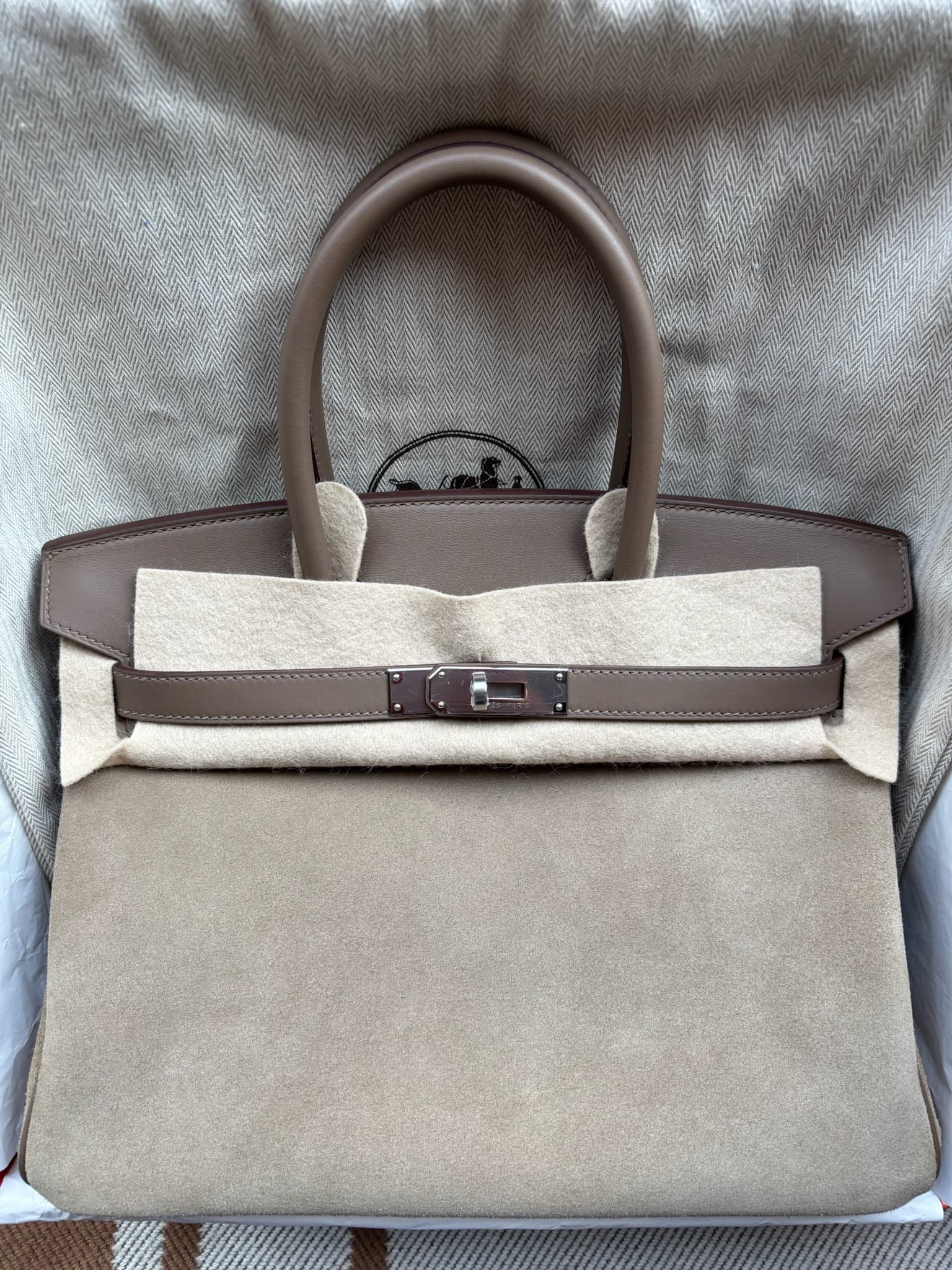
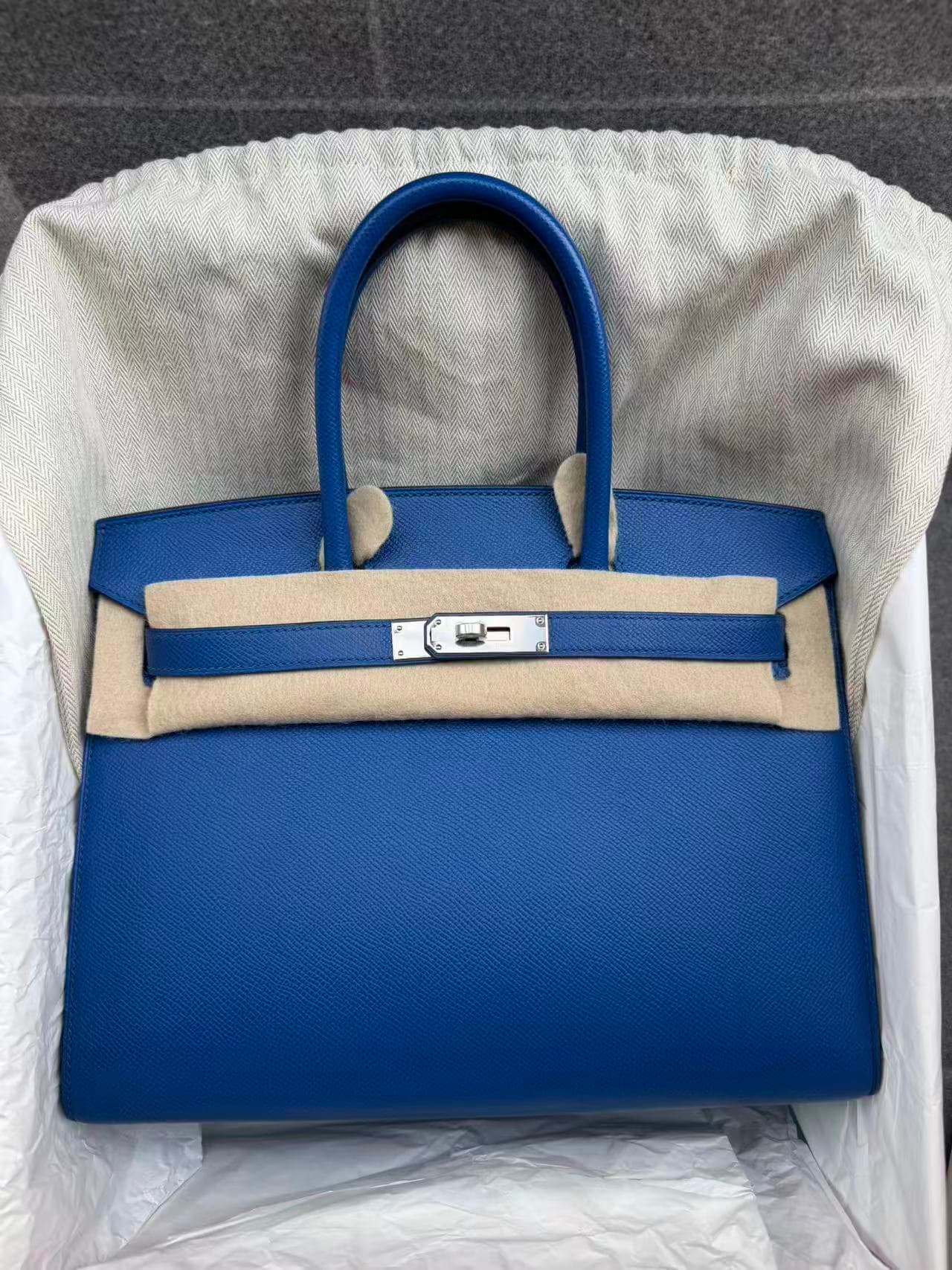
Somewhere between handbag and asset class sits a gradient-dyed Niloticus crocodile whose colour fades from smoke grey to pearl white like its namesake mountains — and whose price chart, over the past decade, has embarrassed most hedge funds. The Himalayan Birkin is the acknowledged summit of handbag collecting: the piece that anchors every great collection, headlines every major auction, and generates the question we're asked more than any other at the top of the market: how many actually exist? This 2026 guide answers it — along with real prices, the diamond question, and the honest path to ownership.
What Makes a Himalayan a Himalayan
Not a colour applied but a dye gradient achieved: Niloticus crocodile, bleached and hand-tinted so the scales transition from grey at the edges toward white at the centre — a process so unforgiving that only the most flawless skins qualify and only senior artisans attempt it. The result reads less like fashion than like object-making: matte crocodile, palladium hardware (or better — see below), produced in Birkin 25 and 30 primarily, with Kelly and Constance Himalayans rarer still. It sits atop the exotics hierarchy not because Hermès priced it there, but because scarcity did.
How Many Himalayan Birkins Exist?
The question the whole market asks, answered as honestly as the data allows: Hermès has never published figures, but the informed consensus — triangulated from auction throughput, dealer networks and collector registries — puts total production across all years in the very low thousands at most, plausibly under two thousand, with annual output believed in the low dozens. For calibration: the world's major auction houses together see only a handful of Himalayans per season, and the same known examples recirculate. Diamond-hardware versions (below) are rarer by an order of magnitude — credible estimates run to a few hundred ever made. Whatever the true figure, the practical answer is the one that moves prices: fewer Himalayans exist than there are collectors who want one, permanently.
Prices in 2026: Auction, Private, and Us
| Spec | Current market, excellent condition |
|---|---|
| Himalayan Birkin 30 | £95,000–£130,000 |
| Himalayan Birkin 25 | £110,000–£160,000+ |
| Himalayan Kelly | £100,000–£150,000+ |
| Diamond hardware (18k white gold, ~250 diamonds) | £250,000–£400,000+; auction records higher |
Context makes the numbers: the pre-Jane-Birkin-sale auction record for any handbag — $513,040 in 2021 — belonged to a Diamond Himalayan Kelly 28, and in the post-record market the Himalayan tier has re-priced upward fastest of all: when a $10M ceiling appears, everything beneath it climbs. Condition dominates valuation brutally at this level — Himalayan crocodile shows handling, yellowing at the white centre is the known ageing risk, and a truly store-fresh example with full papers carries a five-figure premium over a merely excellent one. Our current Himalayans — two Birkin 25s and a 30 at the time of writing — are in the Birkin gallery.
The Diamond Question
Diamond Himalayans replace palladium with 18k white gold hardware pavé-set with roughly 240–250 diamonds (~10 carats) on the touret, plates and padlock. They are the auction-record engine of the category — and, honest counsel, not automatically the better buy: the classic palladium Himalayan is the purist's piece, more liquid at its price point, and the version whose austerity made the design an icon. The diamond version is for collectors completing the summit, and for them the calculus is provenance-tier: each example trades on its individual history.
How People Actually Get One
Not at a boutique — realistically, ever. Himalayans sit above quota allocation in the invitation tier reserved for the house's most substantial clients globally; even devoted million-pound histories wait years, and many simply never receive the call. The working market is secondary: auction (with 25%+ buyer's premiums and public exposure) or private sale through specialists. Our own Himalayans come through the collector network — quietly, with CITES paperwork complete, condition documented photographically, and authentication at a level this tier demands: Himalayan fakes are the counterfeit industry's flagship product, and at six figures the in-person, papers-in-hand inspection is not a preference but the entire game. Talk to us before you talk to anyone anonymous.
The Investment Case, Honestly
Ten-year performance at this tier outruns the standard Birkin index comfortably — but the honest framing is art-market, not stock-market: illiquid between sales, condition-sensitive, provenance-driven, with CITES paperwork adding cross-border friction that keeps casual money out and floors firm. The 2025–26 bifurcation was built for this bag: while commodity-spec premiums compressed, trophy-tier pieces set records. If your portfolio question is "the single Hermès most likely to be worth dramatically more in a decade," the Himalayan has been the textbook answer for twenty years — provided you buy flawless, papered, and from someone accountable.
Frequently Asked Questions
How many Himalayan Birkins are there in the world? Hermès publishes nothing, but informed estimates put all-years production in the very low thousands, with annual output in the low dozens. Diamond-hardware versions likely number a few hundred ever. Fewer exist than collectors who want them — the fact that governs every price.
How much is a Himalayan Birkin in 2026? £95,000–£160,000+ for classic palladium-hardware examples depending on size and condition; £250,000–£400,000+ for diamond hardware, with auction records above that. Store-fresh, fully-papered examples command significant premiums.
Why is the Himalayan Birkin so expensive? Extreme material selectivity (only flawless Niloticus skins take the gradient), a dye process few artisans master, production in the low dozens yearly, and demand from every serious collector on earth. Scarcity, not marketing.
Can you buy a Himalayan from Hermès directly? Effectively no — allocation is by invitation at the very top of the client pyramid, above even standard quota-bag machinery. The functioning market is auction and private specialist sale.
Is a Himalayan Birkin a good investment? The strongest long-term performer in the category, behaving like art: superb appreciation, low liquidity, condition- and provenance-sensitive. Buy flawless and documented or not at all.
---
JULL is a specialist Hermès personal shopping service in Chelsea Harbour, London. Himalayans, exotics and collection-grade rarities pass through our private network with full documentation — every piece authenticated in hand and viewable by appointment. Browse the Birkin gallery or start a confidential conversation.