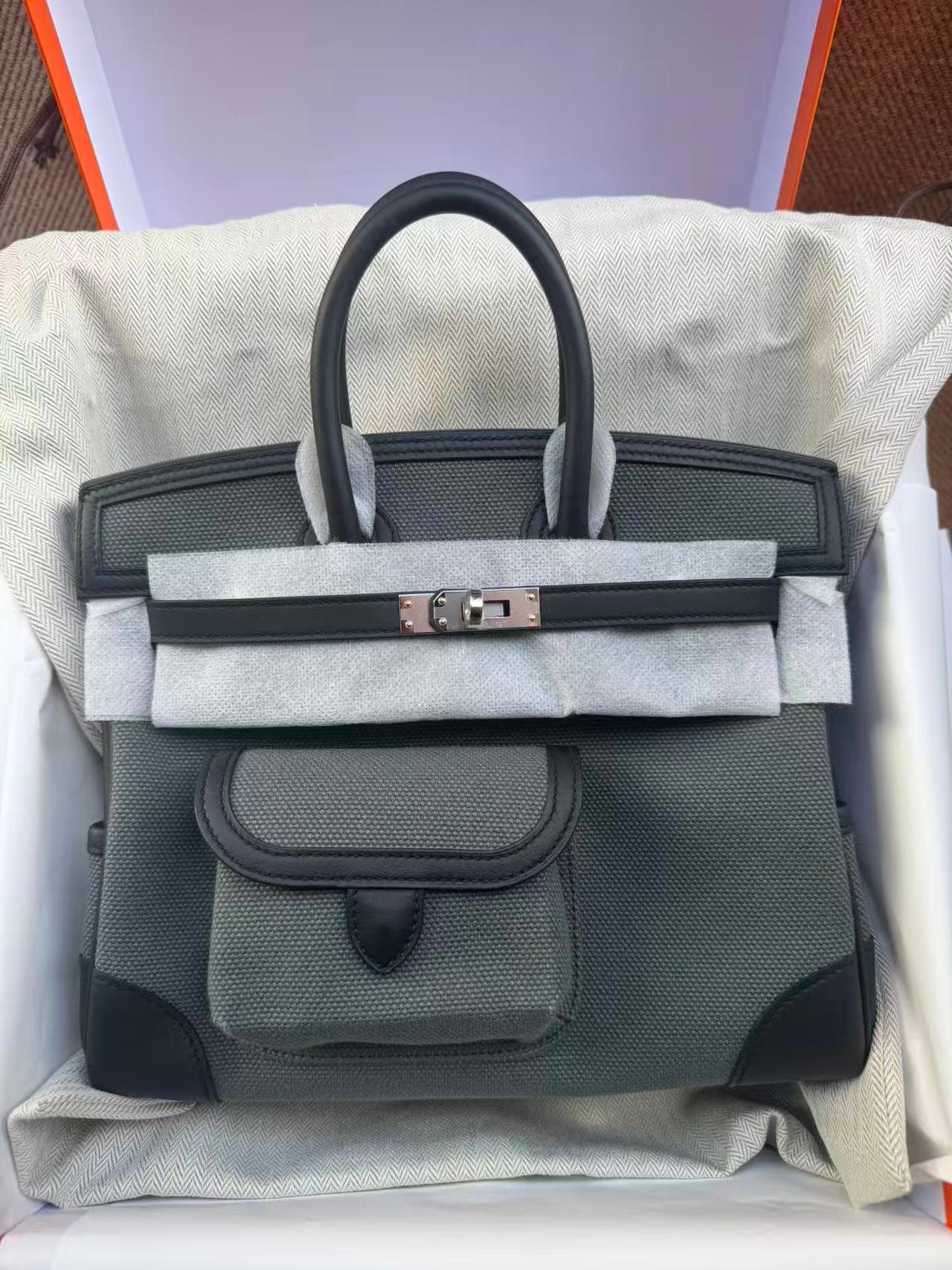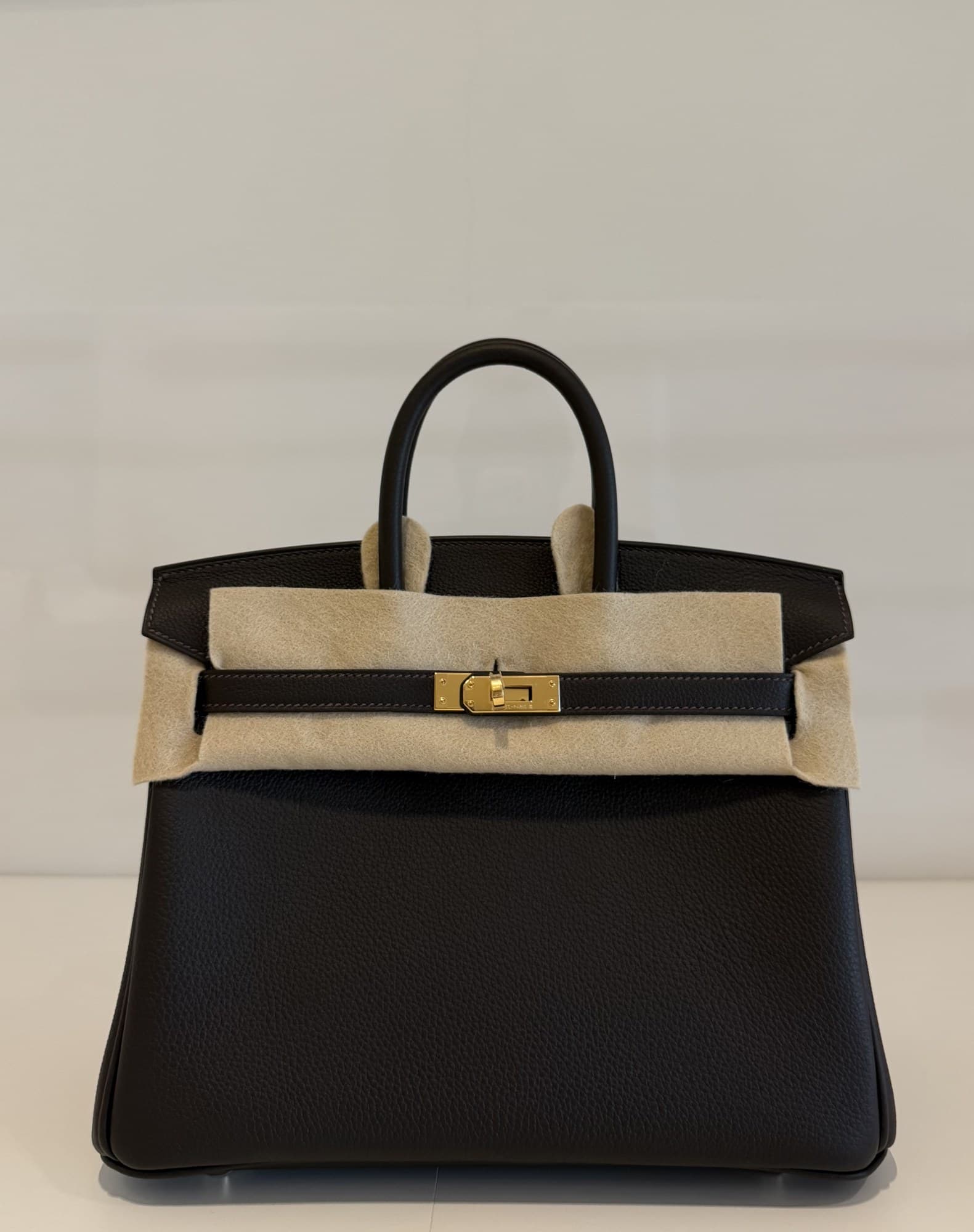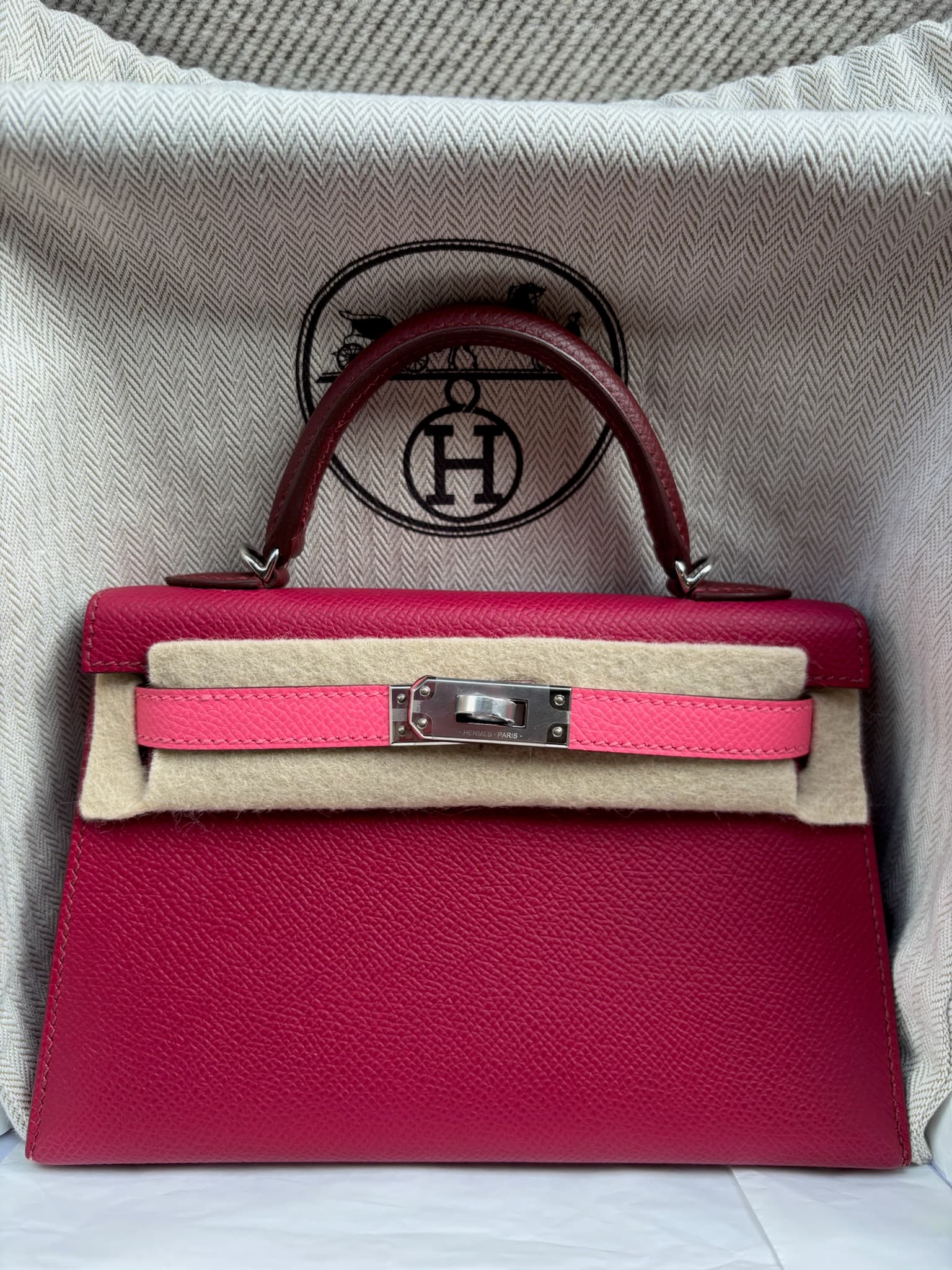
A reference for buyers, collectors and the merely curious. Every term you will encounter when researching, buying or talking about a Hermès bag — defined plainly and in plain English. Bookmark this page. We update it as the language of Hermès evolves.
This glossary is maintained by JULL, a London pre-owned Hermès specialist. If a term is missing, write to us at hello@byjull.com and we will add it.
---
How to use this glossary
Terms are grouped by category for browsing, and a quick A–Z index sits at the bottom for direct lookups. Where a term has a separate deep-dive on the JULL journal, we link to it. Where pronunciation matters, we include it.
---
Bag models
Birkin. The most recognisable Hermès handbag. Named for the actress Jane Birkin after a 1981 conversation with then-CEO Jean-Louis Dumas on a Paris–London flight. Trapezoidal silhouette, top handles, turn-lock clochette closure. Sizes 25, 30, 35, 40 (and rare 45). 2026 UK retail entry: Birkin 25 in Togo at ~£8,700. See our 2026 Birkin price guide.
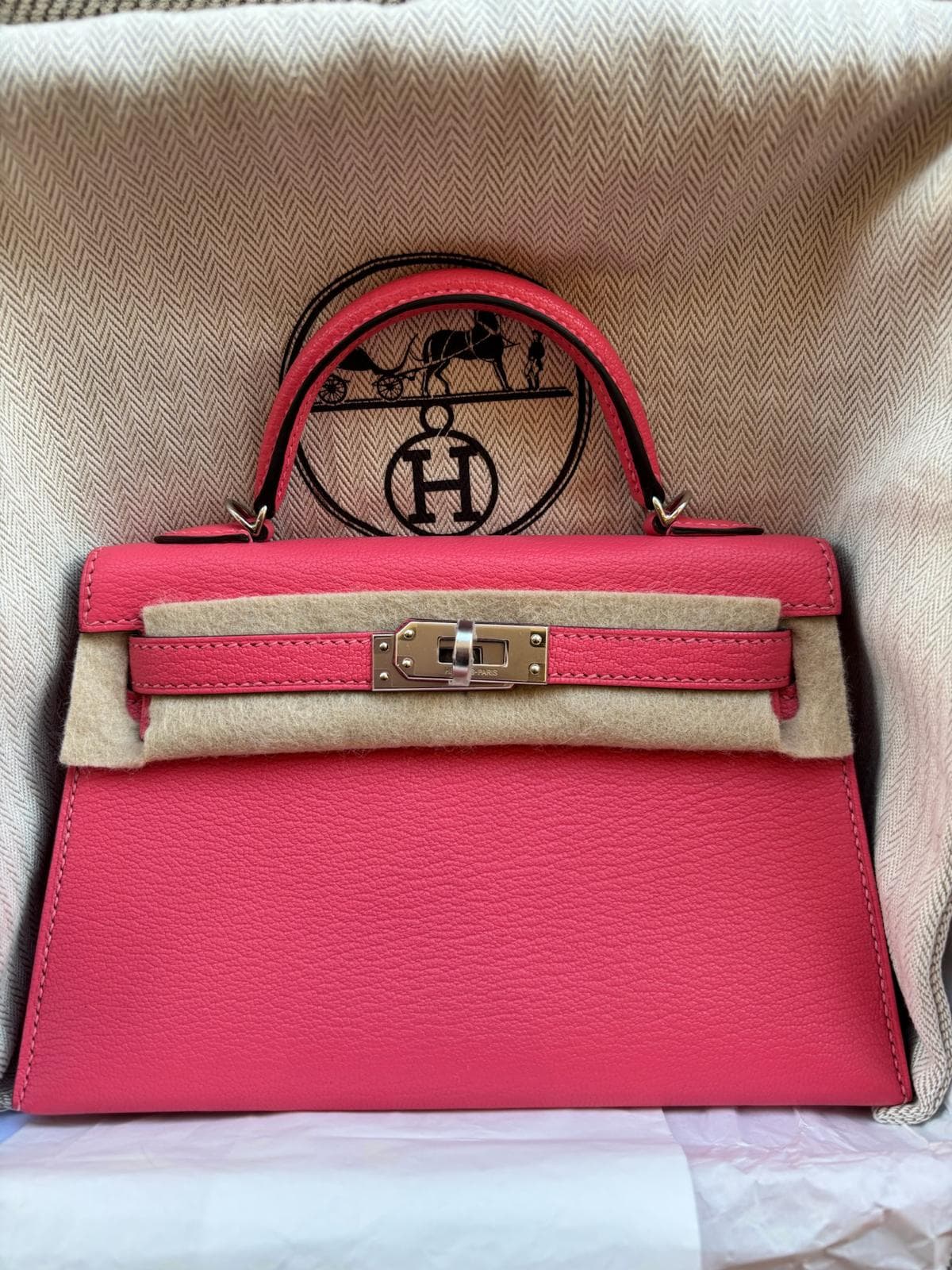
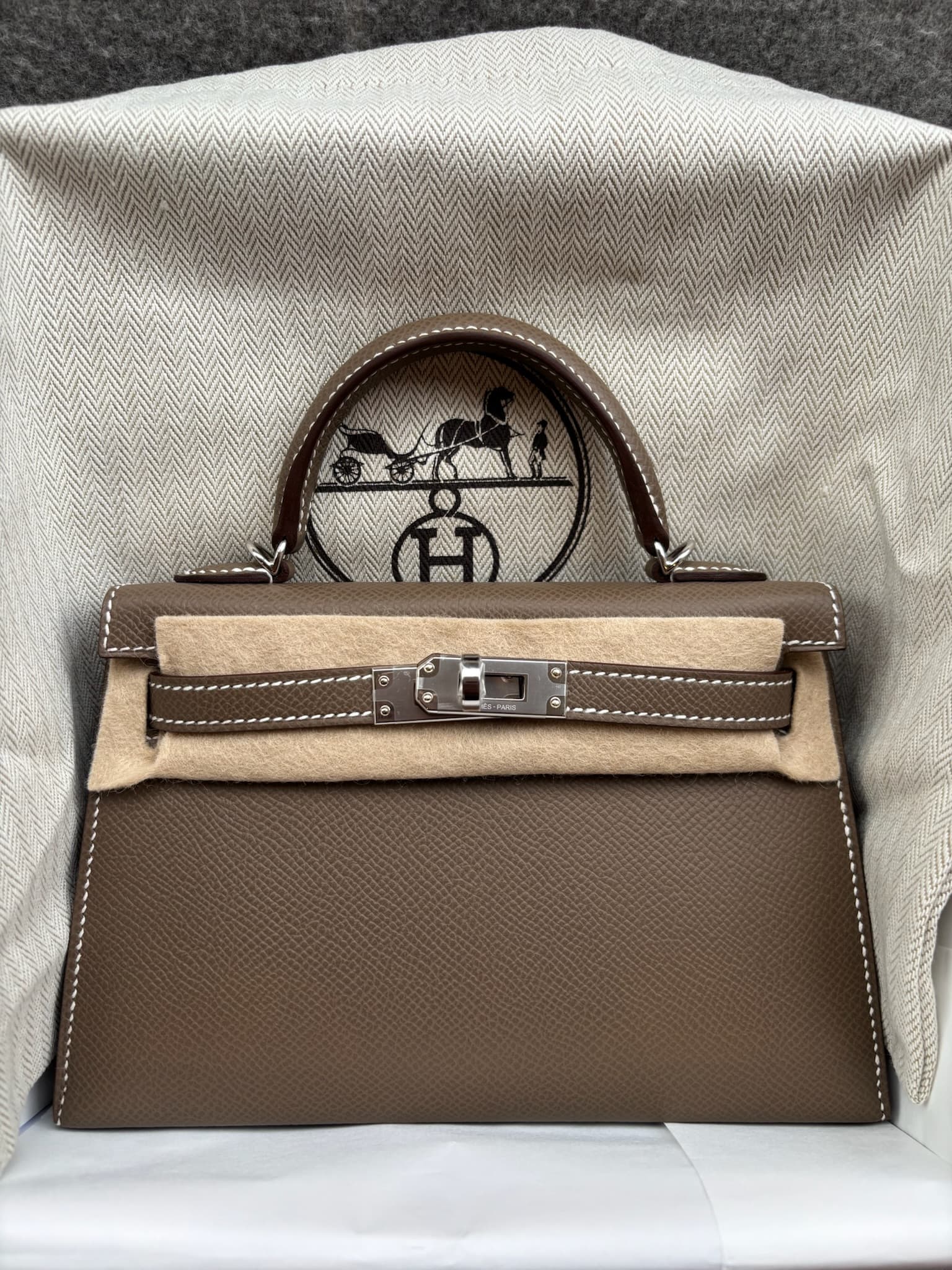
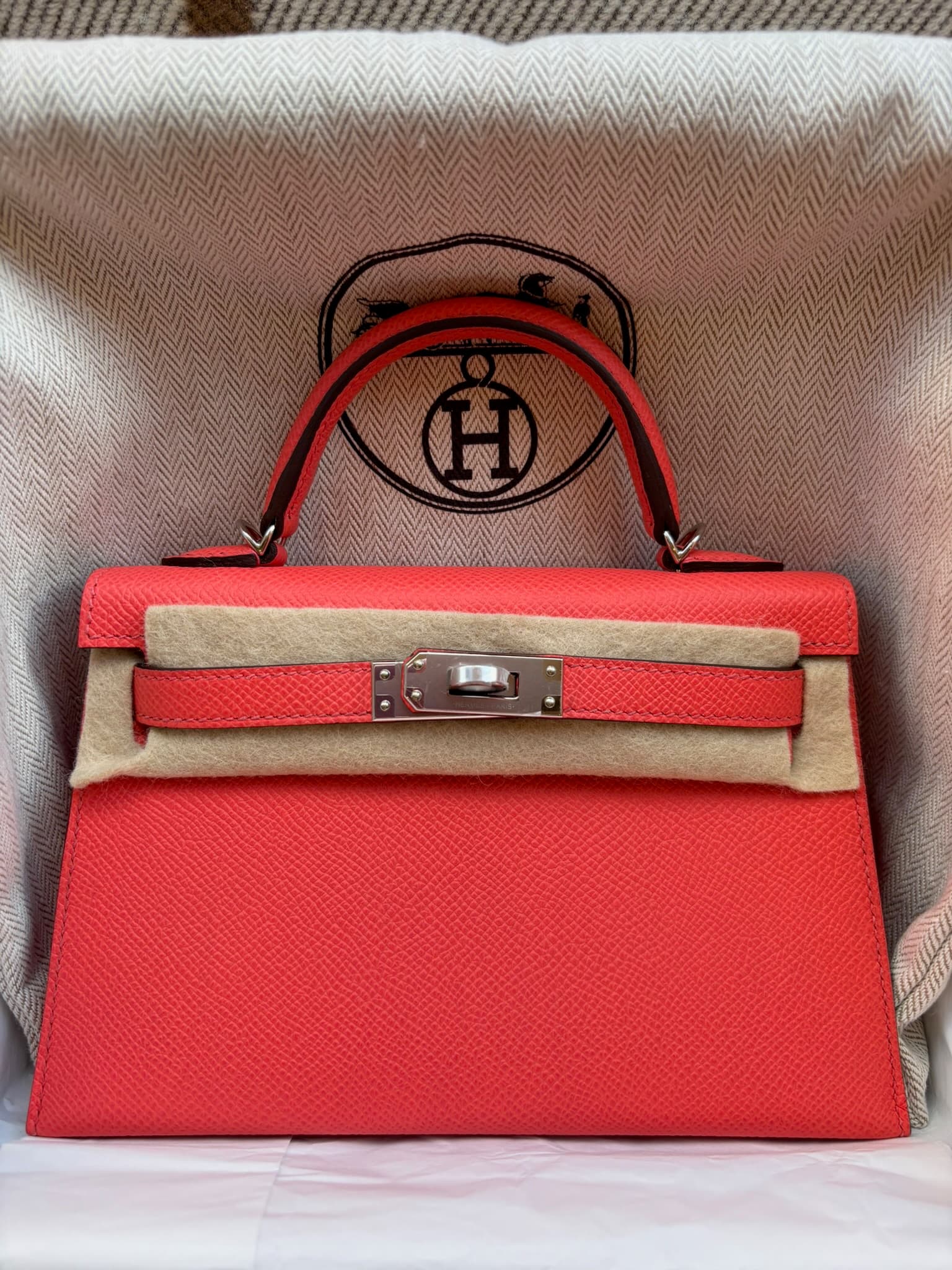
Kelly. Hermès's oldest enduring handbag, introduced in the 1930s as the Sac à Dépêches and renamed after Grace Kelly used it to shield her pregnancy from paparazzi in 1956. Single top handle, optional shoulder strap, trapezoidal body. Comes in two constructions (Sellier and Retourné). Sizes 15, 20, 25, 28, 32, 35. See our pre-owned Kelly guide.
Constance. Hermès's third pillar handbag, designed in 1969 by Catherine Chaillet and named after her daughter. Flat shoulder bag with a distinctive H-clasp. Sizes 18, 24, and Mini (14). See our Constance review.
Mini Kelly. Officially the Kelly 20 (and the discontinued Kelly 15). The smallest Kelly. Resale prices regularly run 200–300% of retail.
Picotin. Unstructured bucket-style tote, introduced in 2002. Named after the equestrian feed measure. Sizes 14 (Lock), 18, 22, 26. Daily-driver favourite.
Evelyne. Casual shoulder bag with perforated H on the front. Introduced in 1978 for équestrians to carry grooming tools. Sizes TPM, PM, GM, TGM. Now Hermès's most accessible "starter" silhouette.
Lindy. Slouchy hobo with double handles and a removable shoulder strap, introduced in 2007. Sizes 26, 30, 34. Popular as a casual everyday bag.
Garden Party. Open tote in canvas and leather (or all-leather). Practical, unfussy, hard-wearing. Sizes 30, 36, TPM.
Bolide. The original Hermès zip-top bag, introduced in 1923 — Hermès's first bag with a zipper. Bowling-bag silhouette. Sizes 27, 31, 35, 45.
Jypsière. Soft messenger-style bag designed by Jean Paul Gaultier for Hermès in 2008. Sizes 28, 31, 34, 37.
Roulis. Compact shoulder bag with a distinctive rolling H-clasp (a softer cousin of the Constance). Sizes 18, 23.
Halzan. Convertible bag (clutch / shoulder / crossbody) introduced in 2014. Sizes 22, 25, 31.
24/24. Modern silhouette introduced in 2019, combining elements of the Birkin and Plume. Sizes 21, 29, 35.
Plume. Elongated soft bowling-style bag, introduced in the 1930s as a horse-blanket carrier. Sizes 28, 32.
Toolbox. Structured small bag with a hard handle, introduced in 2010. Sizes 20, 26.
Berline. Soft shoulder bag introduced in 2014. Sizes 21, 28.
Sac à Dépêches. Historical name for the bag that became the Kelly.
HAC (Haut à Courroies). "Tall with straps." The original 1892 saddle-carrier that the Birkin was later miniaturised from. Sizes 32, 40, 50.
---
Leathers
Togo. The most popular Birkin and Kelly leather. Pebbled grain, scratch-resistant, holds structure but softens slightly with use. Calfskin.
Epsom. Fine embossed calfskin with a regular pattern. Lightweight, holds structure brilliantly, scratch-resistant. Standard for Sellier Kellys and increasingly popular for Birkins.
Clemence (Taurillon Clemence). Baby bull leather. Soft, matte, slightly heavier than Togo. Slouches with use — preferred for Lindy, Picotin, and slouchier silhouettes.
Box Calf. Smooth, glossy calfskin — the oldest Hermès leather. Develops a patina with use. Sensitive to water and scratches. Sellier Kellys in Box Calf are coveted classics.
Swift (formerly Gulliver). Smooth, soft calfskin with a slight grain. Takes colour deeply, scratches more easily than Togo. Common in Constance and small leather goods.
Chèvre Mysore (or Chèvre de Coromandel). Goat leather. Lightweight, durable, naturally shiny. Common in lining and small accessories. Bags in Chèvre exterior (e.g. Kelly Pochette) are highly sought.
Ostrich. Exotic leather with the distinctive quill follicle pattern. Lightweight, takes colour beautifully. Premium tier — typically 2–3× a comparable calf bag.
Alligator (Mississippiensis). Exotic leather sourced primarily from Louisiana farms. Square scales near the belly, smaller scales toward the spine. Top tier in Hermès exotics.
Crocodile (Niloticus / Porosus). Niloticus = Nile crocodile, smaller scales. Porosus = saltwater crocodile, prized for symmetrical scales and finer texture. Porosus is the most expensive Hermès exotic. Look for the small ⊞ (Niloticus) or ^ (Porosus) stamps.
Lizard (Niloticus Lizard / Salvator). Lizard skin with very fine scales. Used mainly for small Kellys (15, 20, 25) and accessories.
Barenia. Smooth equestrian leather developed for saddles in the 1890s. Untreated, develops deep patina with use. Buttery feel, scratches "heal" with rubbing.
Barenia Faubourg. Modern reformulation introduced 2018 — more scratch-resistant, retains the Barenia feel and patina behaviour.
Veau Madame. Smooth calfskin similar to Box, slightly more matte. Used historically for Kellys.
Tadelakt. Smooth, semi-matte calfskin. Mainly for small leather goods and the Constance.
Sombrero. Smooth, polished calfskin — heavier and more structured than Swift.
Negonda. Lightly grained calfskin used primarily on Gardens Party totes.
Fjord. Heavy grained calfskin (similar to Togo but slightly stiffer). Used in larger bags and luggage.
Courchevel. Discontinued fine-grained leather (1990s–early 2000s) — predecessor to Epsom.
Vache Liégée. Lightweight grained calfskin used on Kelly and Plume.
Vache Hunter. Heavy bridle leather used for Garden Party and Steve.
Toile. Canvas. Often combined with leather on Garden Party, Herbag, and certain Picotin/Bolide variants. Toile H = the herringbone canvas with HERMES woven in.
Hair-on hides. Pony or calf with the hair retained. Limited runs.
---
Constructions
Sellier. Outside-stitched construction. Edges are clean and squared, giving the bag a more structured, formal silhouette. Originated in saddlery. Standard for Kelly in Epsom or Box Calf.
Retourné. Inside-stitched construction. The bag is sewn inside-out and turned right way round, hiding the seams. Softer corners, more casual silhouette. Standard for Kelly in Togo and Clemence.
Souple. "Soft." A Kelly Souple is a softer, slouchier interpretation — sometimes the term is used interchangeably with Retourné.
Hardware-stamped construction codes. Inside many bags there is a discreet marking indicating production line — these are internal Hermès references and do not affect resale value.
---
Hardware
PHW. Palladium hardware. Bright silver tone, hypoallergenic (no nickel), highly durable. The most common Hermès hardware.
GHW. Gold hardware (gold-plated brass). Warm, classic luxe finish. Slightly more sought after on neutral leathers (Étoupe, Gold, Noir).
RGHW. Rose gold hardware. Limited production. Highly collectible — typically commands a 20–40% premium over PHW.
Brushed gold / brushed palladium. Matte finish rather than polished. Limited runs (notably on Birkin 25 So Black and certain Special Order pieces).
Permabrass. Discontinued antique-brass-style hardware. Limited Birkins and Kellys from the 2010s.
Ruthenium. Dark gunmetal-toned hardware. Limited production.
Pegasus stamp. Small Pegasus engraved on hardware = Horseshoe (HSS) Special Order. See HSS below.
---
Special Orders
HSS (Horseshoe Stamp / Special Order). A bespoke order placed by a top-tier Hermès client. Marked with a small horseshoe stamp inside the bag. Allows bi-colour combinations, contrast stitching, custom hardware. Resale premium typically 30–80%.
Sur Mesure. Fully custom orders that go beyond standard HSS options — bespoke shapes, materials, dimensions. Rare. Reserved for the highest-tier clients.
Quota bag. Hermès limits how many quota bags (Birkin, Kelly, Constance, certain HAC, Kelly Pochette, Mini Kelly) a client can purchase per year — typically two per calendar year. Designed to slow speculative buying.
Pre-fall / Fall / Spring / Cruise. Hermès seasonal collections that include limited bag colours and leather combinations.
---
Closures, parts, and accessories
Clochette. The small bell-shaped leather holder that hangs from the handle of a Birkin or Kelly and houses the lock keys.
Cadenas. The Hermès padlock. Stamped with the bag's hardware tone. Two keys per cadenas.
Sangle / Sanglon. The leather strap that wraps around the front of the Birkin/Kelly and feeds through the turn-lock plate.
Plaque. The metal plate on the front of a Birkin or Kelly that the turn-lock rotates against.
Tirette. The internal pull-tab on a Kelly that helps you open the bag.
Shoulder strap. Removable strap on Kelly, Constance, and most modern bags. Often replaceable in different colours/leathers.
Twilly. A small silk scarf (5×85 cm) often tied around bag handles for protection and decoration.
Petit Carré. Small 45 cm silk scarf.
Carré. The classic 90 cm silk scarf. Hand-rolled hems. Many are designed in editions of just a few thousand worldwide.
GM Carré. 140 cm silk-cashmere oversized scarf.
Maxi-Twilly. A wider twilly, intermediate between Twilly and Carré.
Rodeo charm. Small horse-shaped leather charm by Christian Louboutin's collaborator Henri d'Origny — wildly collectible. Sizes PM, MM, GM.
Buddy / Carmen / Camail. Other Hermès bag charms in cult-favourite shapes.
Picotin Lock. The locking variant of the Picotin 14 — with a small cadenas mechanism.
Dust bag. The cotton flannel storage bag, branded in Hermès orange and brown.
Boîte (orange box). The signature orange Hermès box — a status object in itself.
Blue Box. Collectors’ shorthand for the navy-lined version of the orange box that Hermès has reserved for its rarest releases since 2021 — runway pieces, limited editions and invitation-only bags. Dyed-through navy board, gold hot-stamping, navy-drawstring dust bag; the full read is in our Blue Box guide.
---
Year codes & blind stamps
Blind stamp. A small letter (or letter inside a shape) heat-stamped on the leather indicating the production year. Pre-2015: letter in a square (year-of-production); pre-1971: no letter.
Year code letters.
- A — 1997 - B — 1998 - C — 1999 - D — 2000 - E — 2001 - F — 2002 - G — 2003 - H — 2004 - I — 2005 - J — 2006 - K — 2007 - L — 2008 - M — 2009 - N — 2010 - O — 2011 - P — 2012 - Q — 2013 - R — 2014 - T — 2015 - X — 2016 - A (in square) — 2017 - C (in square) — 2018 - D (in square) — 2019 - Y — 2020 - Z — 2021 - U — 2022 - B (in square) — 2023 - W — 2024 - T — 2025 - G — 2026 (current production)
Square stamp. Pre-2014, indicated Special Order (HSS) or refurbishment. From 2015 onwards Hermès removed shapes entirely — modern year codes are clean letters with no surrounding box or circle.
Craftsman code. The 2–4 character letter/number combination next to the blind stamp identifying the individual artisan who made the bag.
See our blind stamps explained guide for visual reference.
---
Colours (most-asked)
Gold. Tan/caramel — Hermès's most enduring neutral. Combines with both PHW and GHW.
Étoupe. Grey-taupe. Discreet, ages beautifully. Among the most sought-after neutrals.
Noir. Black. Always available, always in demand.
Gris Étain. Slightly cooler grey than Étoupe.
Gris Asphalte. Discontinued darker grey — collector colour.
Étain. Cool mid-grey.
Étoupe vs Étain vs Gris Tourterelle. Three closely related grey-taupe families — the differences are subtle and best evaluated in daylight.
Rouge H. Hermès's signature deep oxblood — almost burgundy.
Rouge Casaque. Bright primary red — racing-silks reference.
Bleu Nuit. Navy. Quietly luxurious.
Bleu Indigo. Deep purple-blue.
Bleu Atoll. Vivid Mediterranean turquoise.
Bleu Saphir. Royal-blue jewel tone.
Vert Cypress. Deep forest green.
Vert Verone. Bottle green.
Rose Sakura. Pale ballet pink.
Rose Confetti. Brighter pink.
Craie. Chalk-white. Difficult to maintain but coveted on Birkin 25.
Mauve Pale. Soft pale lavender — limited.
Orange H. The signature Hermès orange.
Capucine. Brighter coral-orange.
Vert Bambou, Bleu Pâle, Jaune Citron, Rouge Vif, Rose Texas, Magnolia, Anémone… Hermès releases dozens of colours per year. Many are seasonal and discontinued within a year.
For colour resale rankings, see our resale colour index.
---
Buying & resale terminology
Profile / quota / portfolio. What Hermès SAs consider when offering a quota bag — purchase history across leather goods, ready-to-wear, scarves, homewares, jewellery, fragrance, watches.
Pre-spend. Informal term for the purchasing pattern a client builds to qualify for a quota bag. Hermès does not publish official ratios.
SA. Sales Associate. Your relationship with one SA is central to building a quota-bag profile.
Wishlist. The list of preferred bag combinations a client shares with their SA.
Waitlist. A historical concept — formal waitlists for Birkins and Kellys do not exist at most boutiques today. Bags are offered, not requested.
Walk-in / off-the-shelf. A quota bag offered to a non-regular client. Rare but does happen — particularly in smaller boutiques or during off-season periods.
Resellers. Independent secondary-market dealers (Madison Avenue Couture, Privé Porter, Sellier Knightsbridge, JULL London, and others) who source Hermès and resell at market prices; Hermès authorises none of them.
Grail bag. Collector slang for a long-sought combination.
Unicorn. A bag combining several rare specifications (e.g. HSS bi-colour with rare leather).
Beater. A daily-use bag in well-loved (not pristine) condition. Often heavily discounted vs store fresh.
Store fresh. Pristine, never carried — typically 12 months or younger.
Used twice. Sellers' common condition descriptor — interpret with caution.
RRP. Recommended Retail Price (UK term). The Hermès boutique price.
Spa / Hermès spa service. Hermès's in-house restoration service. Returns bags to like-new condition over 6–12 months. Modest cost relative to a new bag.
Authentication. The process of confirming a bag is genuine Hermès. Done by trained specialists looking at stitching tension, leather grain, hardware weight, stamping, edge paint, lining, and over 60 other markers.
Authenticator services. Third-party services that issue certificates. Authentication ultimately depends on the human eye — JULL hand-inspects every piece in-house.
---
Stitching, edges and craftsmanship
Saddle stitch. The two-needle hand stitching technique Hermès uses on Birkin, Kelly, and most flagship pieces. Each stitch is fully locked; if one breaks the rest do not unravel.
Edge paint. The lacquered finish on the cut edges of leather. Hermès uses many coats, hand-applied, and the colour is matched to (or contrasted with) the leather.
Resine. The harder edge finish used on certain leathers (notably Epsom).
Hand-stitched. A bag built entirely by one craftsman over 18–25 hours of saddle stitching.
Machine-stitched. Some Hermès silhouettes (Garden Party, Evelyne, Picotin) are partially machine-stitched. Quality is not lower — different construction philosophy.
---
Scarves & accessories quick reference
Maillon. A chain motif used on scarf prints (notably the Chaîne d'Ancre).
Brides de Gala. Hermès's iconic 1957 scarf design — bridle-and-bit. Re-released yearly in new colours.
Roulis chain bracelet, Médor stud, Collier de Chien (CDC), Clic Clac, Clic H. Iconic Hermès jewellery and leather-with-hardware references.
Oran sandals. The iconic flat H-cutout slide.
Chypre sandals. Sportier H-detail slide.
Bottega. (Not Hermès — but commonly confused in lay conversation. Don't.)
---
Care & condition
Patina. Natural development of colour, sheen, and softness on a leather bag over time. Particularly prized on Box Calf and Barenia.
Slouch. The natural softening of bag shape with use — desirable on Clemence, Togo, Barenia; undesirable on structured Sellier Kelly.
Corner wear. Friction-induced wear on the four bottom corners. The most common condition issue.
Handle darkening. Patina/darkening on top handles from hand oils.
Hardware rub. Plating wear on heavily used hardware.
Lining wear. Wear on internal goat lining.
See our Hermès bag care guide for maintenance.
---
Hermès — the maison
Maison Hermès. Founded 1837 by Thierry Hermès as a Parisian harness workshop. Sixth-generation family-led, currently chaired by Axel Dumas.
24 Faubourg. The Hermès flagship address at 24 Rue du Faubourg Saint-Honoré, Paris.
Métiers. The 14 craft "métiers" (workshops) — leather, ready-to-wear, silks, perfumes, watches, jewellery, tableware, etc.
Petit h. A workshop using Hermès offcuts to create one-off objects.
Faubourg, La Madison, Bond Street, Sloane Street. London Hermès boutiques.
Cheval d'Hermès / Pegasus / Calèche. Hermès logos and motifs across product lines.
---
A–Z quick index
A — Alligator, Authentication B — Birkin, Barenia, Blind stamp, Bolide, Box Calf C — Cadenas, Clemence, Clochette, Constance, Craie, Carré, Chèvre D — Dust bag E — Epsom, Étoupe, Evelyne F — Fjord, Faubourg G — GHW, Gold, Garden Party H — HAC, HSS, Halzan I — (see Index) J — Jypsière K — Kelly, Kelly Pochette L — Lindy, Lizard M — Mini Kelly, Maison N — Noir, Negonda O — Ostrich, Oran, Orange H P — PHW, Picotin, Plume, Patina Q — Quota R — Retourné, Rouge H, RGHW, Rodeo S — Sellier, Sangle, Spa, Swift, Sur Mesure T — Togo, Twilly, Tadelakt, Toile U — Used twice V — Veau Madame, Vert Cypress W — Waitlist X — (no entries — but see year code X = 2016) Y — Year codes Z — Zip-top (see Bolide)
---
Missing a term?
This glossary is a living document. If a Hermès term you need is not defined here, email hello@byjull.com and we will add it within 48 hours.
For pricing references, see our Hermès bag prices 2026. For buying routes in London, see our complete Hermès buying guide London 2026. For authentication walk-throughs, see how to authenticate a Hermès bag.
---
JULL is a London pre-owned Hermès specialist. We hand-inspect every piece. Private viewings by appointment.