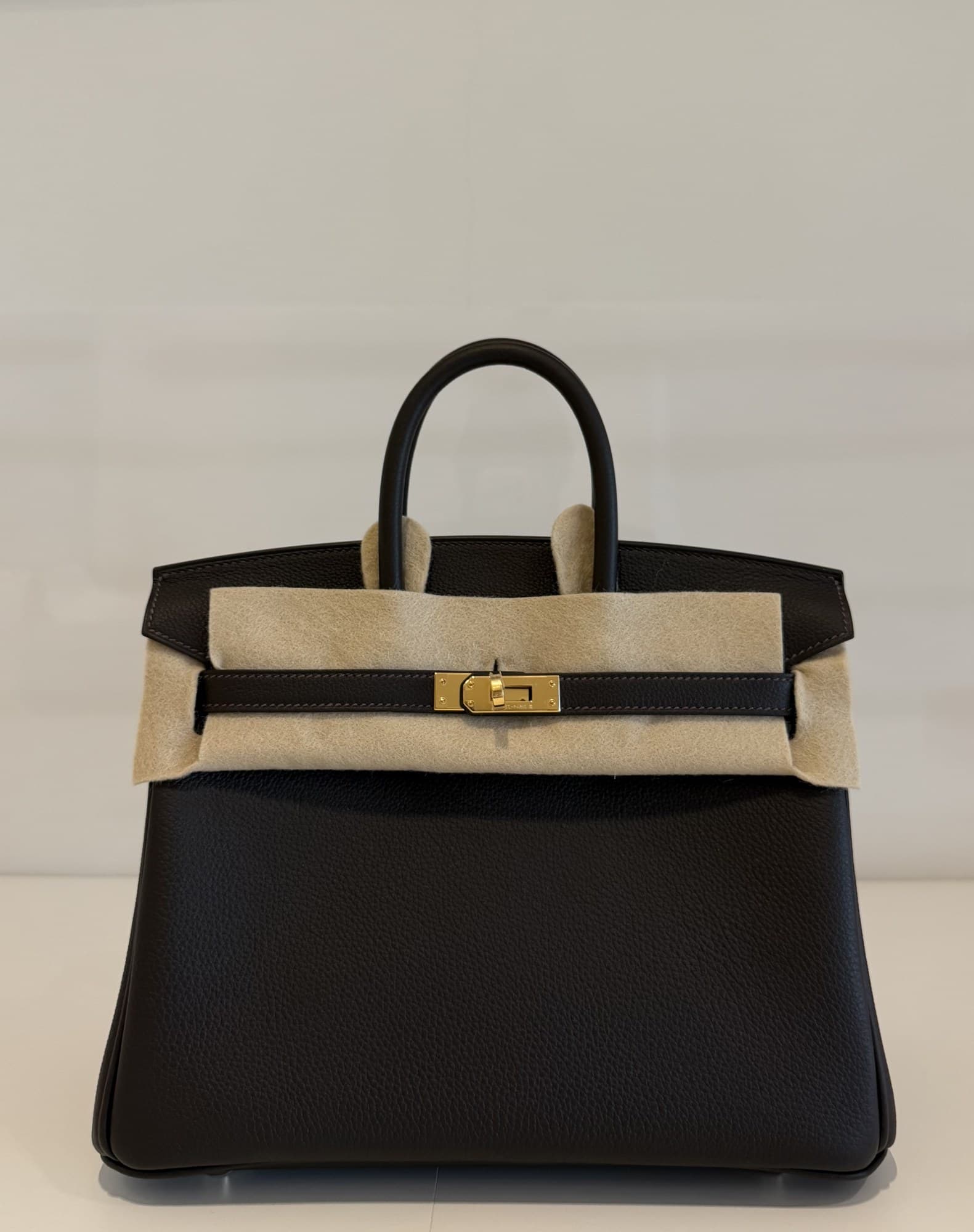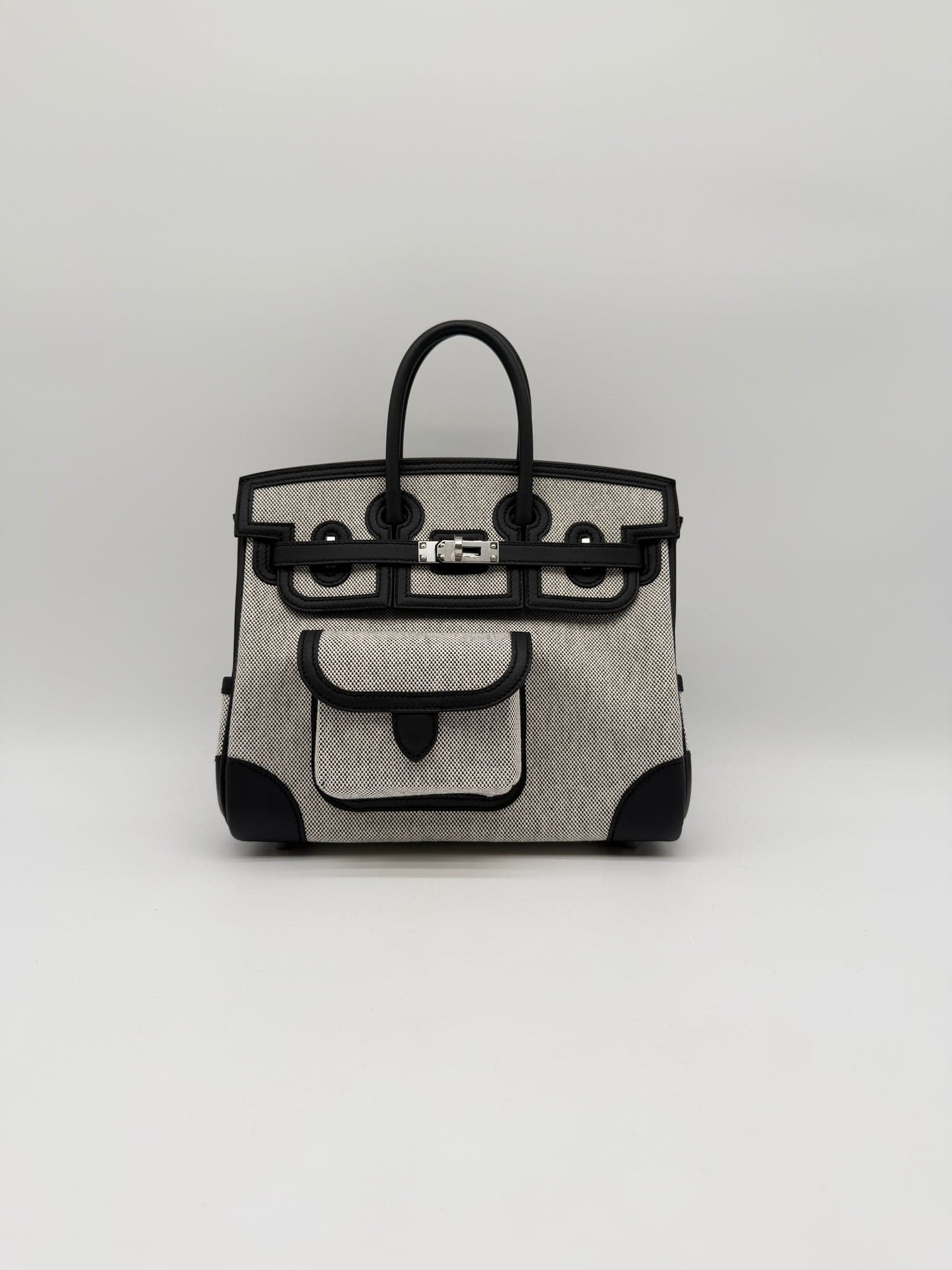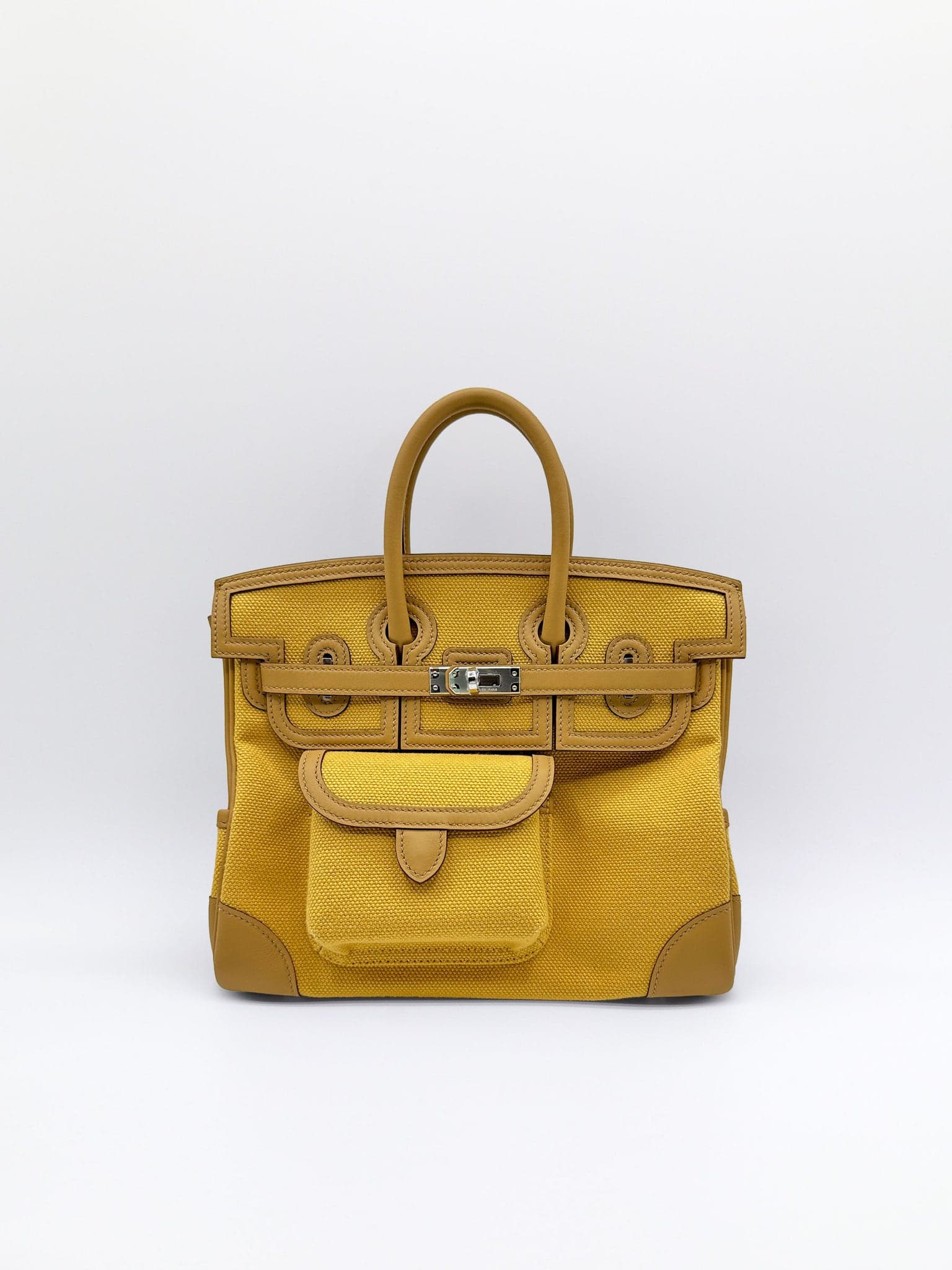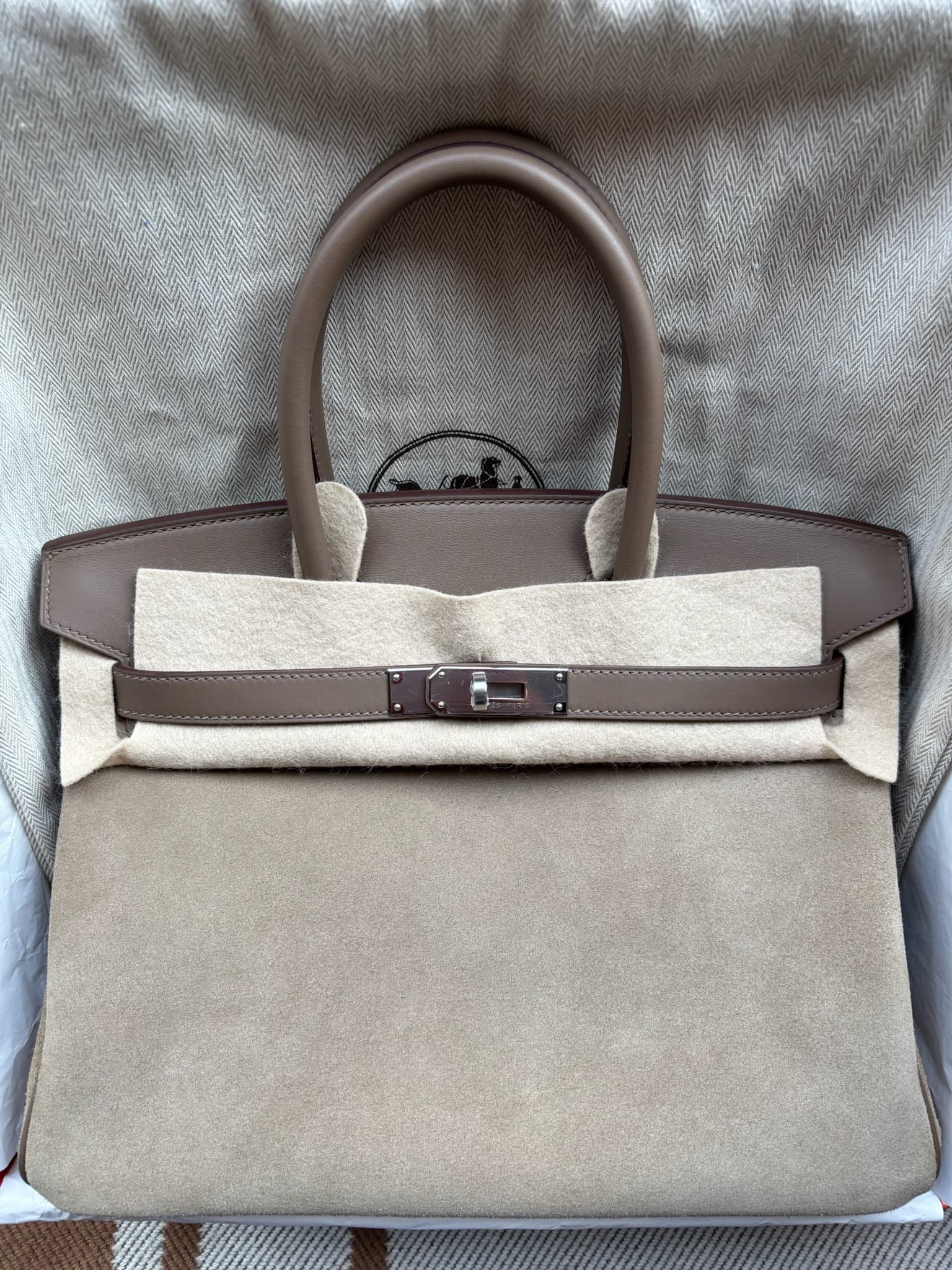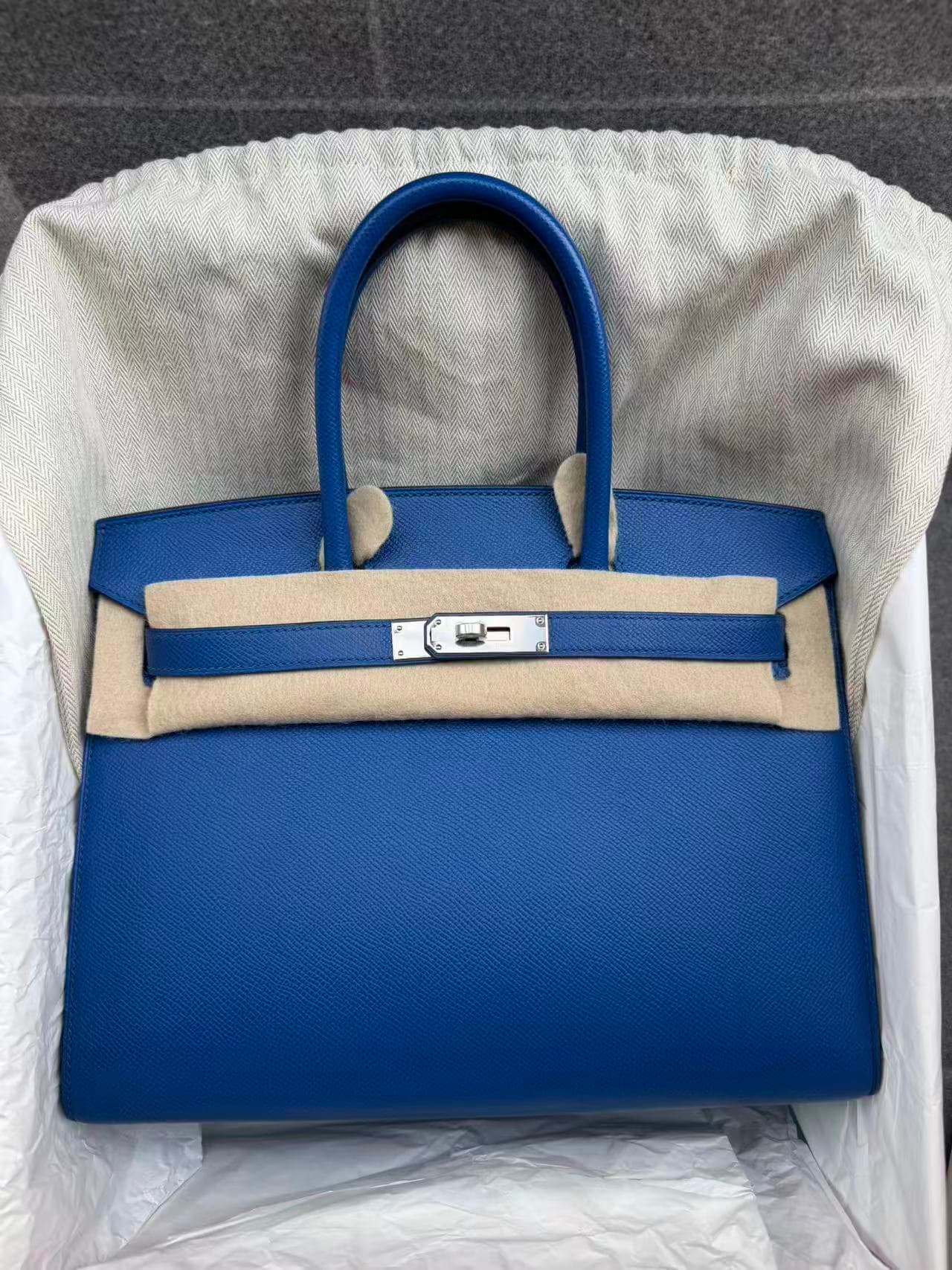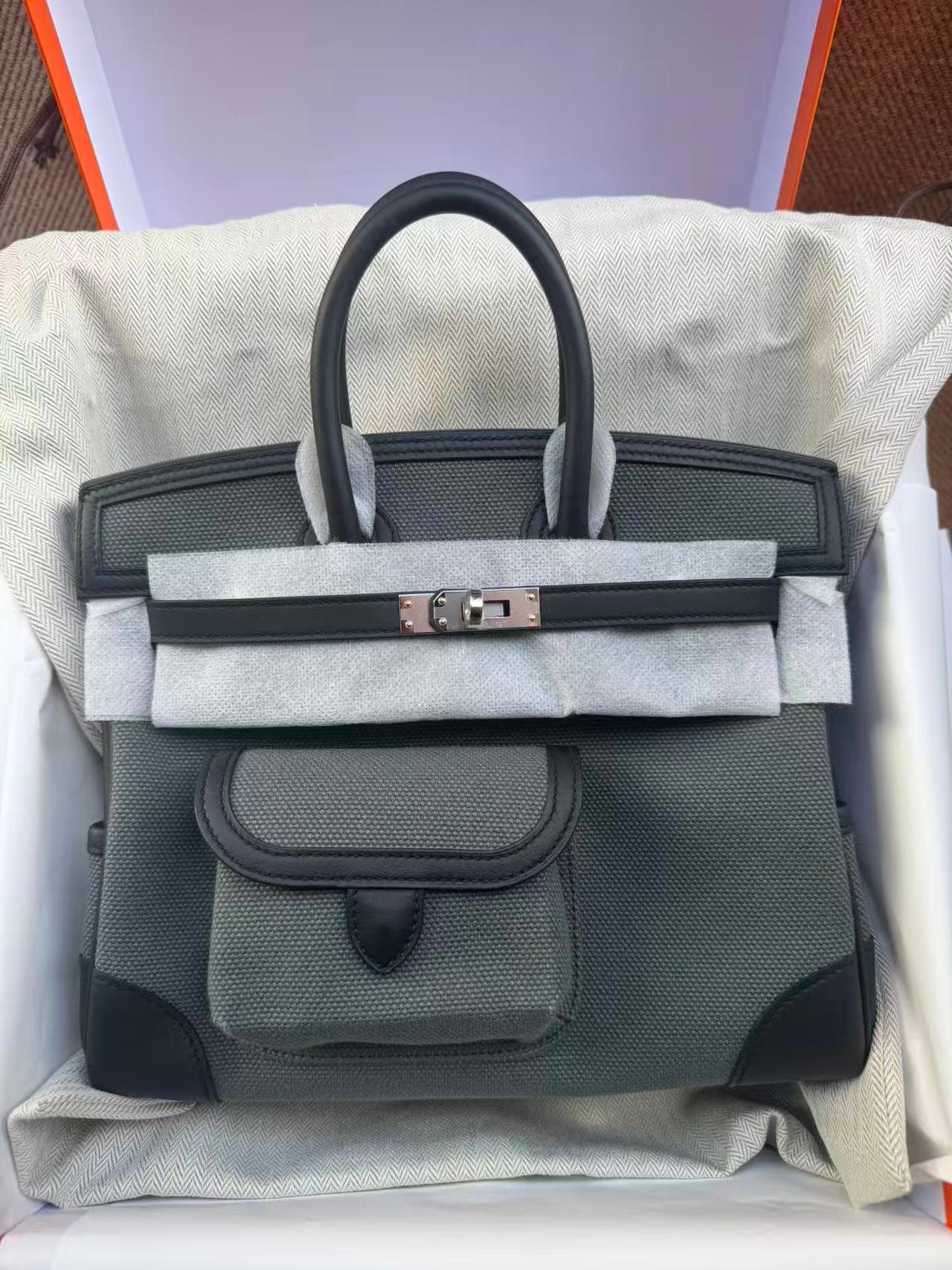
Somewhere in Singapore there is a wardrobe — reportedly climate-controlled, camera-monitored and larger than most London flats — containing more than two hundred Birkins. Somewhere in Los Angeles, a room Kris Jenner had built specifically to display hers. Somewhere in Manchester, until recently, a Norwegian striker's spare bedroom quietly accumulated HACs the way other footballers accumulate trainers.
The celebrity Birkin collection is its own genre of wealth — more legible than art, more portable than property, more photographed than either. And in the year since a single Birkin sold for $10.1 million, these collections have stopped being tabloid trivia and become something closer to publicly visible investment portfolios. So let us take the tour properly: who actually owns what, what the reported numbers say, and — more interesting to us as specialists — what each collection teaches about how to collect.
A note on sourcing: no celebrity publishes an audited bag inventory. The figures below are as reported by press and the collectors themselves over the years — treat them as well-informed folklore, which is half the fun.
Jamie Chua: The Everest (200+ Birkins)
The Singaporean socialite and entrepreneur is arguably the summit of the genre — reportedly over two hundred Birkins and Kellys, widely described as the world's largest private Hermès collection, housed in a fingerprint-locked wardrobe that has itself become a social-media destination. What the collection teaches: range. Chua collects across the whole spectrum — exotics, Himalayas, hard-to-find colours, multiple sizes — which is precisely what gives a collection resilience. Individual bags rise and fall in fashion; a collection with range rises as a portfolio. Her crocodiles alone — see our exotics guide — would constitute a formidable holding by themselves.
Victoria Beckham: The Classic (100+ Birkins, reportedly $2m+)
The collection by which all others are measured, begun in the 2000s when Mrs Beckham was photographed with a different Birkin seemingly weekly. The reported count exceeds one hundred, with a valuation north of $2 million that is almost certainly conservative at 2026 prices — early-2000s bags bought at four figures now trade at five, and her rarities (the fuchsia crocodile, the ostriches) at six. What the collection teaches: timing compounds. Beckham bought heavily in the era when Birkins were merely expensive rather than allocated, which is to say she acquired at prices and in quantities impossible to replicate today. The lesson for 2026 buyers is not "you're too late" — it's that the bags bought sensibly now are the ones that look prescient in fifteen years. Our investment analysis makes the ten-year case with numbers.
Kris Jenner: The Room (20+ Birkins, ~$550k)
Reportedly around twenty bags — modest by this list's standards — but displayed in a purpose-built room that turned a closet into a gallery, and a collection into content. Several of her children have since built collections of their own (Kim Kardashian's includes Himalaya-grade pieces; Kylie's wall of bags had its own viral moment), making the Jenner-Kardashian axis probably the most photographed Hermès holding on earth. What it teaches: display is care. Bags shown beautifully are bags kept beautifully — light-controlled, shaped, spaced. The worst thing that happens to most collections isn't theft; it's the slow damage of bad storage. Our care guide is the unglamorous version of Kris's room.
Cardi B: The Maximalist (dozens, heavy on custom and colour)
Cardi B's collection — showcased across her social channels in walk-in-wardrobe tours — runs to dozens of Birkins, skewing loud: saturated colours, exotics, customised pieces, the occasional matching mother-daughter set. What it teaches: personality holds value too. The market's safest bets are the neutrals — our resale colour index proves it annually — but distinctive, joyful, instantly-attributable bags develop their own collectibility, especially as provenance pieces. A bag famous for being someone's is worth more than the same bag anonymous; the $10.1 million prototype was, after all, simply the ultimate provenance bag.
Jeffree Star: The Pink Wall (reported 50+, exotics-heavy)
The beauty entrepreneur's collection — famously wall-mounted, famously pink-saturated, including multiple Himalayas and rare exotics — is among the most valuable per-bag holdings in the genre. What it teaches: thematic collecting works. A collection with a thesis (one colour family, one leather, one silhouette) becomes more than its parts — it becomes a single, coherent, almost curatorial object, and the market prices coherence.
Erling Haaland: The New School (7+ Hermès, $300k+, HAC-led)
And then the newest entry, and the reason this list needed updating at all. Haaland's collection — at least seven Hermès pieces led by the HAC 50 "Endless Road" and the Caban Togo Multipockets HAC 50, as catalogued in our World Cup 2026 report — is small next to Chua's two hundred. But it did something none of the larger collections managed: it moved an entire market segment in a single summer, dragging men's Hermès demand into the mainstream and the HAC silhouette from connoisseur's footnote to the most-searched bag in football. What it teaches: taste beats volume. Seven interesting bags outran two hundred famous ones in cultural impact. Collect the pieces that say something.
Kim Kardashian: The Provenance Play (Himalaya-grade)
Kim Kardashian's collection deserves its own entry less for size than for composition: it includes Himalaya-grade pieces — the Niloticus crocodile grail we anatomised in our Himalayan Birkin guide — alongside bags with their own celebrity backstories, including pieces famously gifted within the family and a vintage bag hand-painted by her daughter that became a viral object in its own right. What the collection teaches: the top of the pyramid is its own market. Himalayas and museum-grade exotics barely correlate with the ordinary Birkin market at all — they trade against art-money liquidity, auction seasons and each other. When the record sale reset the ceiling, it was this stratum that repriced overnight.
Jane Birkin: The Collection of One
It feels wrong to write this list without its origin. Jane Birkin owned few bags by this company's standards — she was famously hard on them, stickering, overstuffing and genuinely using the objects that bear her name — and yet her "collection" is the most valuable per bag in history: the 1985 prototype at $10.1 million, Le Birkin Voyageur at $2.9 million, and the remaining pieces of her personal quartet now implicitly seven-figure objects wherever they rest. What it teaches is the purest lesson on this page: use is not the enemy of value — anonymity is. A bag worn hard by someone who mattered outruns a bag kept pristine by no one in particular. Documentation, photographs, story: keep them all.
The Scorecard: Six Collections at a Glance
| Collector | Reported scale | Signature strength | The lesson |
|---|---|---|---|
| Jamie Chua | 200+ bags | Breadth — exotics to classics | Range makes a portfolio |
| Victoria Beckham | 100+, $2m+ | Early accumulation, rare exotics | Timing compounds |
| Kris Jenner | ~20, ~$550k | Display and preservation | Storage is strategy |
| Cardi B | Dozens | Colour, custom, personality | Character adds provenance |
| Jeffree Star | 50+, exotics-heavy | Thematic coherence | Curation beats accumulation |
| Erling Haaland | 7+, $300k+ | Taste-led rarities, HAC-first | Impact needs no volume |
The Men's Wing: A Collection Category That Barely Existed
Five years ago a list like this would have been entirely female, with Pharrell Williams as its lone footnote — the purple alligator HAC he carried through New York in 2007 having made him, for years, the men's collection of record all by himself. The 2026 edition requires a wing. David Beckham has carried Hermès with unforced fluency for two decades. Travis Scott and Gunna folded Birkins into hip-hop's daily wardrobe; Travis Kelce carries them through NFL tunnels; Timothée Chalamet's Kelly moments made the "man Birkin" a red-carpet category. And then the footballers arrived en masse — Haaland's HACs leading a summer in which David Alaba, Ollie Watkins, Rayan Cherki and half the France squad turned World Cup arrivals into an Hermès runway. What the wing teaches collectors is structural: when a market gains an entire new demographic, the bags that demographic favours — large HACs, Birkin 40s, Maxi Kellys, briefcase silhouettes — reprice first and fastest. The smart money watched the tunnel walks and bought large sizes; the very smart money had already read the pattern in 2007. The pieces themselves are gathered in the For Men edit.
The Collections You Will Never See
One caveat belongs on any list like this: the largest Hermès holdings on earth are almost certainly not on it. The great published collections are, by definition, the ones their owners chose to publish. Dealers and auction specialists trade quiet stories of holdings in Geneva vaults, Hong Kong apartments and Gulf family compounds that would dwarf everything above — assembled over decades, documented meticulously, and never photographed for anyone. These invisible collections matter to the visible market: they are where a meaningful share of the world's Himalayas, special orders and discontinued rarities actually live, and their occasional, anonymous disposals are how such bags surface at auction with provenance listed only as "property of a private collector." When you see that phrase above a spectacular lot, you are glimpsing the iceberg below this article. Discretion, it turns out, is its own collecting philosophy — and the one closest to how most of our own clients operate.
How Great Collections End: The Coming Wave of Single-Owner Sales
Nobody likes the thought, but every collection on this list will eventually change hands — and the market is preparing for it. The auction world's romance with the single-owner sale (the format that made the Jane Birkin prototype a $10.1 million object rather than an $800,000 one) is built on a simple observation: provenance premium applies to the whole collection, not just its stars. When a documented, named, photographed collection comes to market as an event — catalogued, exhibited, publicised — even its ordinary bags outperform identical anonymous examples by meaningful margins. This is why we advise collecting clients, from five bags to fifty, to think archivally from day one: keep receipts, keep boxes, photograph the bags in use, document the story of each acquisition. It costs nothing today and compounds into real money at the moment of sale — whether that moment is an estate event at Sotheby's or a quiet consignment through our showroom. A collection with a paper trail is an asset; a wardrobe of anonymous bags, however magnificent, is merely inventory.
What the Collections Have in Common
Strip away the square footage and a pattern emerges across every serious collection on this list. They hold the icons (Birkin, Kelly) as the core. They reach for scarcity at the edges — exotics, Himalayas, special orders, discontinued colours. They keep bags in exceptional condition, because collectors at this level understand that condition is where value lives. And they never sell in a hurry — which, in a bifurcating market that increasingly rewards rarity and story, has been exactly the right instinct.
None of this requires two hundred bags. A private collector with five well-chosen pieces — a classic-spec Birkin, a Kelly in a strong colour, one exotic, one special order, one piece of pure personal joy — holds a portfolio structurally identical to the great collections, at one-fortieth the scale. That, candidly, is the collection we most enjoy helping clients build: our roadmap for starting a collection sketches the path, and the current gallery shows what could be its beginning this week.
Frequently Asked Questions
Who has the biggest Birkin collection in the world? Singaporean socialite Jamie Chua is widely reported to hold the largest private collection — over two hundred Birkins and Kellys. Victoria Beckham's hundred-plus collection is the most famous in Europe.
How many Birkins does Victoria Beckham have? Reportedly more than one hundred, accumulated largely through the 2000s, with a valuation commonly cited above $2 million — likely conservative at current prices given the exotics among them.
What is the most expensive celebrity-connected Birkin? The original 1985 Birkin prototype made for Jane Birkin herself, sold at Sotheby's in July 2025 for $10.1 million — the most expensive handbag in history. Among living collectors, Himalaya Birkins with diamond hardware, held by several names on this list, trade in the hundreds of thousands.
Do celebrities get Birkins without waiting? Fame helps but does not exempt anyone from allocation — boutiques answer to the same scarcity as everyone else, and plenty of famous names buy on the secondary market for exactly the reasons everyone else does: spec and speed. The allocation system bends for purchase history far more reliably than for celebrity.
Are celebrity-owned bags worth more at resale? Documented provenance — proof a bag belonged to someone notable — can add a meaningful premium, occasionally a spectacular one. Undocumented claims add nothing. Paperwork, photographs and chain of ownership are what turn a story into value.
---
JULL is a specialist Hermès personal shopping service in Chelsea Harbour, London. We help clients build collections with intention — sourcing new, unworn and pre-owned Birkin, Kelly and rare Hermès pieces through a private network, every bag authenticated and available to view at our Chelsea Harbour showroom. Browse available bags or get in touch to begin.