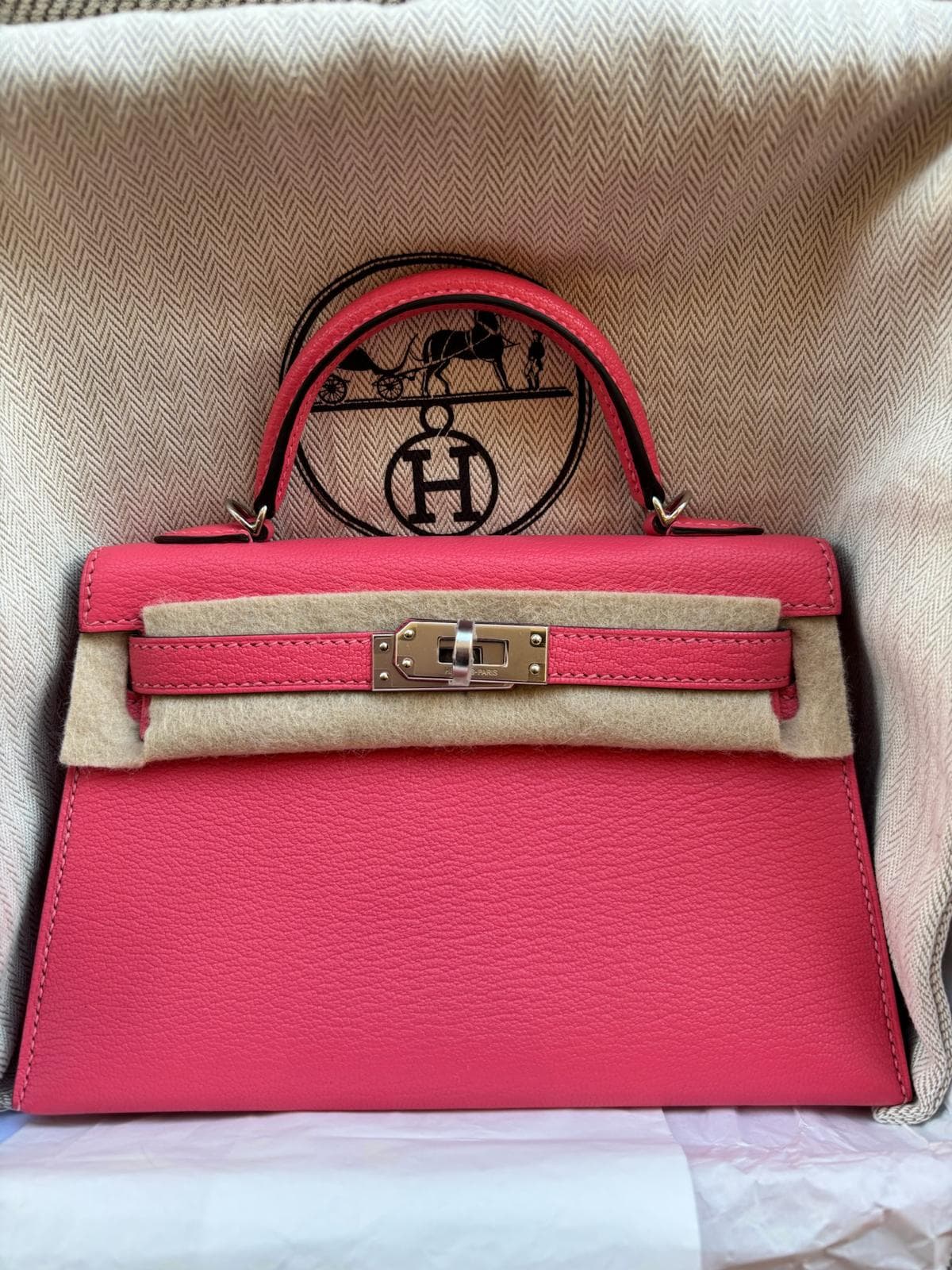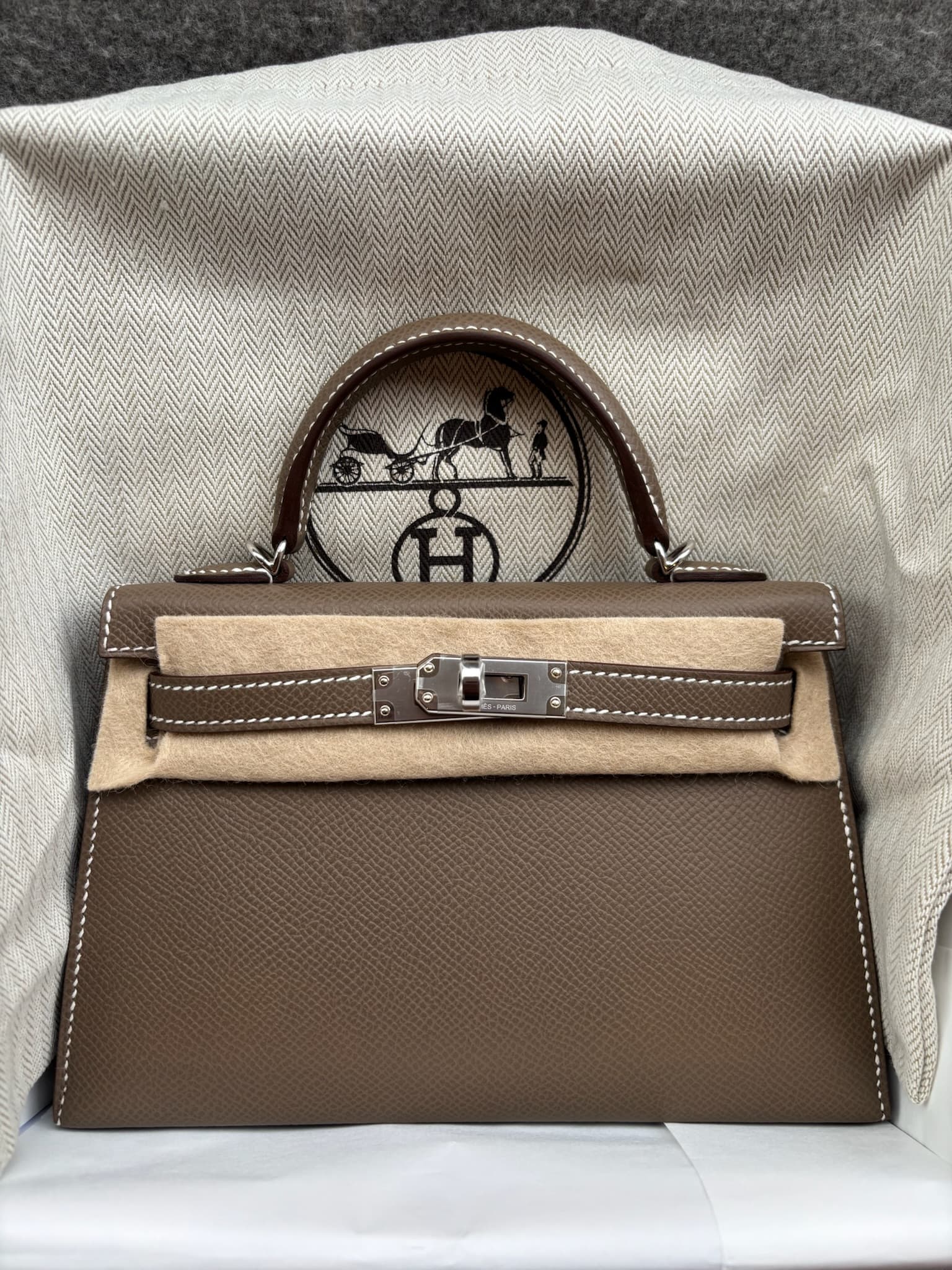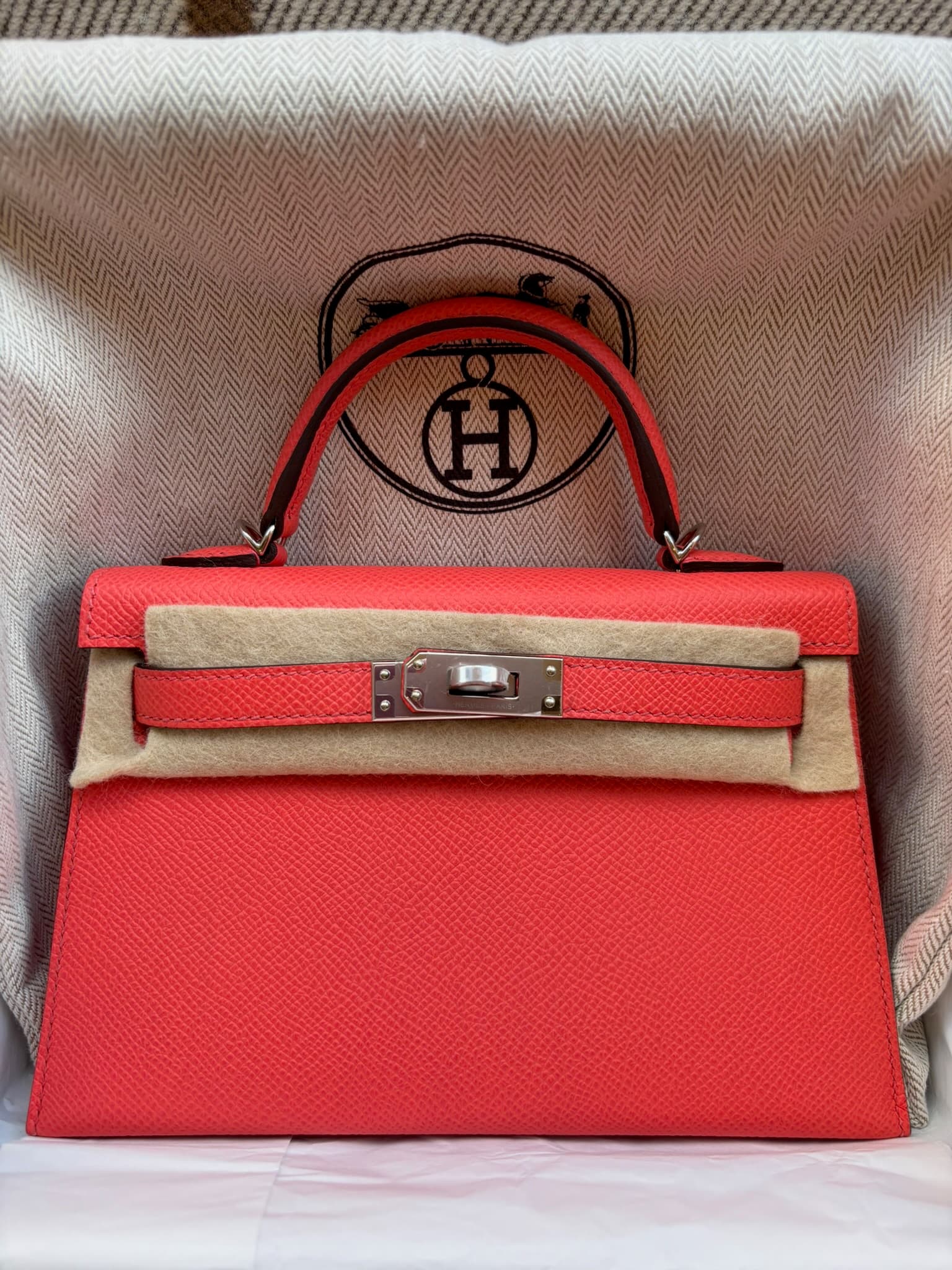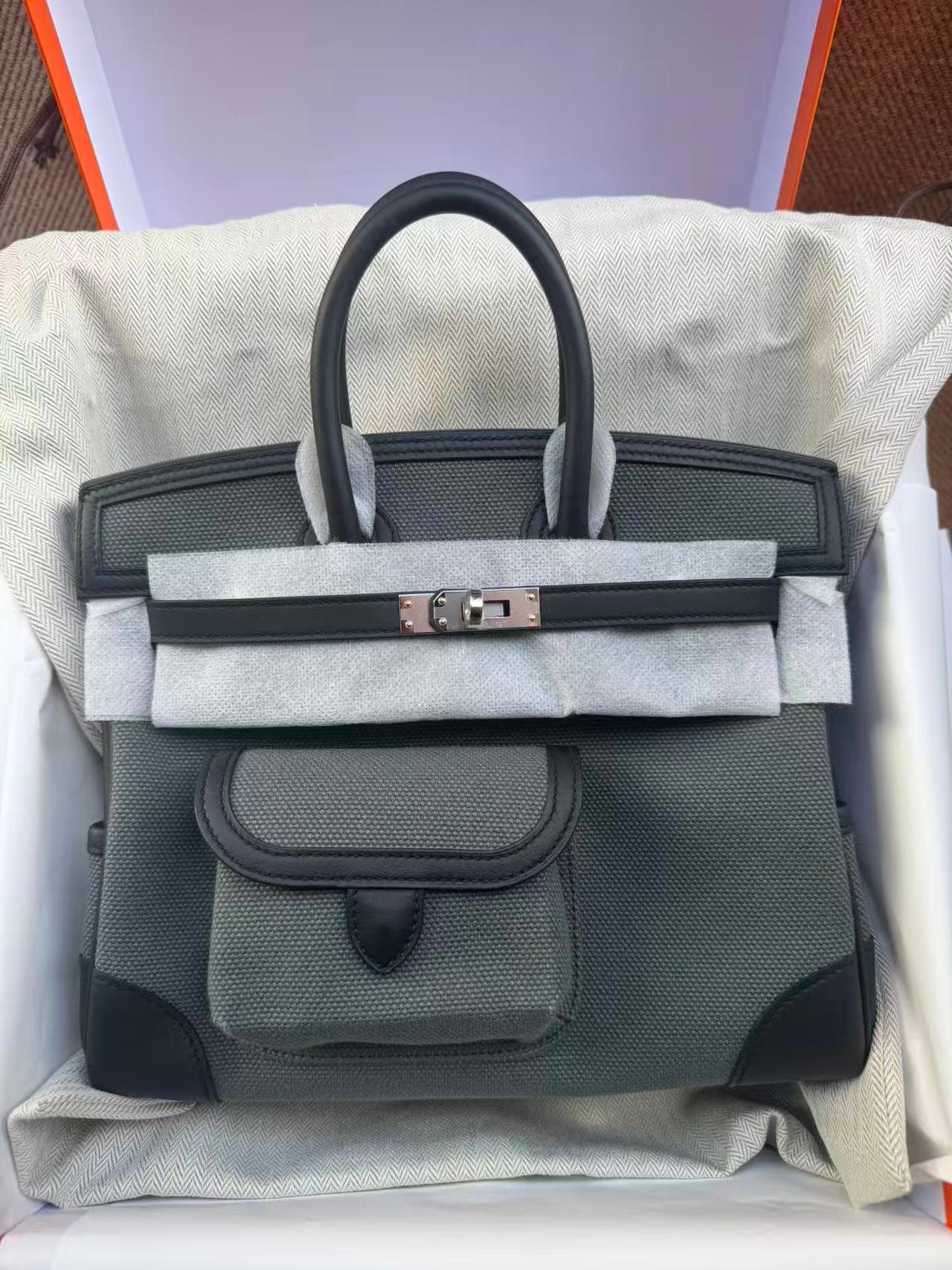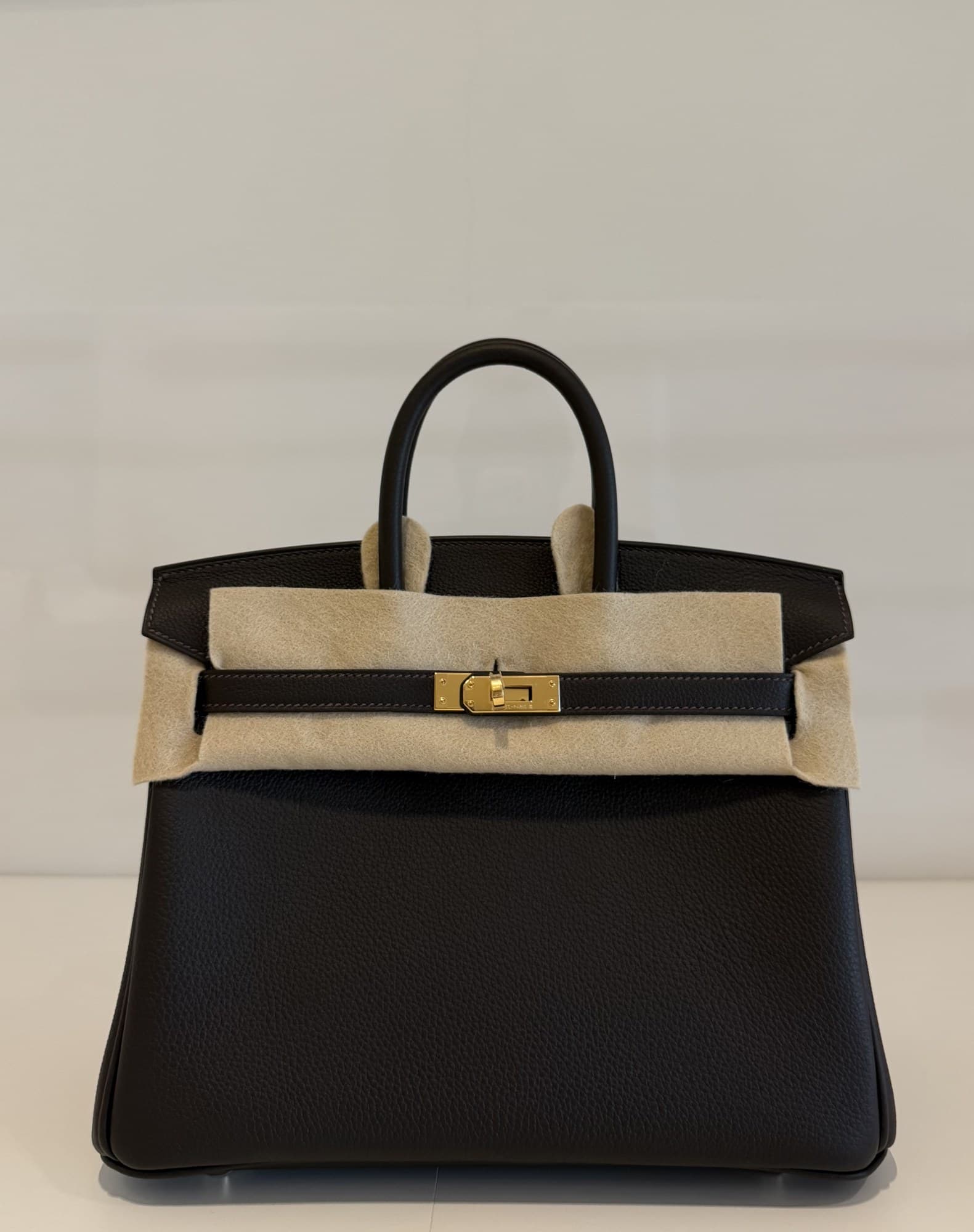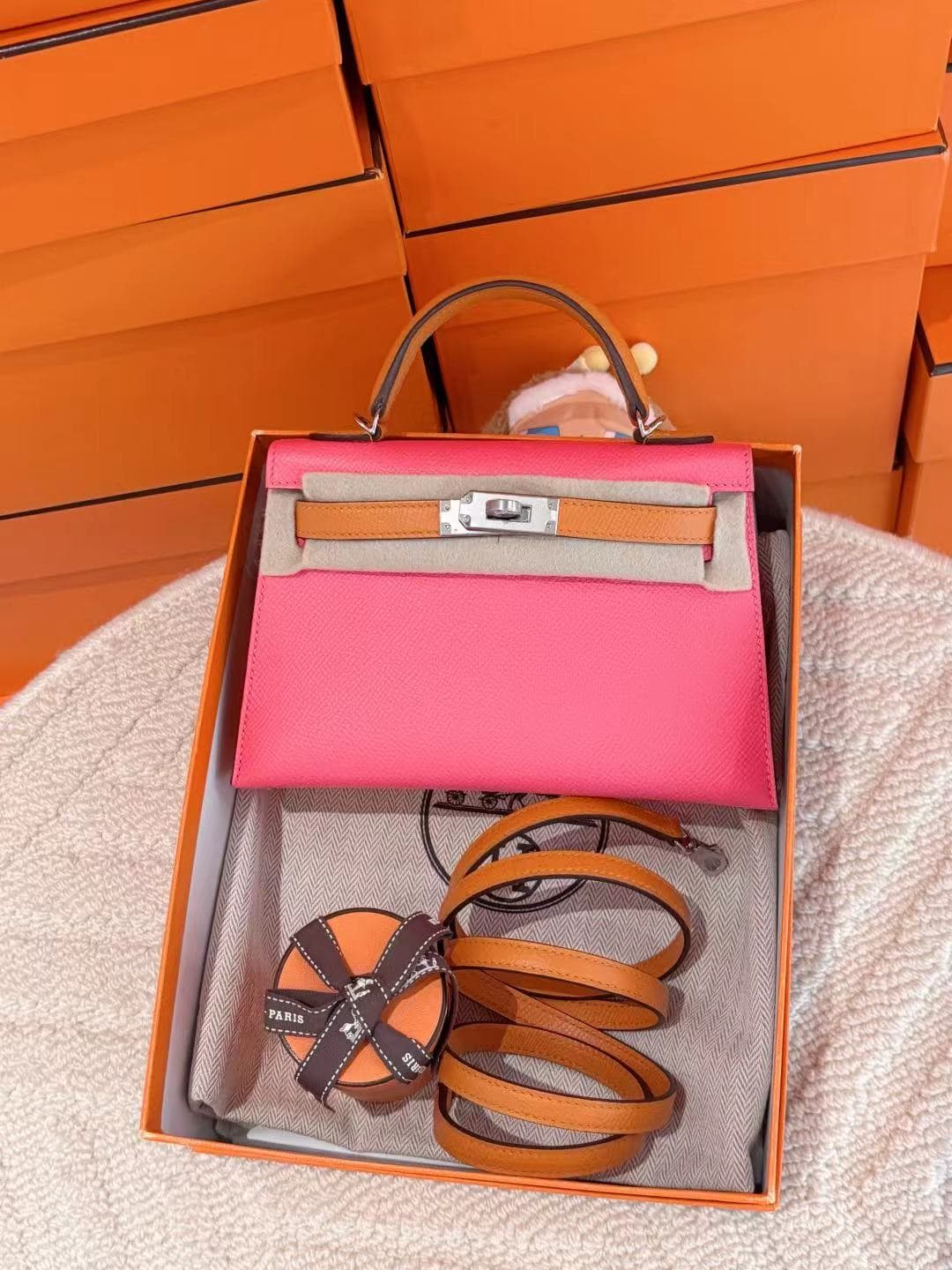
Look closely at the front of certain Birkins and Kellys — just beside the "Hermès Paris Made in France" heat stamp — and you will occasionally find a small, discreet horseshoe. Most people never notice it. Collectors, on the other hand, will cross a saleroom for it. That little mark means the bag in front of you was never part of any seasonal collection, never sat in any allocation, and was never available to any client except one: the person who designed it.
The horseshoe is the mark of the Horse Shoe Stamp special order — HSS in collector shorthand, commande spéciale in the house's own language — Hermès's invitation-only programme through which its best clients compose their own bag. It is the closest the modern luxury industry comes to bespoke, and on the secondary market it has become one of the most reliable premium signals a bag can carry. This guide explains how the programme actually works, what can and cannot be ordered, why HSS bags outperform at resale, and how to buy one without waiting the years it takes to be invited.
What Exactly Is an HSS Special Order?
Once or twice a year, Hermès opens special-order windows in which selected clients — chosen by their boutique, by the same opaque logic that governs quota bag allocation — are invited to compose a bag from an approved menu: silhouette, size, leathers, colours, hardware, stitching. The signature move of the programme is the bi-colour bag: one colour for the body, another for the interior or for contrast details, combinations Hermès would never put into regular production. A black Epsom Kelly with a screaming Rose Shocking interior; a Gris Tourterelle Birkin with Vert Cyprès sides; contrast stitching that quietly breaks the house's own rules.
The menu is real and its limits are strict — this is composition, not carte blanche. Silhouettes are restricted (Birkin and Kelly dominate; a handful of other models appear in some windows), leathers and colour palettes rotate per season, and exotics are periodically included for the uppermost tier of clients. Hardware choices — including the brushed finishes rarely seen in regular production — are among the programme's most coveted levers.
Then you wait. Special orders are made in the same Norman and Parisian workshops as everything else, by a single artisan, and the queue is long: twelve months is fast, two years is normal, three is not unheard of. The wait is part of the mythology — and, candidly, part of the resale value. Nobody flips a bag they waited three years to design. When an HSS bag does reach the market, it is usually because a collection is being refined, not because a flipper got lucky.
How to Read the Stamp
The horseshoe itself is small, stamped beside or near the main heat stamp, and — like everything Hermès — has generated its own authentication folklore. Points worth knowing. The mark denotes special order, not superiority of materials: the leather in an HSS bag is the same leather as regular production. Placement and crispness matter to authenticators; a sloppy horseshoe is a red flag. The stamp interacts with the blind stamp system — year letter, workshop marks — exactly as on any bag, and an HSS bag whose blind stamp year is inconsistent with its claimed order window deserves hard questions. And because the premium attached to the mark is well known, the horseshoe is now actively counterfeited, including — a particularly modern crime — added to genuine bags to inflate them. Verification of an HSS bag is therefore verification of the whole story: bag, stamp, spec plausibility and paperwork together. Our authentication guide covers the fundamentals, and our blind stamp guide explains what the stamp region should look like.
Why HSS Bags Command a Premium
On the secondary market, special orders reliably trade 20–40% above the equivalent regular-production bag, and exceptional combinations go far beyond. Four forces drive it.
True one-of-one scarcity. A regular Birkin spec may be produced in the hundreds. A specific HSS combination may exist once. In a market that has spent the past year re-pricing rarity, one-of-one is the strongest word there is.
Embedded access. An HSS bag is proof its first owner stood at the very top of the client pyramid — the programme is invitation-only, and invitations follow years of history. The bag carries that provenance implicitly, the way a racehorse carries its bloodline.
Design you cannot buy. Bi-colour combinations, contrast stitching and brushed hardware exist almost nowhere else in the Hermès universe. For collectors who already own the classics, HSS is where novelty lives — which is why demand for special orders is deepest precisely among the market's most serious money.
The story tells itself. Every HSS bag is an anecdote made object: someone chose those colours, for reasons, and waited years. In the provenance era, bags with narratives outperform bags without them — a pattern running straight through the great collections, where special orders are invariably the pieces their owners discuss most.
One honest caveat: the premium follows taste. A well-judged bi-colour in coherent tones is a blue-chip asset; a chaotic combination that seemed witty at the podium is merely rare, and rare-but-unlovely trades at a discount to beautiful-and-common. The market forgives boldness faster than it forgives noise — worth remembering both when buying HSS and, should you ever be invited, when designing one.
The Stamp Family: Horseshoe, Shooting Star and Friends
The horseshoe is the most famous of Hermès's "extra" marks, but it belongs to a small family worth knowing, because the family is where authentication cases are won and lost.
The horseshoe (HSS): special order by an invited client, as this guide describes. The shooting star (étoile filante): the rarest of all — historically stamped on bags an artisan made for their own personal use, one of the house's most poetic traditions; shooting-star bags reach the market perhaps a handful of times a year globally and command extraordinary premiums, with the caveat that their scarcity makes them the most faked mark per capita in the Hermès universe. The "S" stamp: the opposite end of the spectrum — marking employee-sale pieces with minor imperfections, sold at discount to staff; honourable bags, but priced accordingly, and occasionally "polished out" by unscrupulous sellers, which is why stamp-region inspection matters even on ordinary-looking bags. Brand-partner and commemorative marks appear sporadically on collaboration pieces and anniversaries.
The practical rule across the family: a special mark multiplies the importance of everything else being right. On a plain production bag, a small anomaly is a question; on a bag whose value rests on a tiny stamp, it is the whole case. This is precisely where blind-stamp literacy pays for itself.
If You Are Ever Invited: Designing an Order That Ages Well
A minority of readers will one day face the champagne problem of the special-order menu. Having watched many orders return from Paris — some triumphant, some quietly regretted — the principles that separate them are consistent.
Design for your tenth year with the bag, not your first week; combinations chosen for immediate drama age worst, while quiet two-tones (a neutral body with an interior in your true favourite colour) age best of all — the joy is private, the resale universal. Respect the colour wheel: Hermès's own palette does the work if you let it — pairings from the same tonal family almost always outlive high-contrast statements. Spend your boldness on the interior and stitching, not the panels: a Gold bag with Bleu Saphir stitching whispers; colour-blocked panels shout, and shouting dates. Choose brushed hardware if offered — it is the single most reliably prized HSS-only element. And order the size you already reach for: a special order in a size you don't carry becomes the world's most expensive shelf ornament. None of this is law — the market occasionally falls in love with a beautiful lunatic of a bag — but as portfolio advice it has never let a client of ours down.
Buying an HSS Bag in 2026: The Practical Route
You cannot request your way into the programme — the invitation finds you, usually years into a serious boutique relationship. But the bags themselves surface steadily on the secondary market, and buying one well requires exactly three disciplines.
Verify the whole story, not just the stamp. Spec, blind stamp year, order-window plausibility, paperwork. A genuine horseshoe on an implausible bag is still an implausible bag.
Price the combination, not the category. The 20–40% premium is an average, not an entitlement; judge each bag's colour story on its own merits, ideally in person and in daylight — undertones that clash in photographs sometimes sing in reality, and vice versa.
Buy from someone who handles them regularly. Special orders are a small, connoisseur's corner of the market where experience compounds. At JULL, HSS pieces pass through our Chelsea Harbour stock room with some regularity — sourced from the collector network where they originate — and we brief clients candidly on which combinations the market will love in ten years and which it will merely tolerate. The current selection, special orders included when available, is in our Birkin and Kelly galleries, and if a specific HSS concept haunts you, tell us — the network is precisely how such bags are found.
What HSS Bags Actually Trade For: The Three Bands
Because "20–40% premium" is an average hiding a wide spread, here is how the market actually tiers special orders in 2026, in our experience of handling them.
Band one — the tasteful classics (premium ~15–30%). Quiet bi-colours in neutral families, contrast interiors, brushed hardware on black or étoupe bodies. These trade briskly: buyers get rarity without risk, and the pool of admirers is the whole market. A standard-spec Birkin 25 trading around £12,000–£13,500 pre-owned becomes £15,000–£17,000 with a well-judged horseshoe.
Band two — the statements (premium 30–60%, taste-dependent). Bold exterior combinations, tri-colour builds, unusual stitching plays. Magnificent when they work; this is the band where the gap between "rare" and "desirable" gets priced bag by bag, and where in-person viewing matters most. The same combination can clear 50% over production or sit unsold at 20% — the market votes on the specific colour story, not the stamp.
Band three — the unicorns (price decoupled entirely). Exotic-leather special orders, combinations referencing famous archive bags, HSS pieces from celebrated collections. These trade like the provenance pieces they are — against each other and against collector liquidity, not against any retail reference. Auction is often the honest venue at this level.
The bands also explain the market's one persistent HSS pricing error: sellers who believe the horseshoe alone earns band-three money for a band-two bag. The stamp opens the door; the combination closes the sale.
The Order Window Diary: How It Actually Happens
For the curious — and the invited — the process from the client's chair. The invitation arrives softly, usually verbally, from your SA when a window opens: "Would you like to do something special this season?" An appointment follows, often in a private salon, where the season's menu is revealed: the eligible silhouettes and sizes, leather swatch panels, the colour palette available for that window (it rotates — the combination you dreamed of may simply not be orderable this season), thread cards for stitching, hardware samples. Your SA guides; good ones steer clients gently away from combinations they've watched age badly. Choices are recorded, the order is submitted to Paris — where, a detail that surprises everyone, Hermès can decline it: combinations the house judges incoherent are refused, politely and without appeal. Confirmation may take weeks. Then silence — a year, often two — until the call that your bag has arrived, at which point you pay current retail for the configuration (special orders carry a modest surcharge over the equivalent production bag, not a bespoke multiple). The bag appears with its horseshoe, your combination, and — for most clients — the strongest emotional attachment of any Hermès they own. Which is, of course, exactly why so few HSS bags ever reach the secondary market, and why the ones that do are priced the way they are.
Frequently Asked Questions
What does the horseshoe stamp on an Hermès bag mean? It marks a commande spéciale — an HSS special order: a bag personally configured (colours, leathers, hardware, stitching) by an invited client, produced once, outside Hermès's regular collections.
How do you get invited to make an Hermès special order? By invitation from your boutique, extended to established clients with deep purchase history — typically years of relationship. There is no application. The programme sits above quota allocation in the client hierarchy.
Are HSS bags worth more? Generally yes: 20–40% above the equivalent production bag at resale, with exceptional combinations commanding more. The premium reflects one-of-one scarcity, embedded provenance and design elements unavailable at retail — moderated always by the taste of the specific combination.
How long does an Hermès special order take? Commonly one to two years from order to delivery; three is not exceptional. Each bag is made by a single artisan alongside regular production.
Can a horseshoe stamp be faked? Yes — and worse, genuine bags are sometimes retro-stamped to fake special-order status. Authentication must assess the entire bag: stamp quality and placement, blind-stamp consistency, spec plausibility and provenance paperwork together. Buy from specialists who handle HSS pieces routinely.
---
JULL is a specialist Hermès personal shopping service in Chelsea Harbour, London. We source new, unworn and pre-owned Birkin, Kelly and rare Hermès pieces — special orders included — through a private network of collectors and boutique clients. Every bag is authenticated and available to view at our Chelsea Harbour showroom. Browse available bags or get in touch.