Hermès Ostrich Bags · London
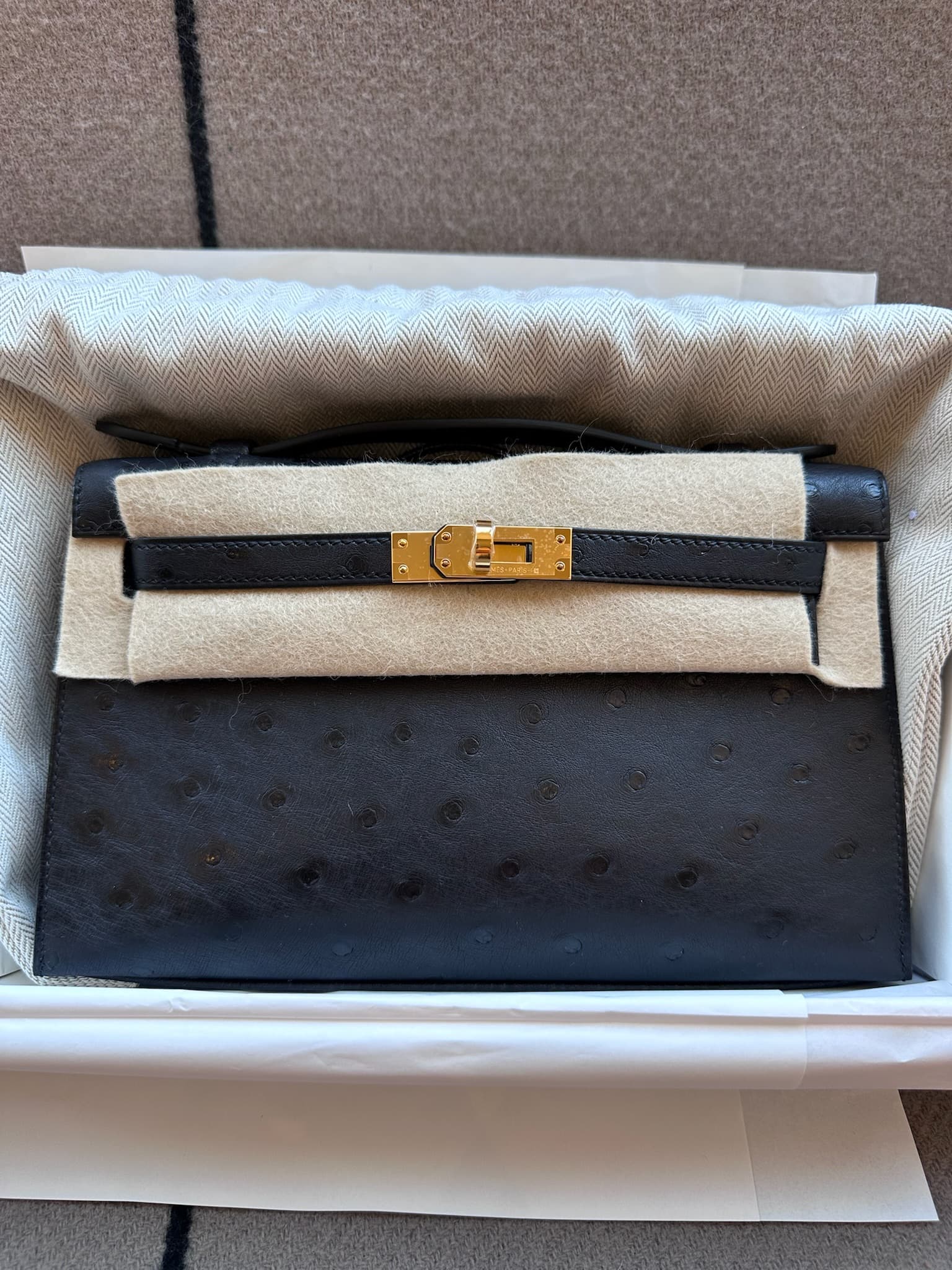
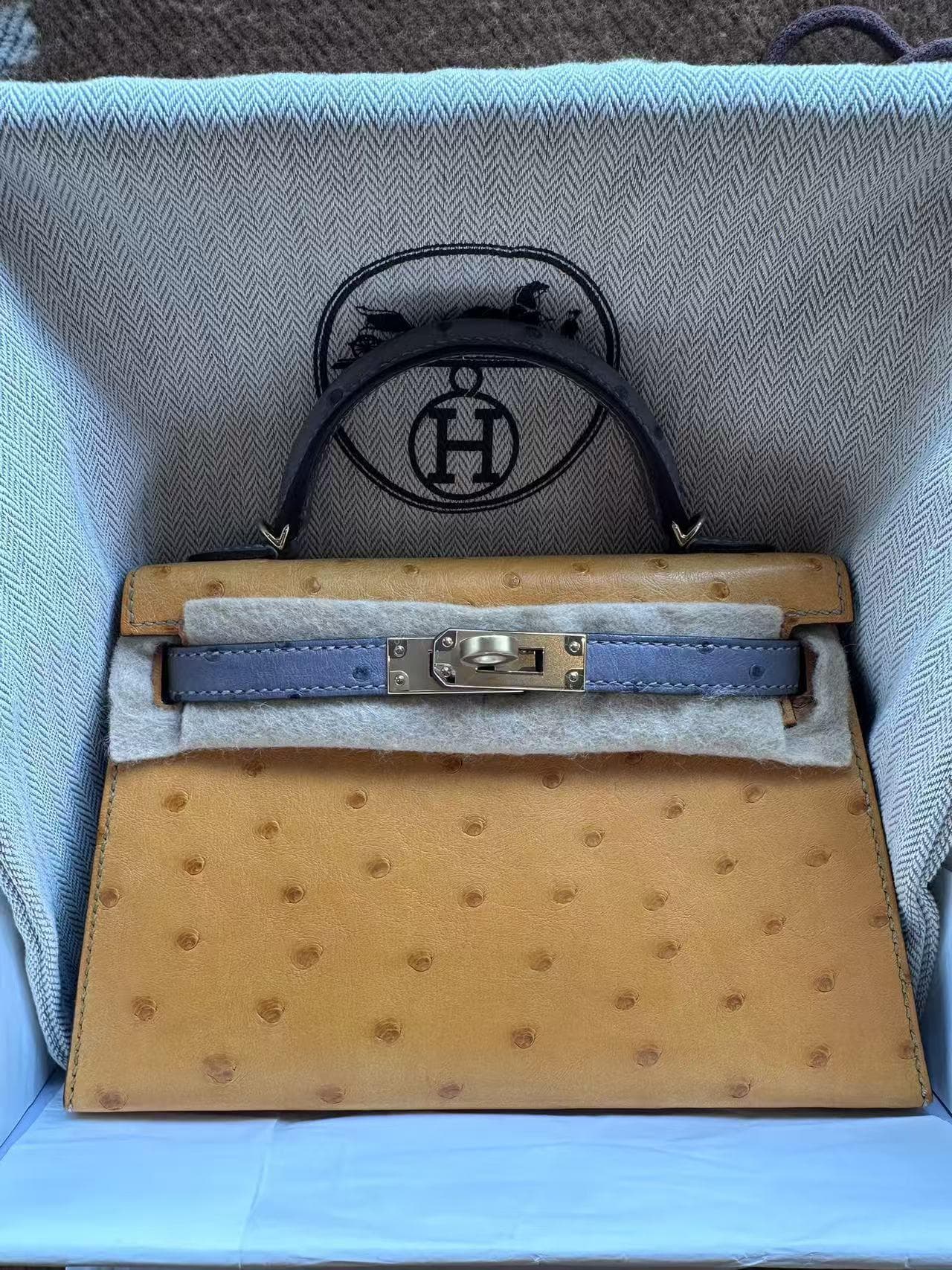
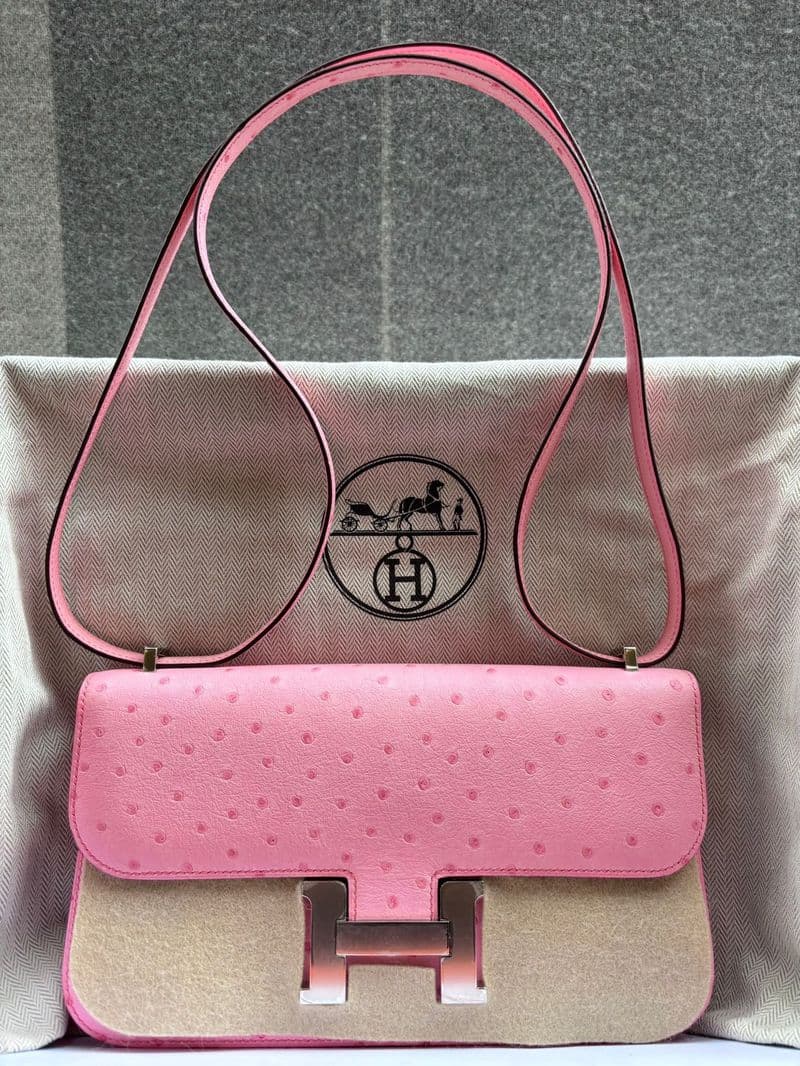
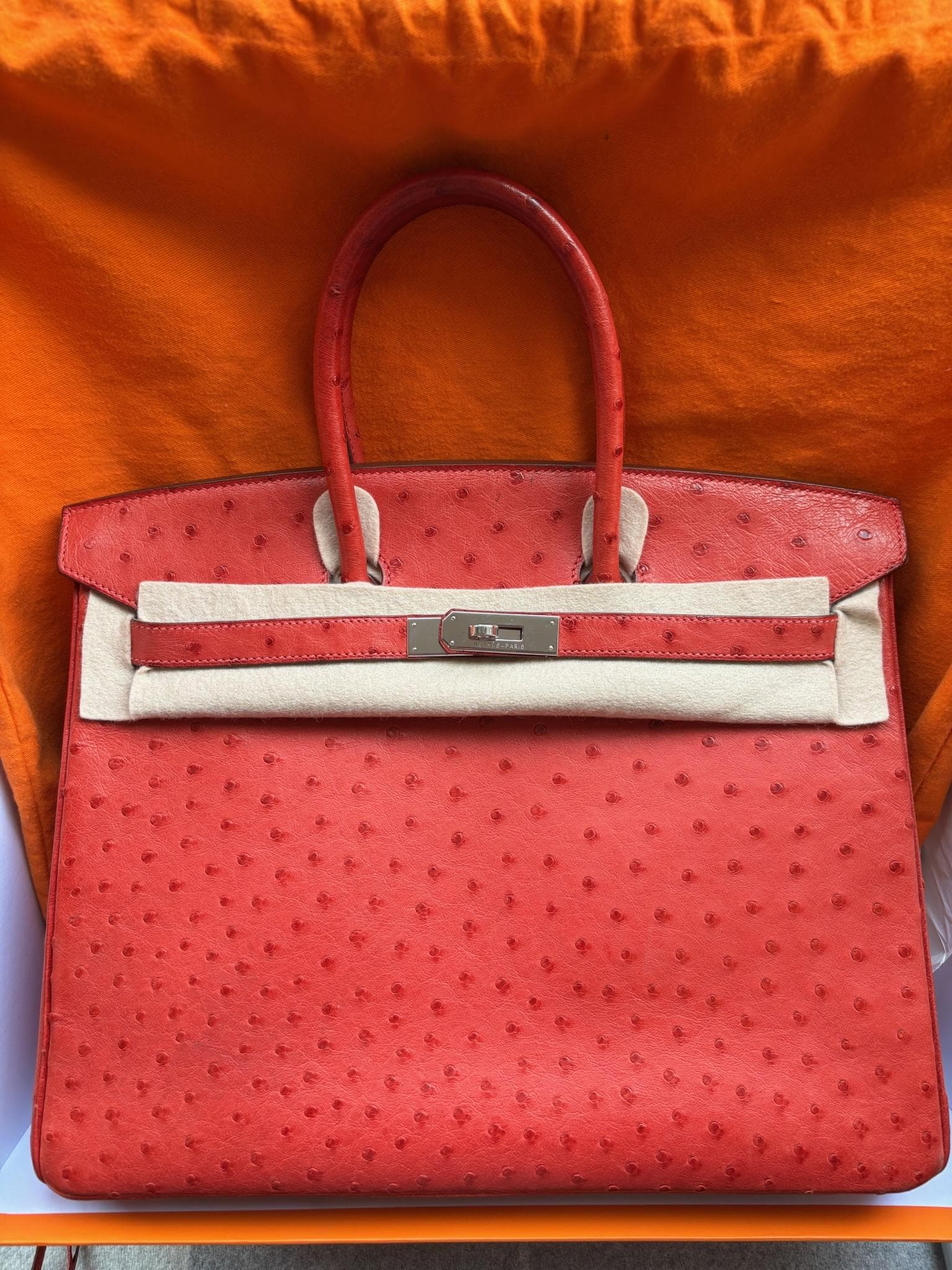
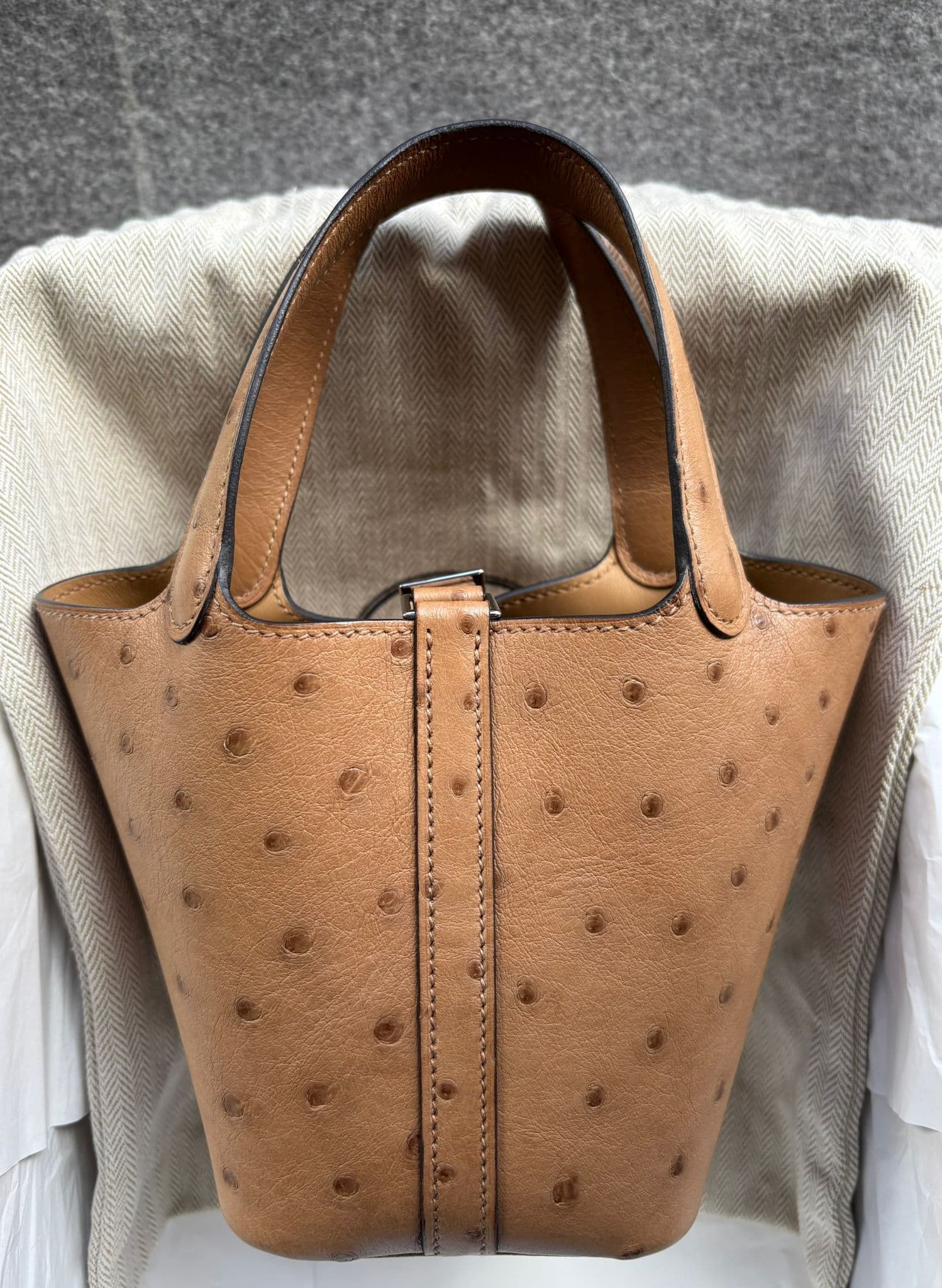
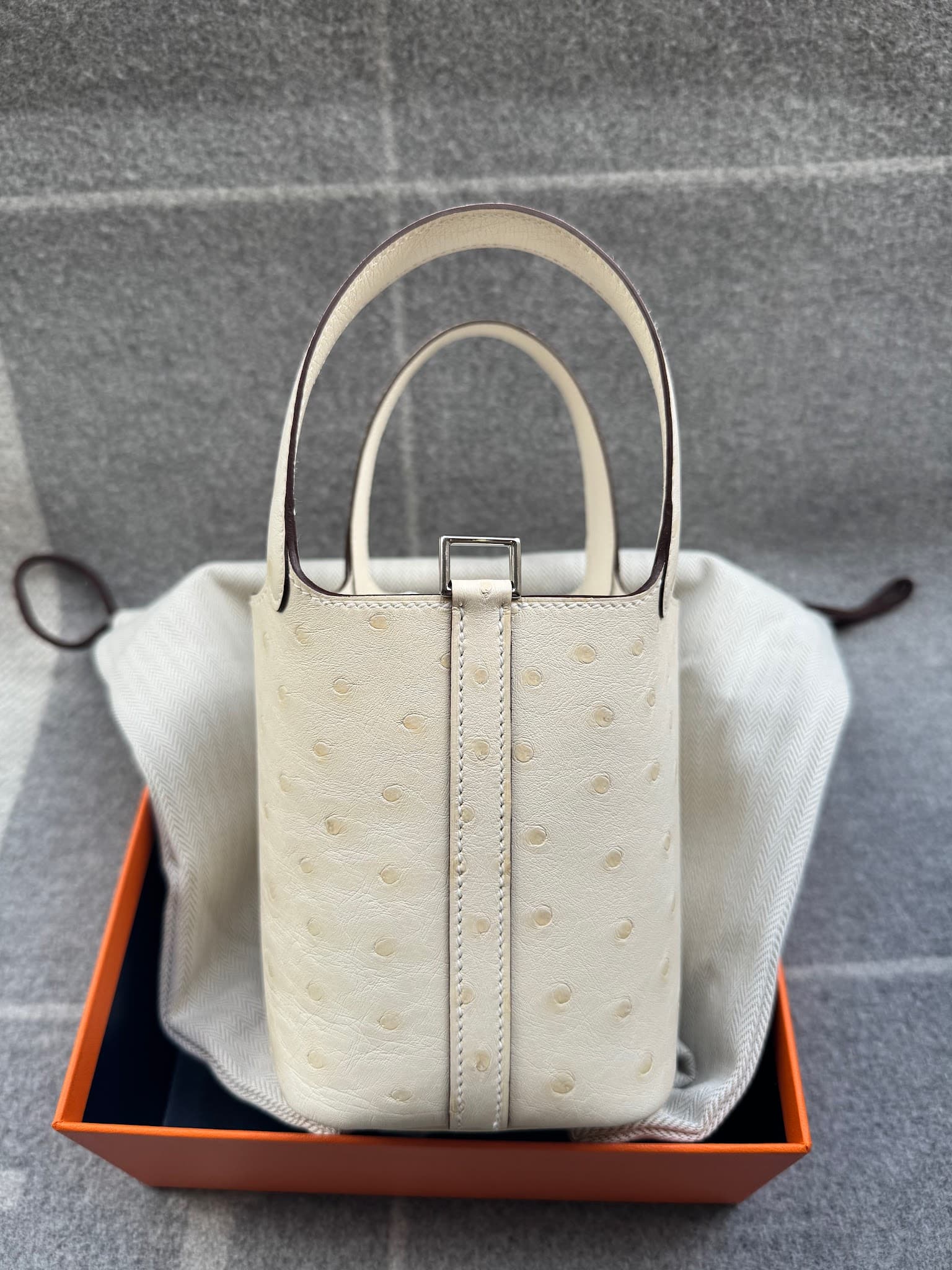
Ostrich sits in a category of its own among Hermès exotics — instantly recognisable by its quill pattern, remarkably light, and so hard-wearing that decades-old ostrich pieces routinely look barely carried. Hermès offers it in a narrow palette of colours that deepen beautifully with age, and production is limited enough that specific combinations can take years to surface. JULL authenticates and hand-inspects every ostrich piece in our London workroom, quill by quill. Browse the ostrich selection below, or brief our concierge on the exact model and colour you are after.
8 pieces available


Looking for one in particular?
Send us the size, colour and hardware you have in mind. We reply within the hour with what is here, more photographs of any piece above, or the time it would take to source it.
Ostrich is the exotic that people who dislike exotics tend to fall for. It has none of the formality of crocodile and none of the obvious luxury signalling; what it has is texture — a field of raised follicles, each one where a quill grew — and a suppleness that no crocodile can match.
The quill pattern is the whole grammar of the skin. Follicles are densest across the crown, the central back section of the bird, and thin out towards the edges, so the most desirable pieces are cut to place that dense area across the front of the bag. On a Birkin or a Kelly you can read the quality of the cutting immediately: a well-made ostrich piece has an even, generous field of quills where the eye lands.
It is also the most practical exotic by a distance. Ostrich is lighter than crocodile, considerably more supple, and its natural oils make it more tolerant of handling and of weather than any other exotic skin. Where a crocodile Birkin is an occasion, an ostrich Birkin can be carried — and frequently is.
Colour behaves beautifully on it. The porous surface takes dye deeply and the raised follicles catch light at their tips, so a colour reads with two tones at once: deeper in the pits, brighter on the crowns. This is why ostrich in strong colours — Rouge, Blue Electric, Vert, the pinks — looks so much more alive than the same shade in a flat leather, and why the neutrals in ostrich are quieter than you would expect.
It is not without limits. The follicles can flatten under sustained pressure, so an ostrich bag stored crushed will show it; the skin also dries if kept in heat, which is the one real maintenance concern. Ordinary use, ordinary storage and occasional professional attention are all it asks.
On price and availability ostrich occupies useful ground: substantially above calfskin, substantially below crocodile and alligator, and produced in enough quantity that a specific model in a good colour surfaces regularly rather than by luck. For a first exotic piece it is very often the sensible entry — you get an unmistakably exotic bag without the crocodile bracket.
When buying pre-owned, the assessment is quill density and evenness across the front panel, then flattening at corners and along the base, then dryness. All three are read by hand and none of them show reliably in a photograph taken straight on, which is why we shoot ostrich at an angle and in raking light.
Every ostrich piece at JULL is inspected by hand in our London workroom — quill density and placement, flattening at corners and base, suppleness, stamp, hardware and interior — and described exactly as found. Pieces are new, unworn and pre-owned, sourced through European boutiques below boutique retail where the market allows. Shown by appointment in London, filmed in detail for clients elsewhere, delivered insured across the UK.
Questions, answered
What makes an ostrich bag good or ordinary?
Quill density and placement. Follicles are densest across the crown of the skin and thin towards the edges, so the best pieces are cut to put that dense field across the front. An even, generous quill pattern where the eye lands is the mark of good cutting.
Is ostrich practical for everyday use?
The most practical of the exotics by a distance. It is lighter and more supple than crocodile, and its natural oils make it more tolerant of handling and weather. Where a crocodile Birkin is an occasion, an ostrich Birkin gets carried.
How does colour look on ostrich?
It reads in two tones at once — deeper in the follicle pits, brighter on the raised crowns. Strong colours such as Rouge, Blue Electric and the pinks look markedly more alive than in flat leather; neutrals are quieter than you might expect.
Do ostrich quills flatten?
They can, under sustained pressure — a bag stored crushed will show it at the corners and base. The skin also dries if kept in heat. Ordinary use and sensible storage are all it asks, with occasional professional attention.
Is ostrich a good first exotic?
Usually the sensible one. It sits well above calfskin and well below crocodile and alligator in price, is produced in enough quantity that specific models surface regularly, and is unmistakably exotic without the crocodile bracket.
What should I check on a pre-owned ostrich bag?
Quill density and evenness across the front, flattening at the corners and base, and dryness of the skin. None of the three show reliably in a straight-on photograph, which is why we shoot ostrich at an angle and in raking light.
Can’t find it? We’ll source it.
Tell us what you’re looking for — model, colour, leather, size — and our team will find it for you, usually within days.
Start a Search