Hermès Crocodile & Alligator Bags · London
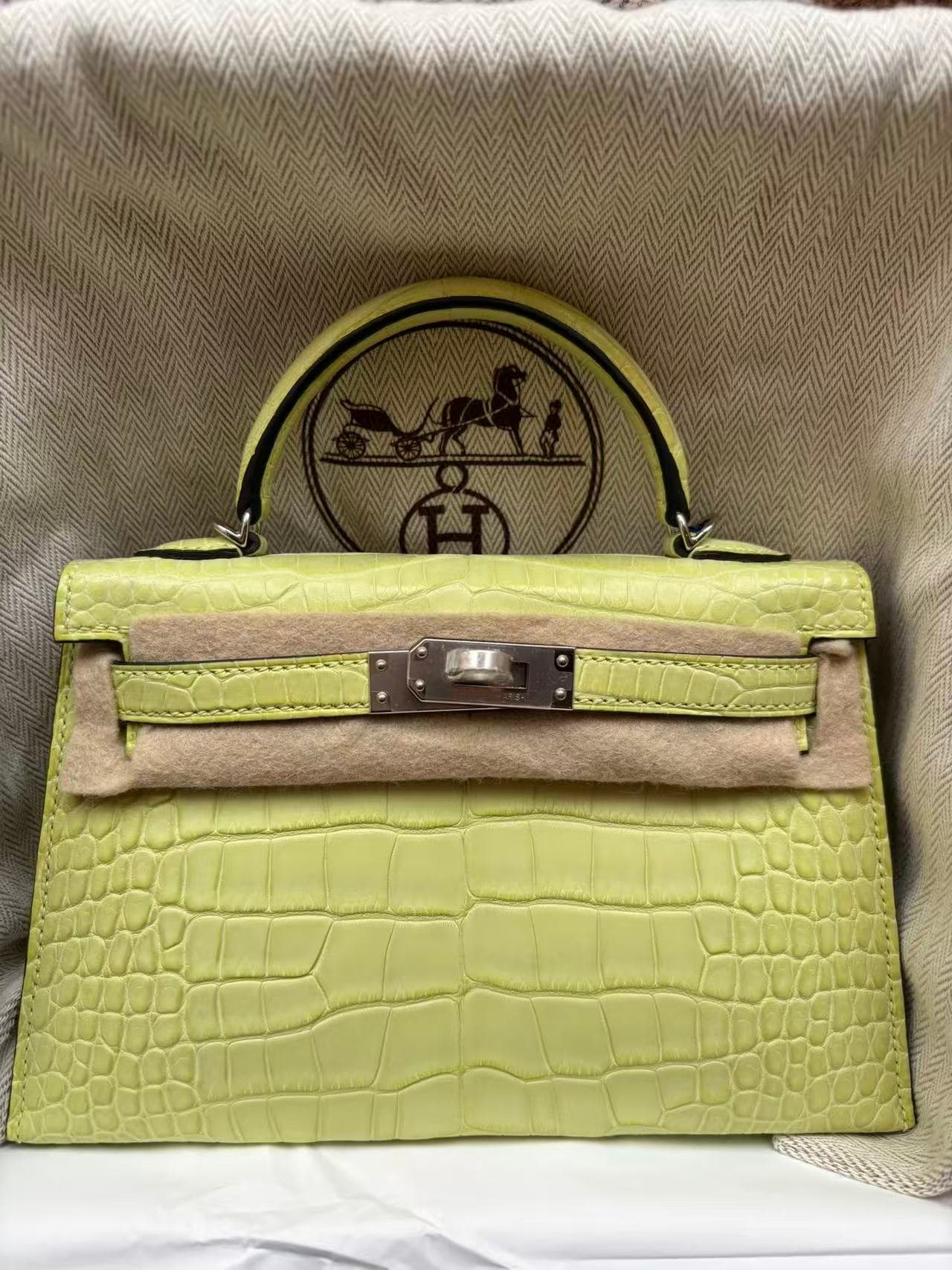
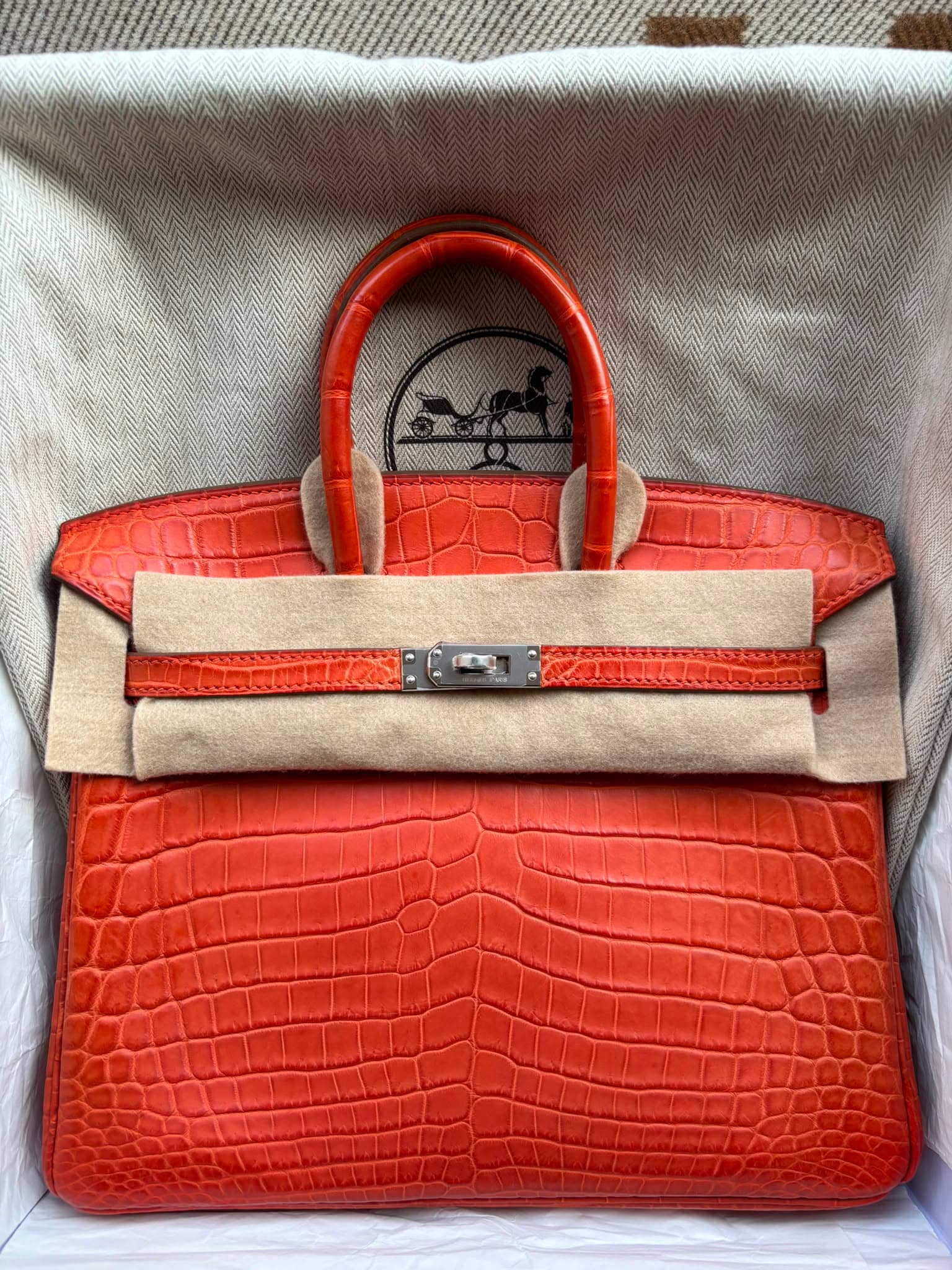
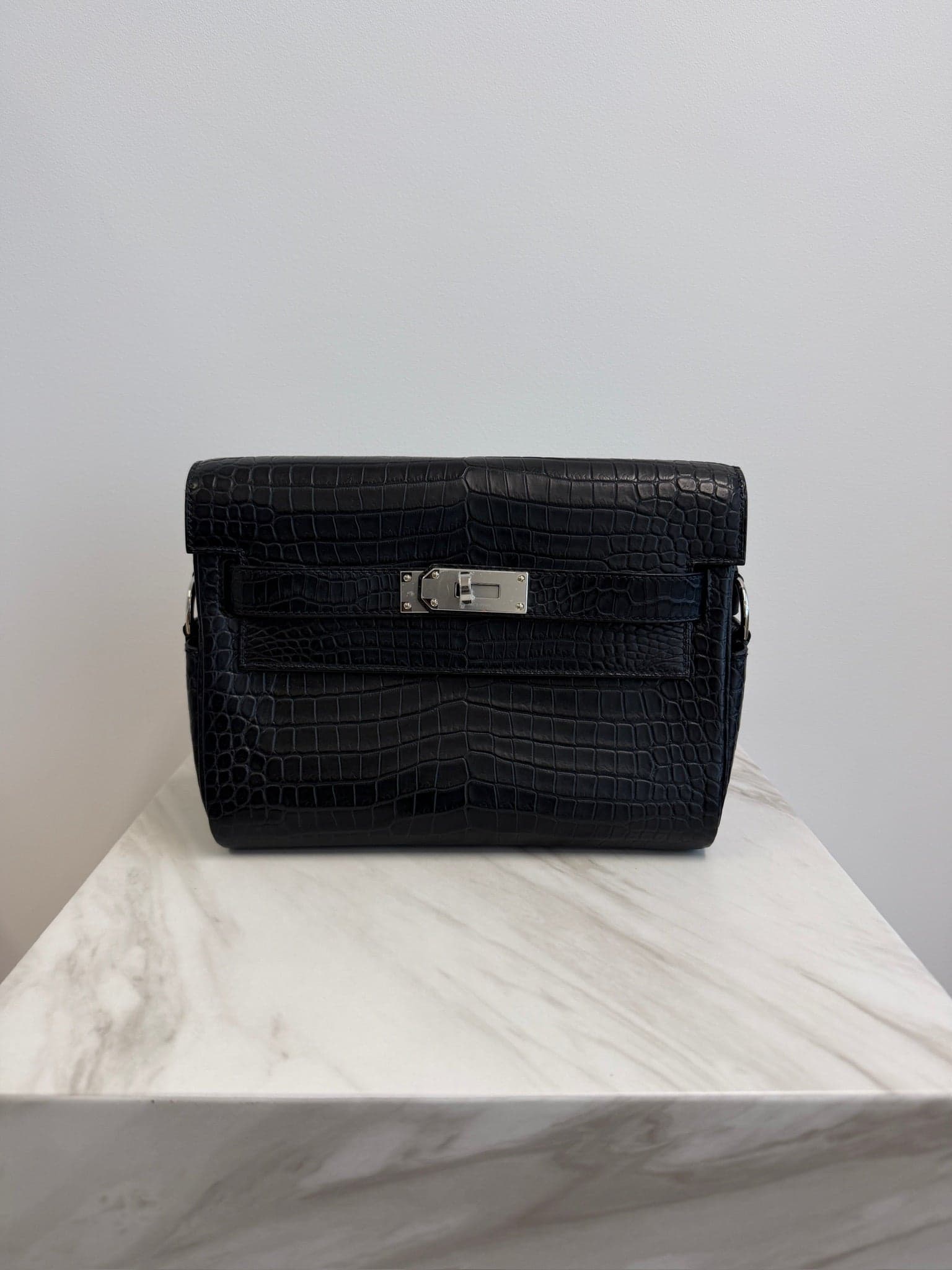
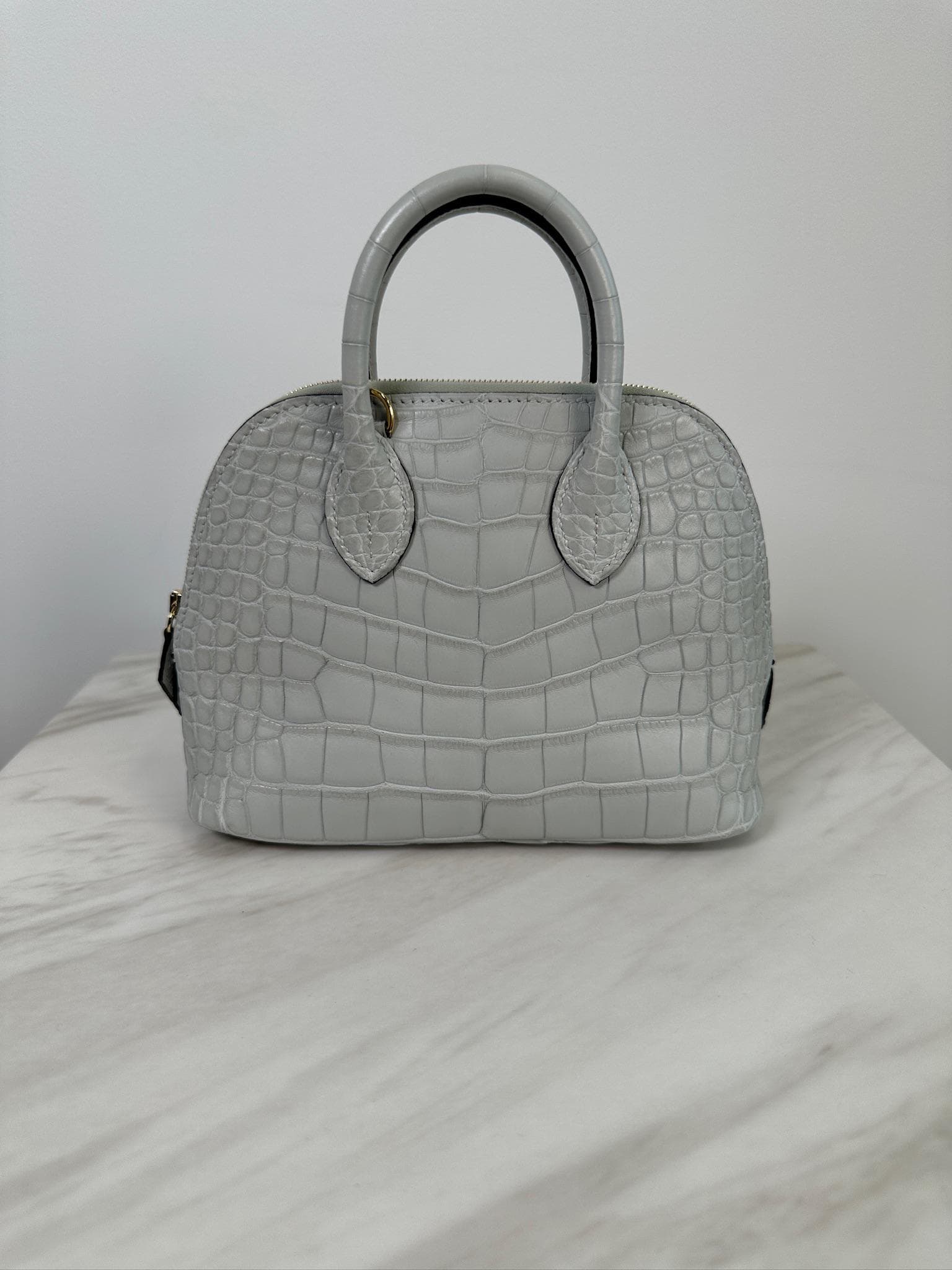
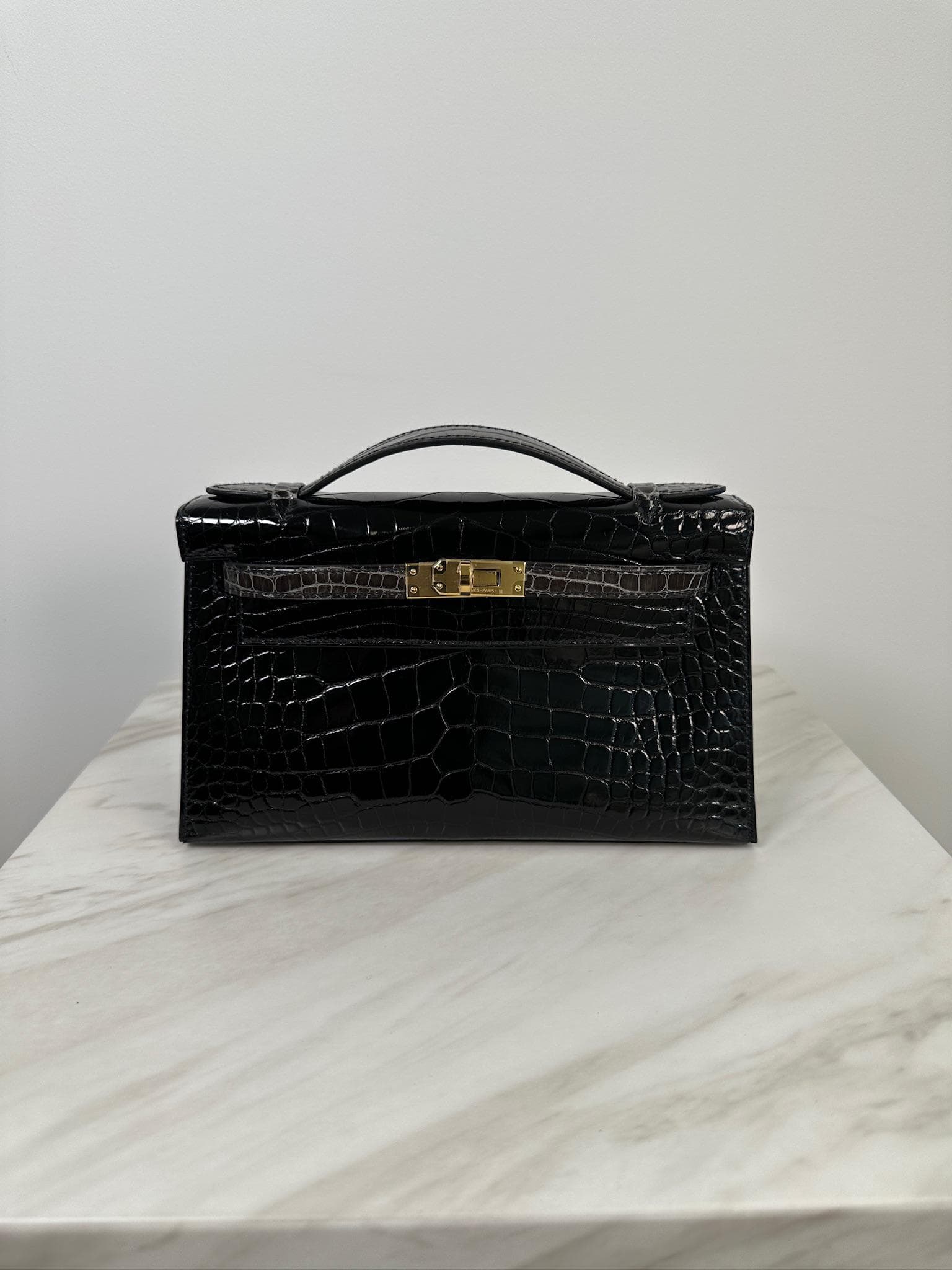
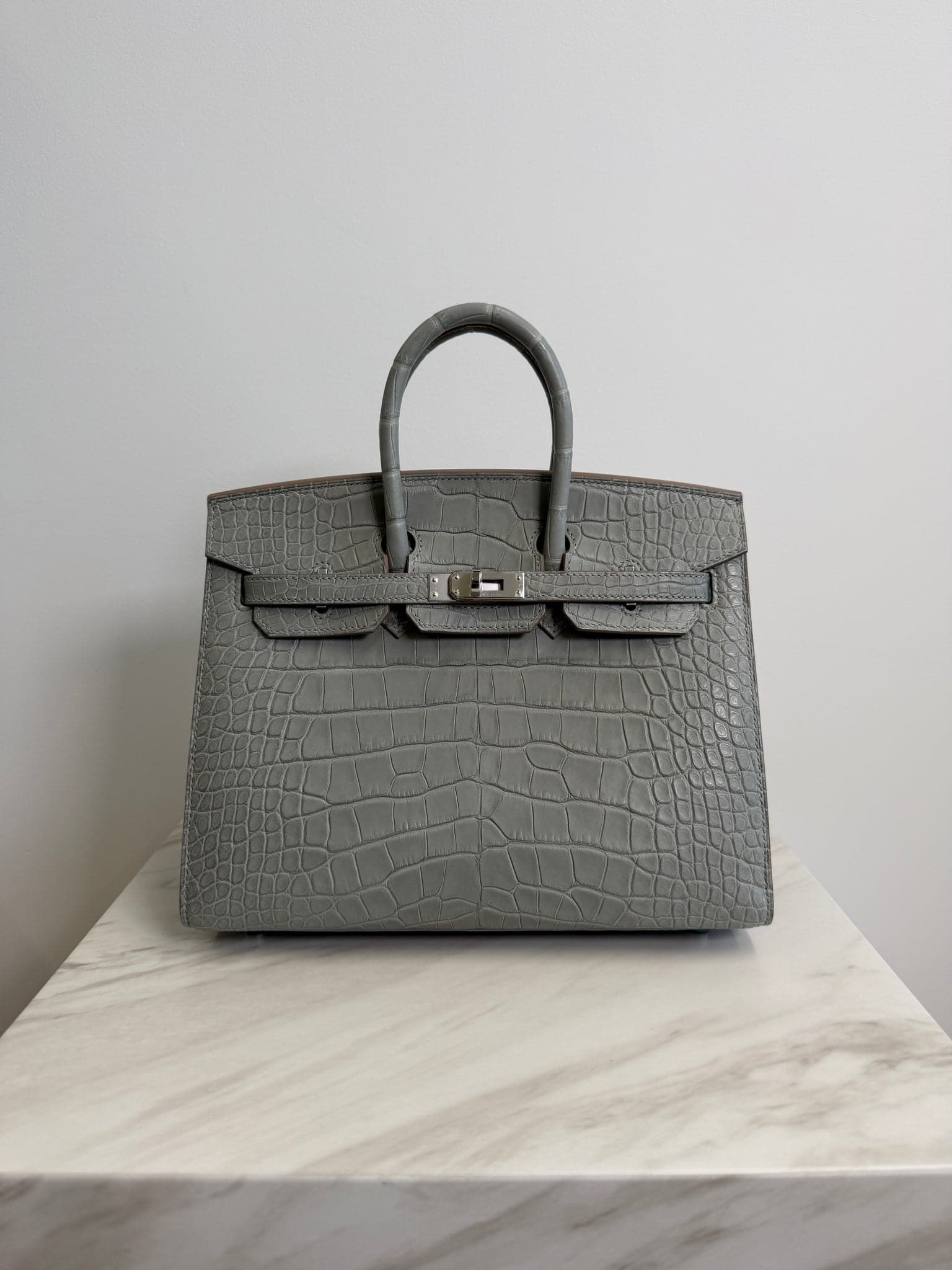
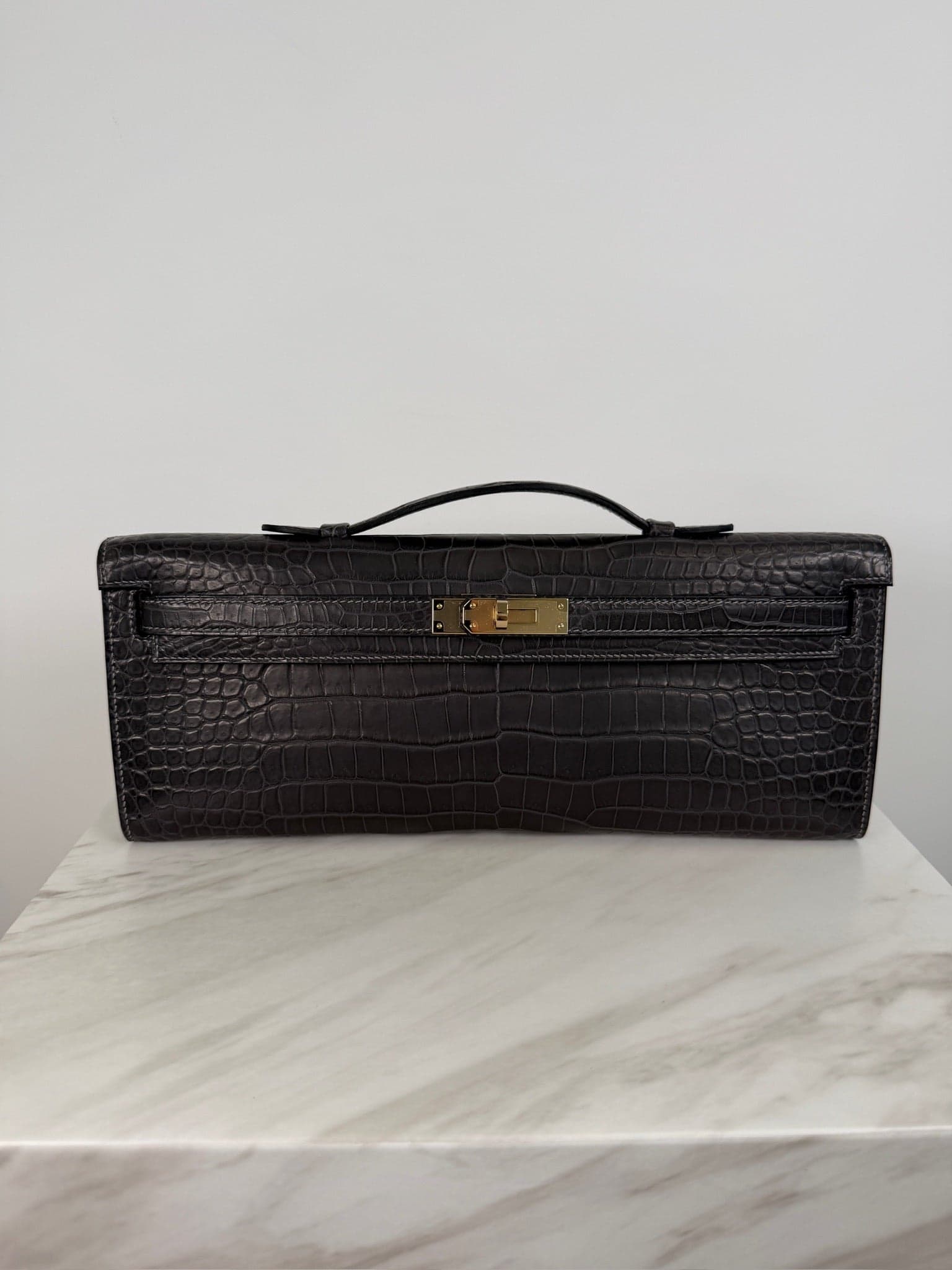
Crocodile and alligator sit at the very top of the Hermès hierarchy — skins so scarce that the house builds only a fraction of its bags in them, and specific colour-and-model combinations may surface once in years. Every crocodile piece at JULL is authenticated and hand-inspected in our London workroom: scale symmetry, the species symbol beside the blind stamp, hardware engraving and stitch count are checked before a bag is listed. Viewings are by appointment in London.
35 pieces available
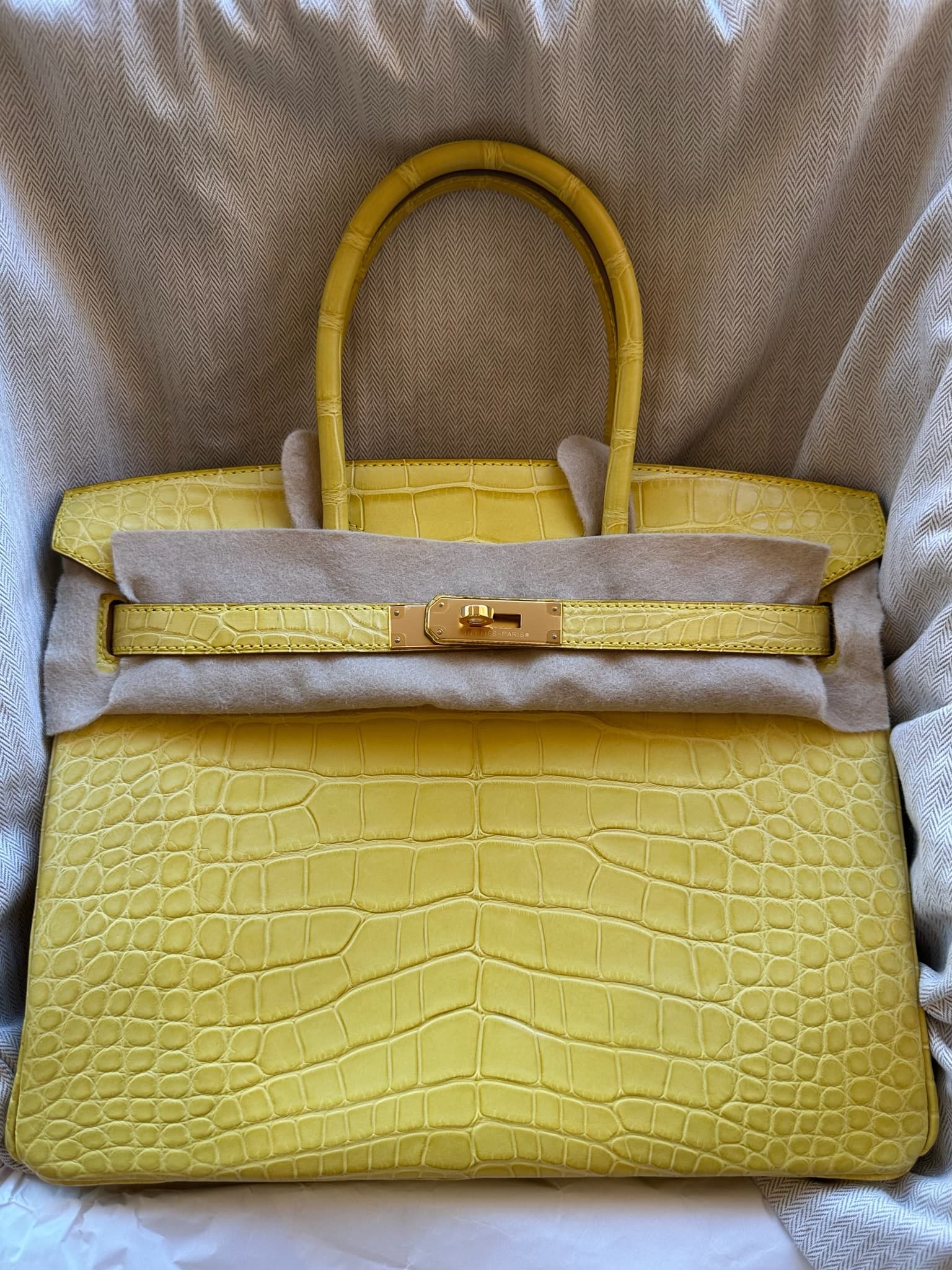 Exotic
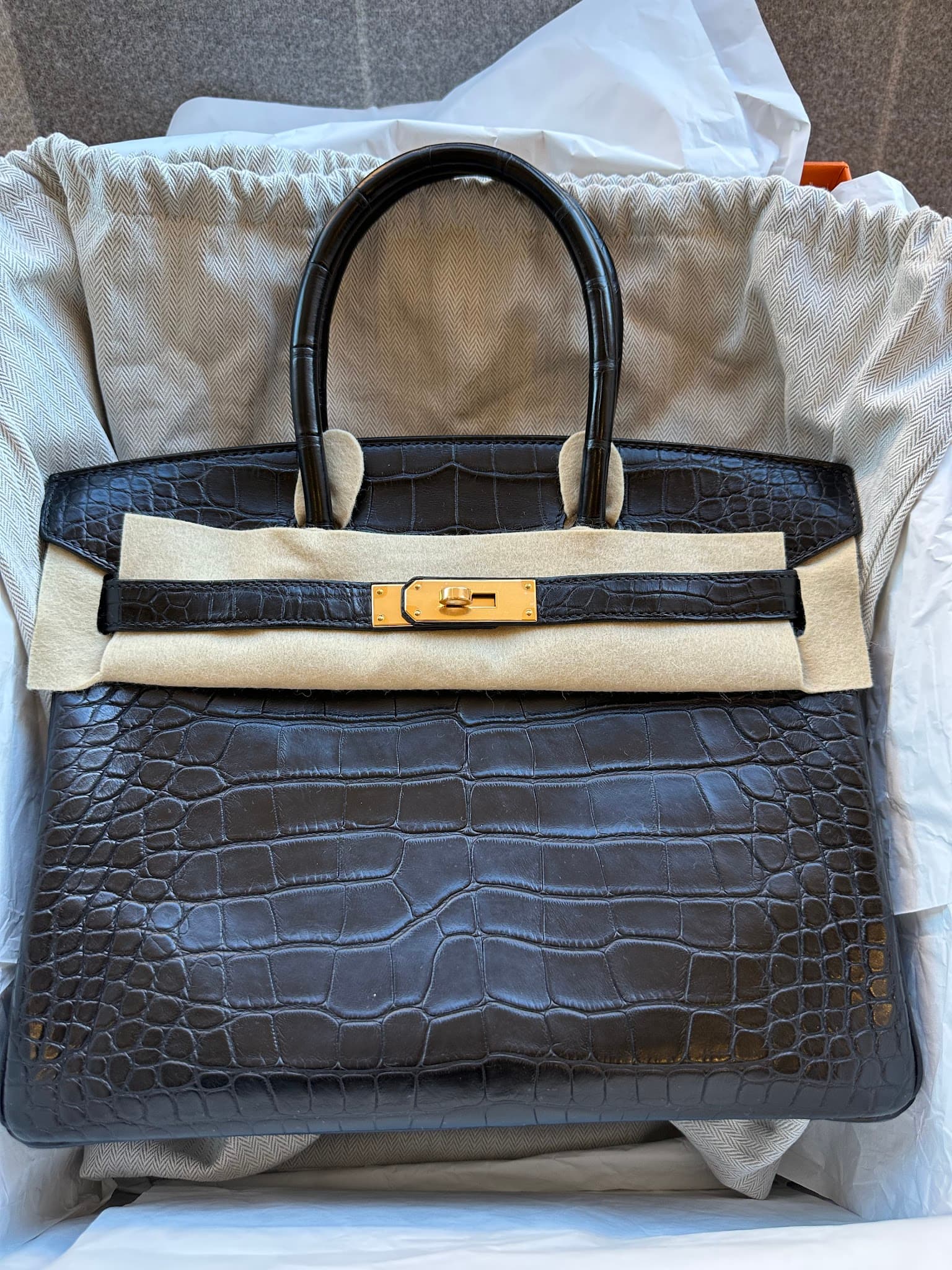 Exotic
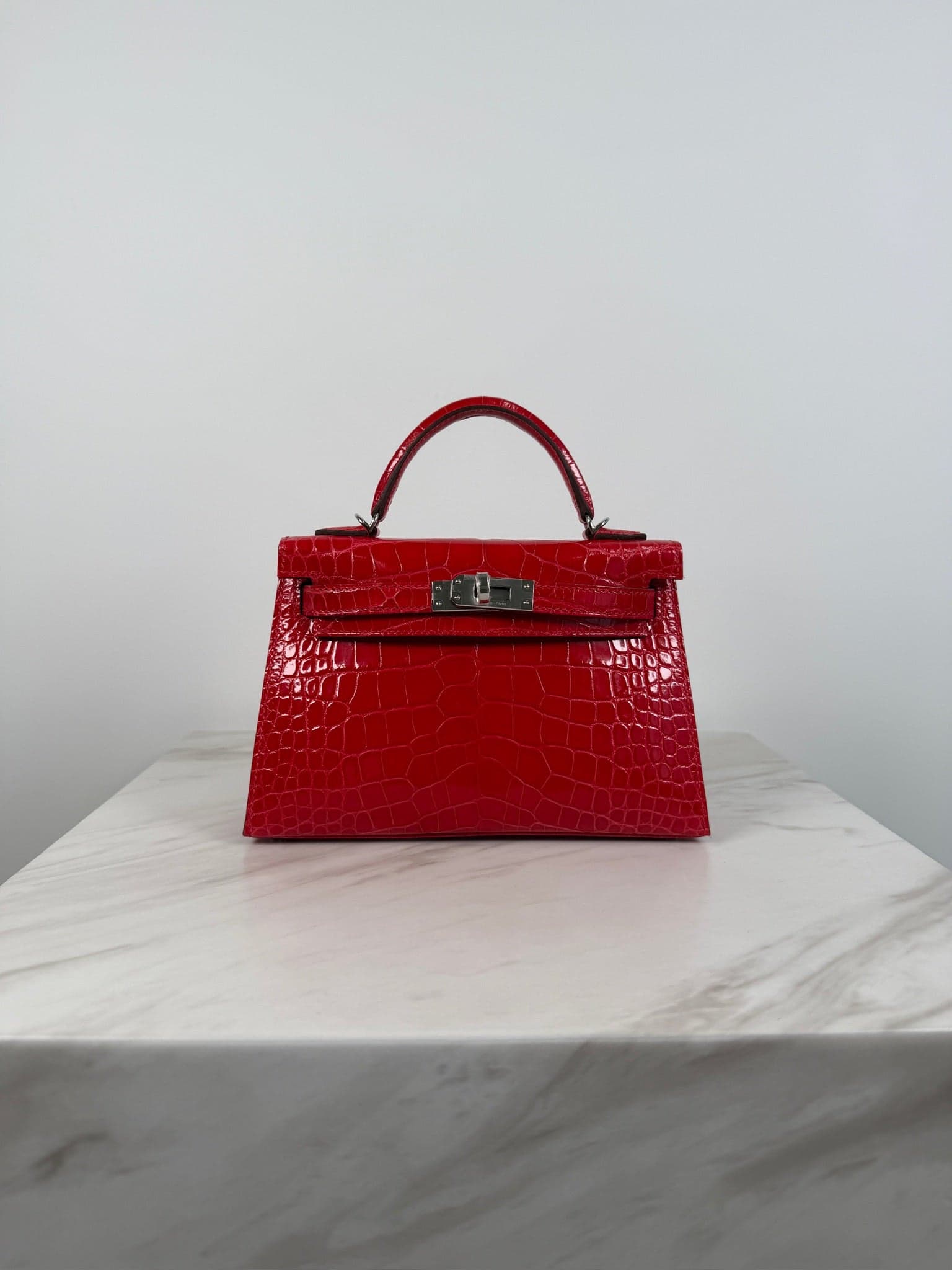 Exotic
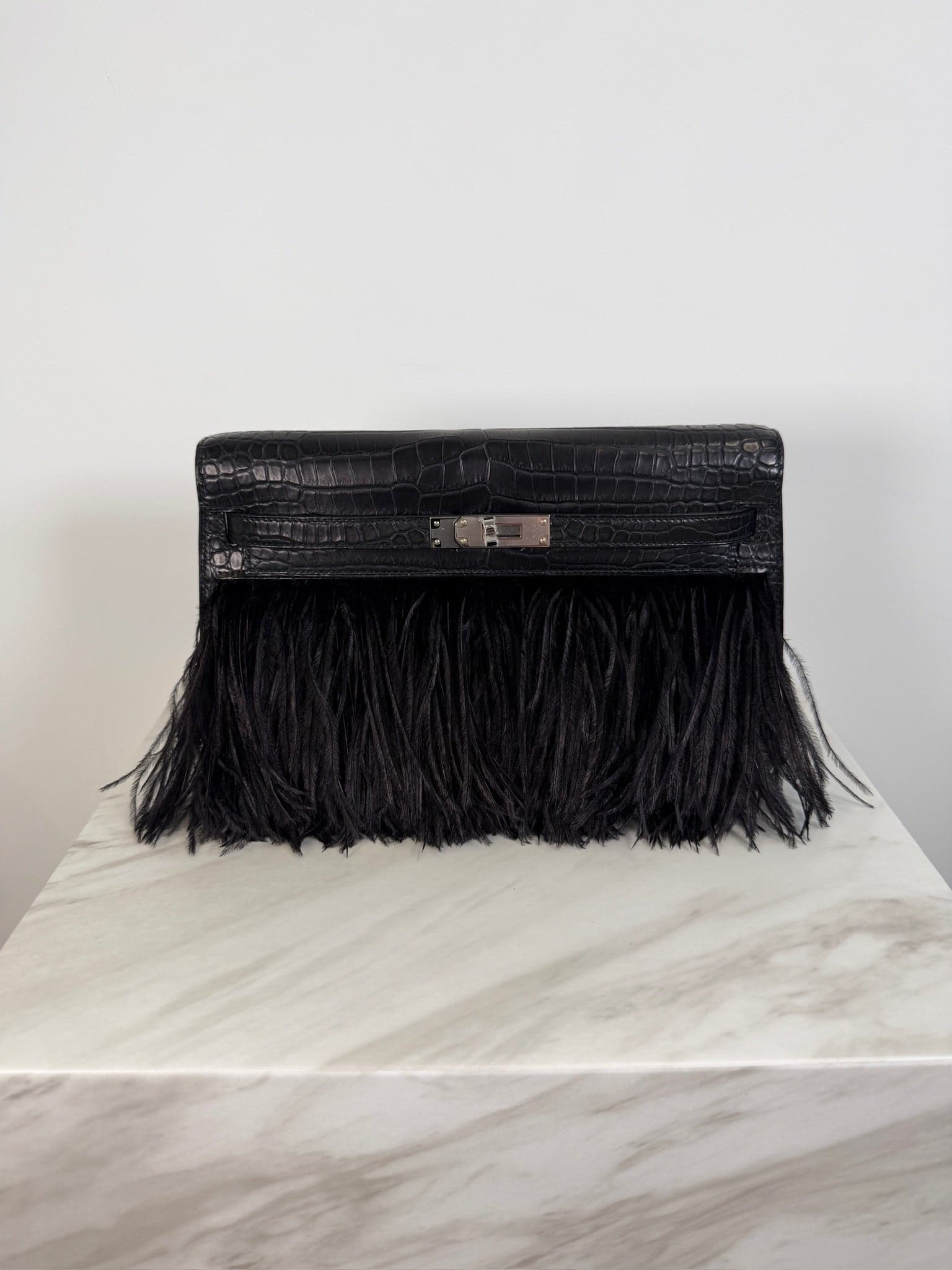 Exotic
 Exotic
 Exotic
 Exotic
 Exotic
 Exotic
 Exotic
 Exotic
 Exotic
 Exotic
 Exotic
 Exotic
 Exotic
 Exotic
 Exotic
 Exotic
 Exotic
 Exotic
 Exotic
 Reserved
 Exotic
 New
New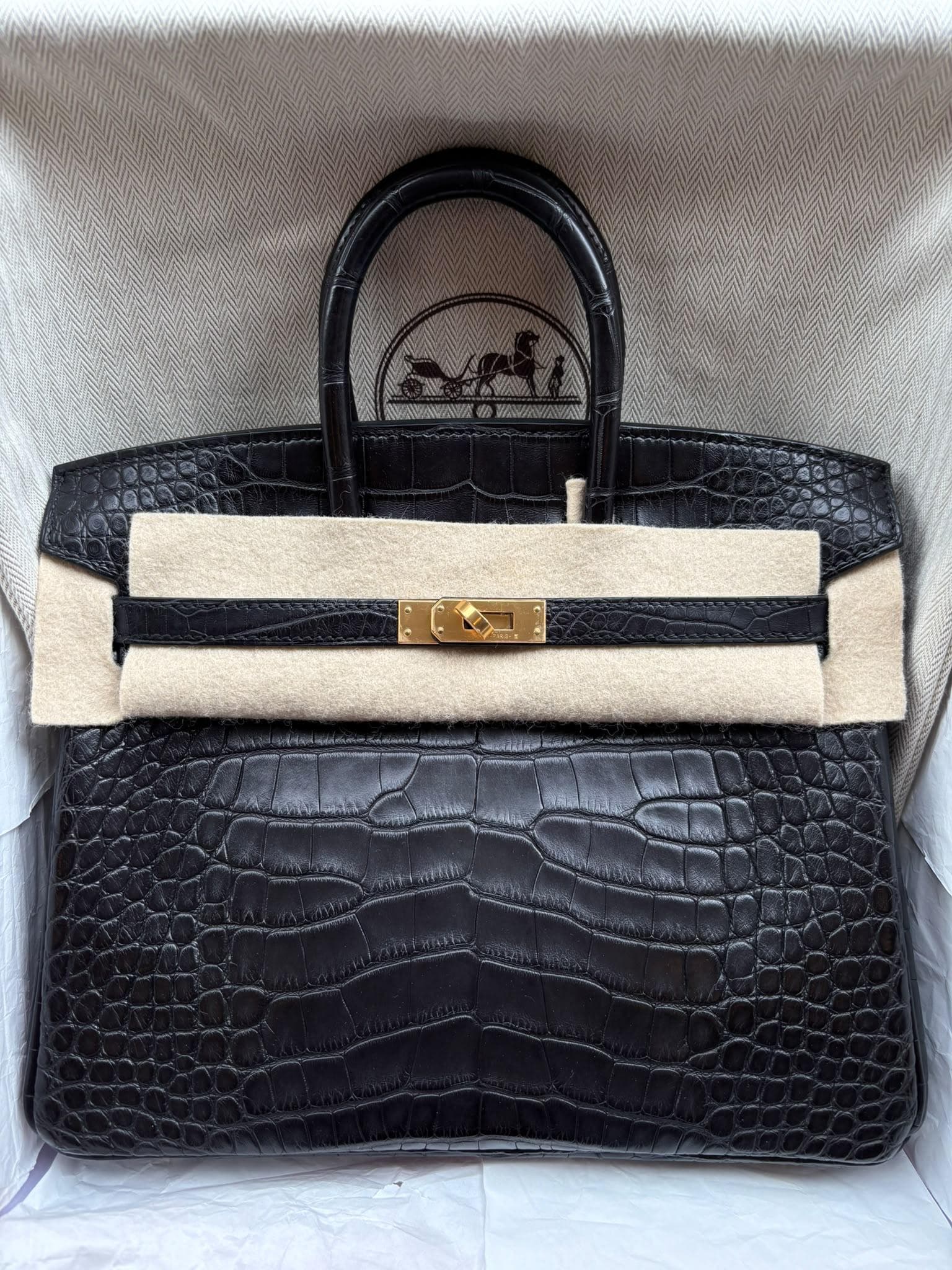 Exotic
 ExoticBlue Box
 ExoticBlue Box
 Exotic
 Pre-Owned
 New
New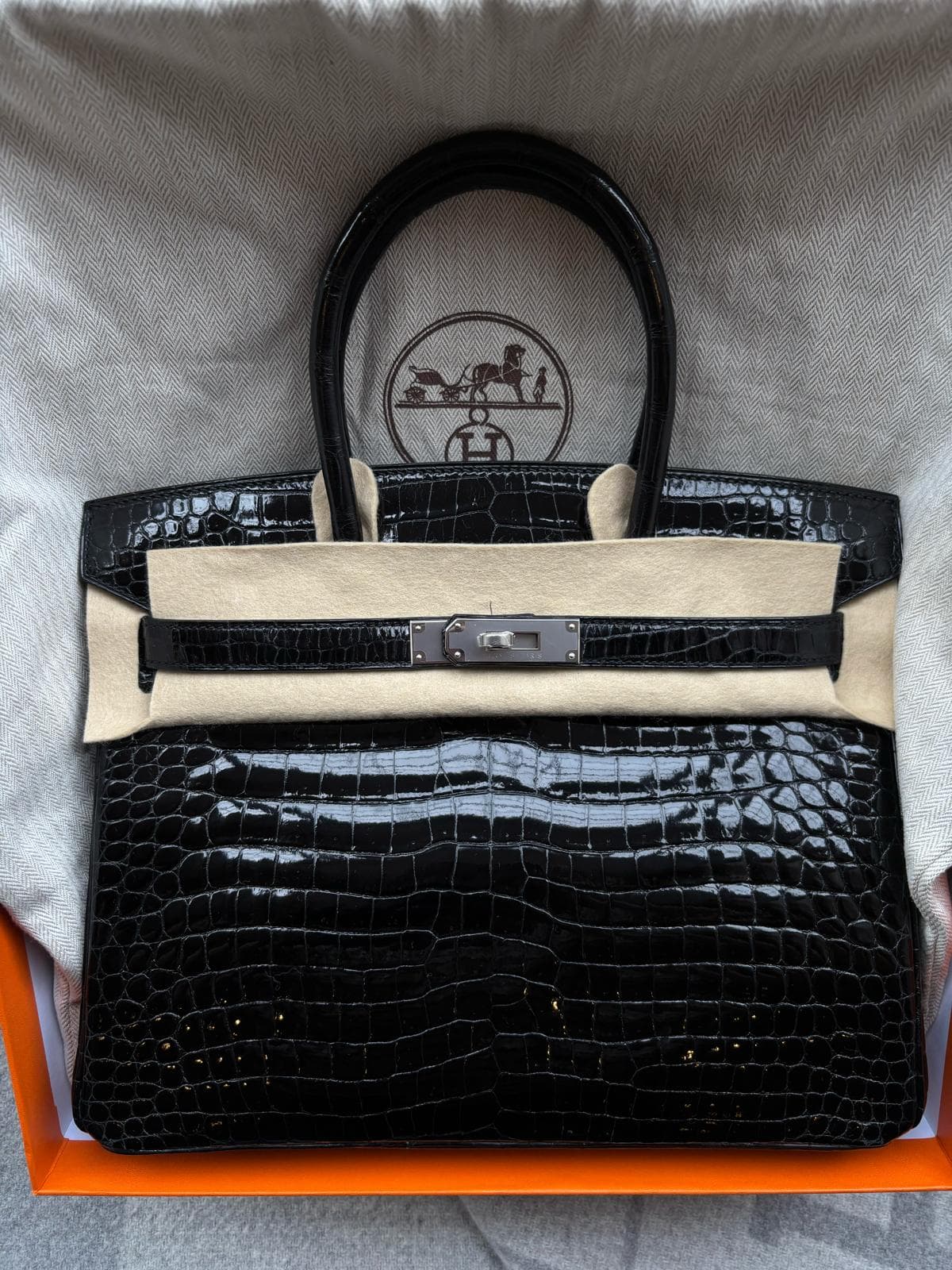 Pre-Owned
 New
New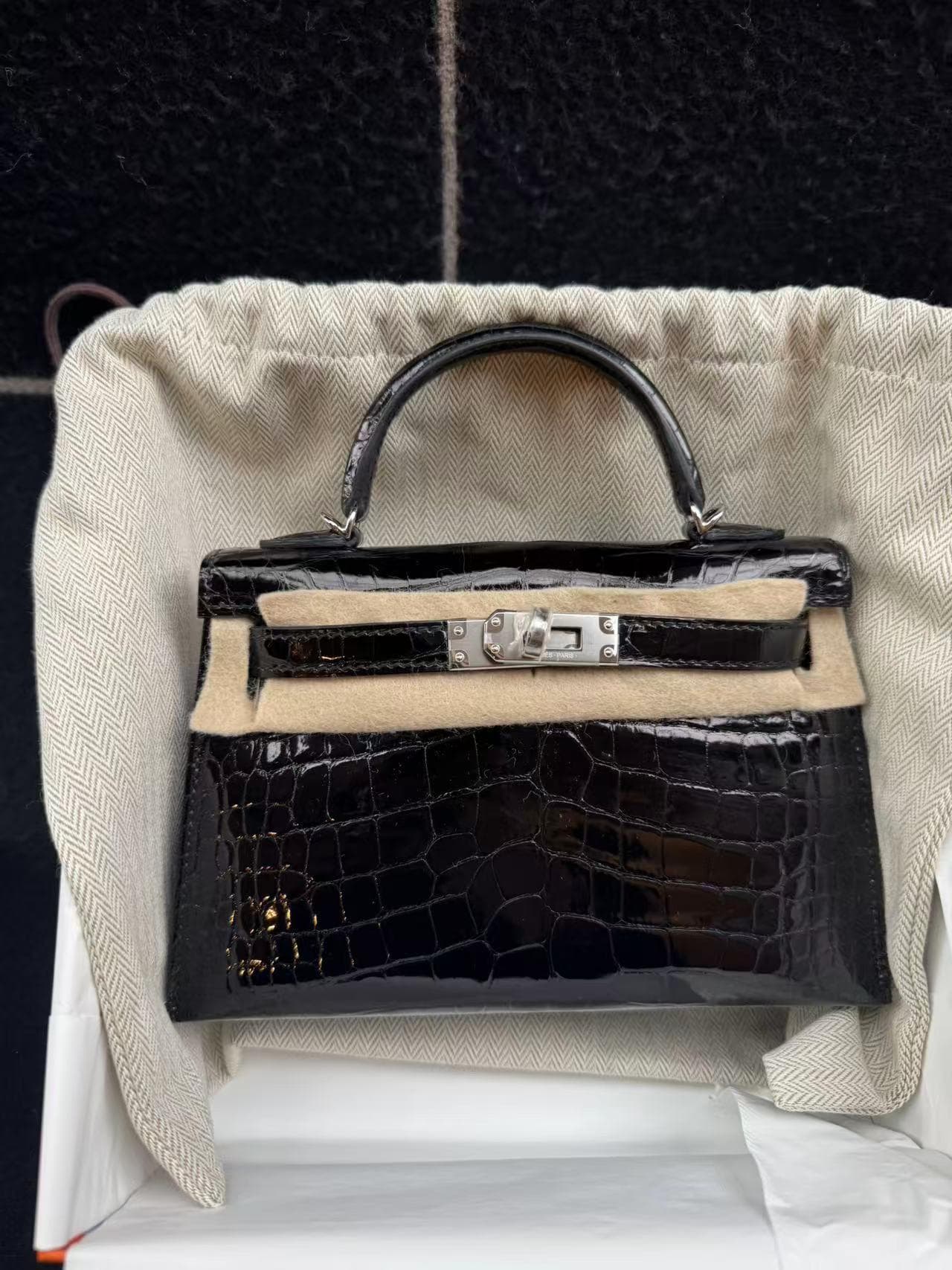 New
New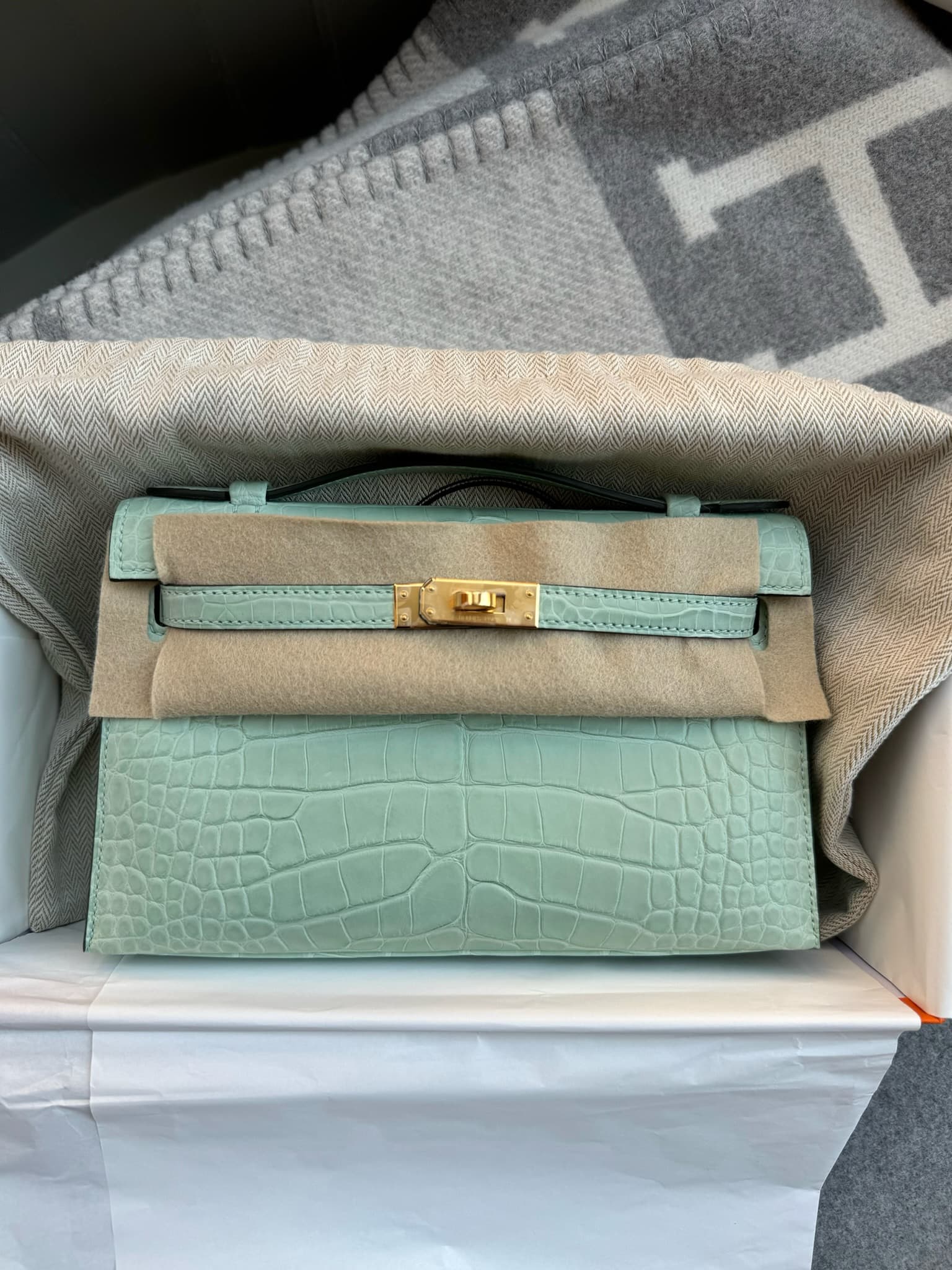 New
NewLooking for one in particular?
Send us the size, colour and hardware you have in mind. We reply within the hour with what is here, more photographs of any piece above, or the time it would take to source it.
Hermès never writes the word crocodile inside a bag. Instead, a small symbol sits beside the maker's stamp and quietly tells you exactly what the bag is made of: two dots for Niloticus crocodile from the Nile basin, a caret for Porosus from saltwater estuaries, a square for American alligator. That one detail decides identity, rarity and value — and it is the first thing we photograph when a crocodile piece arrives in our workroom.
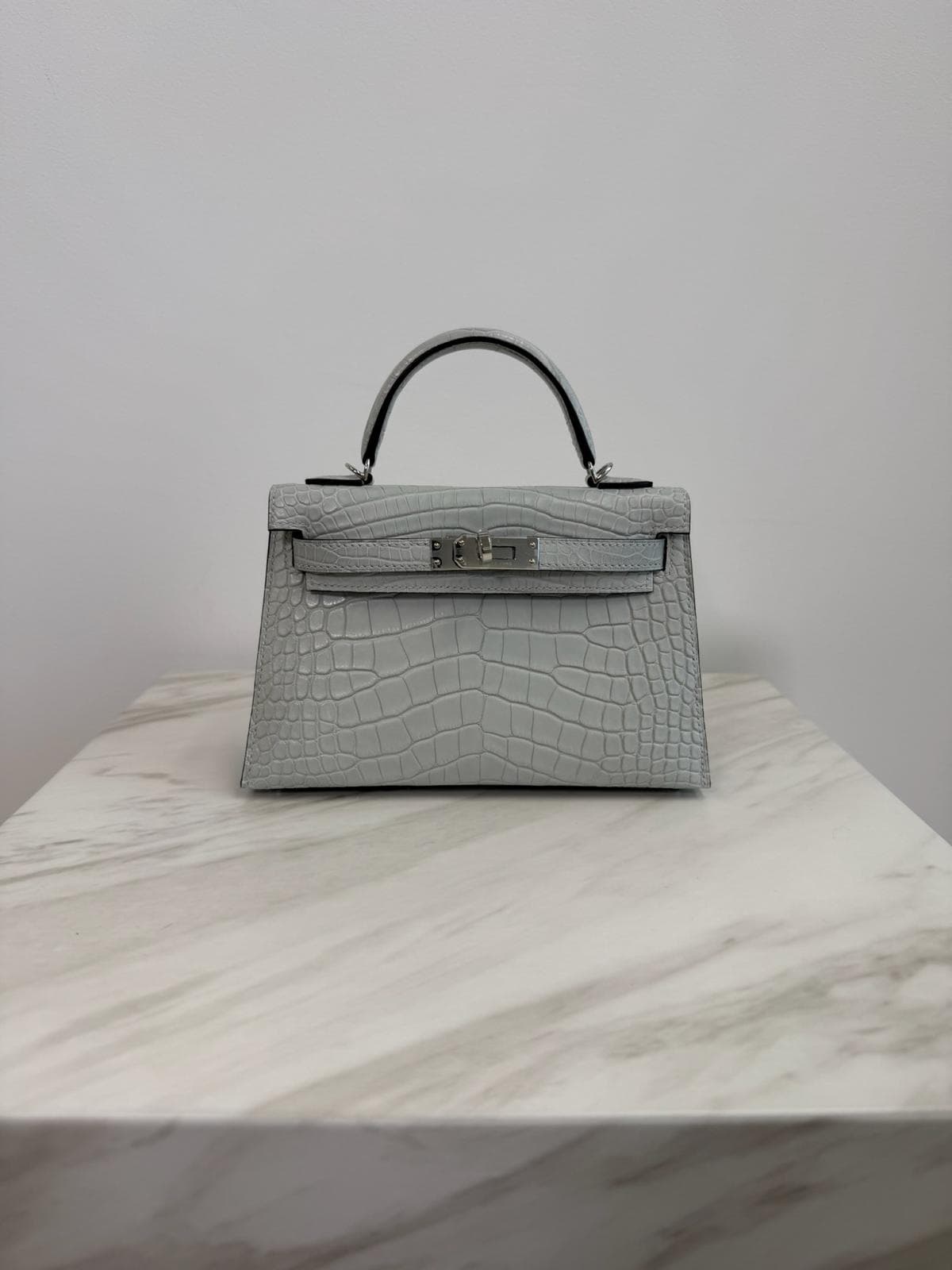
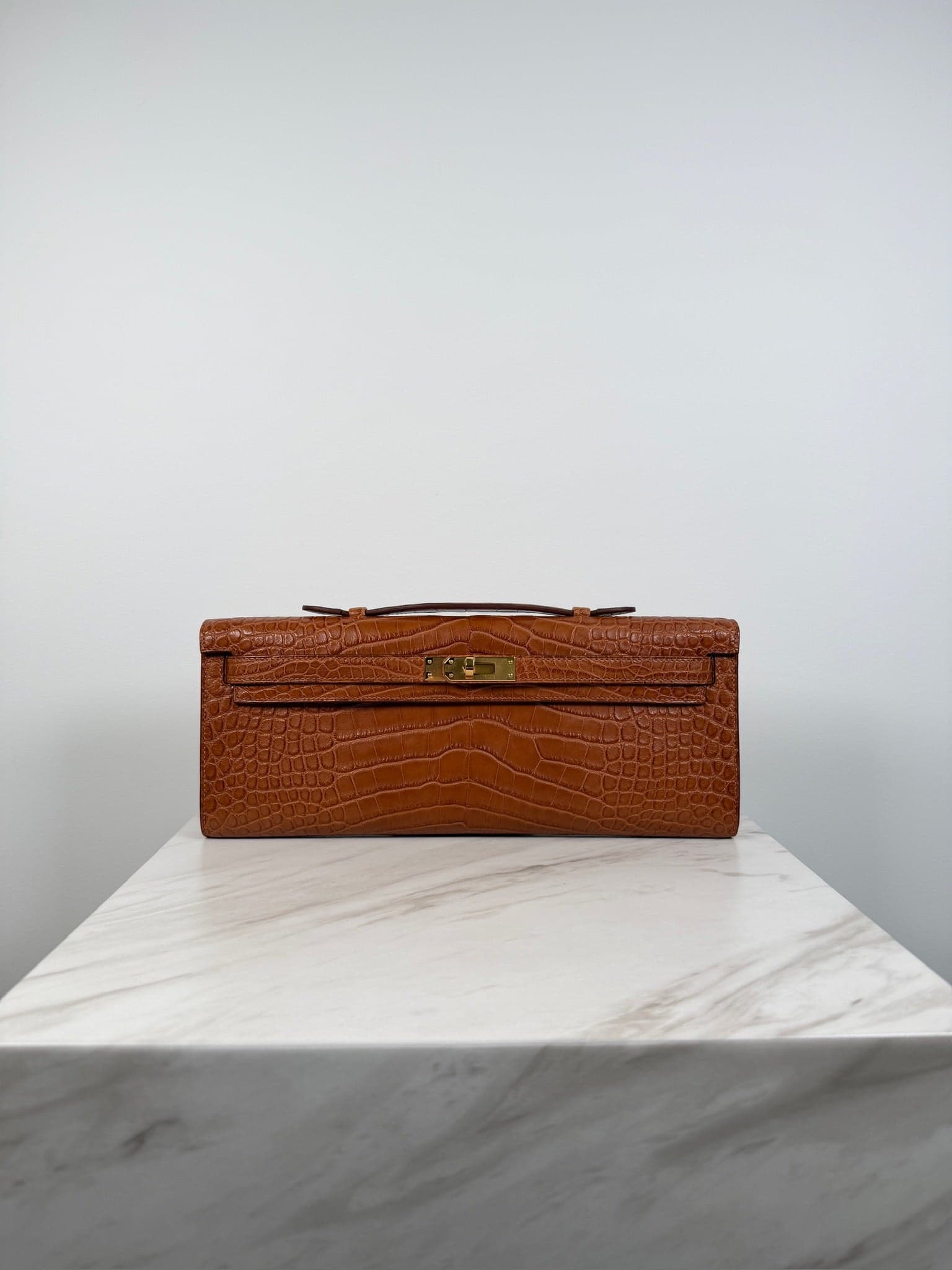
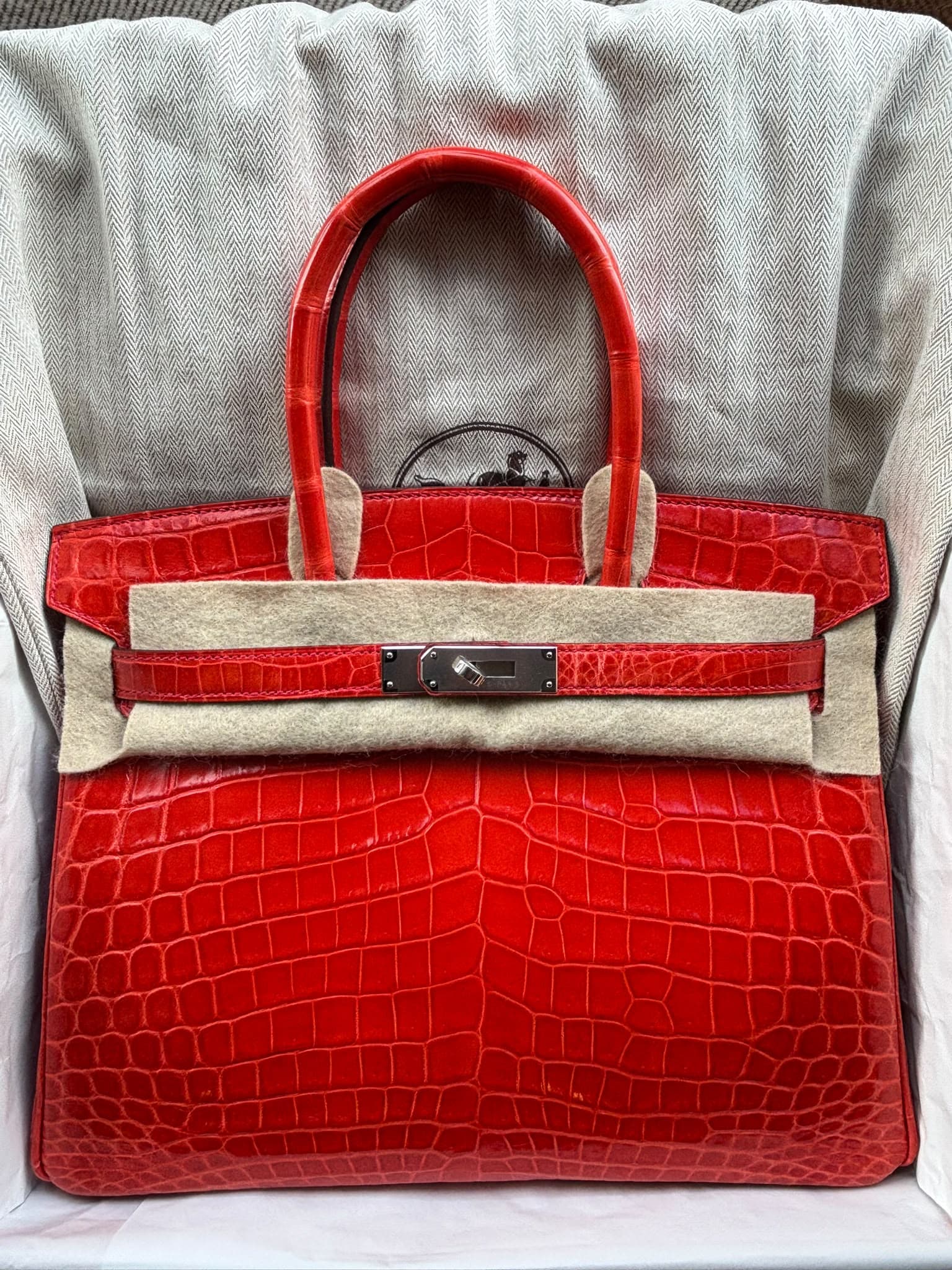
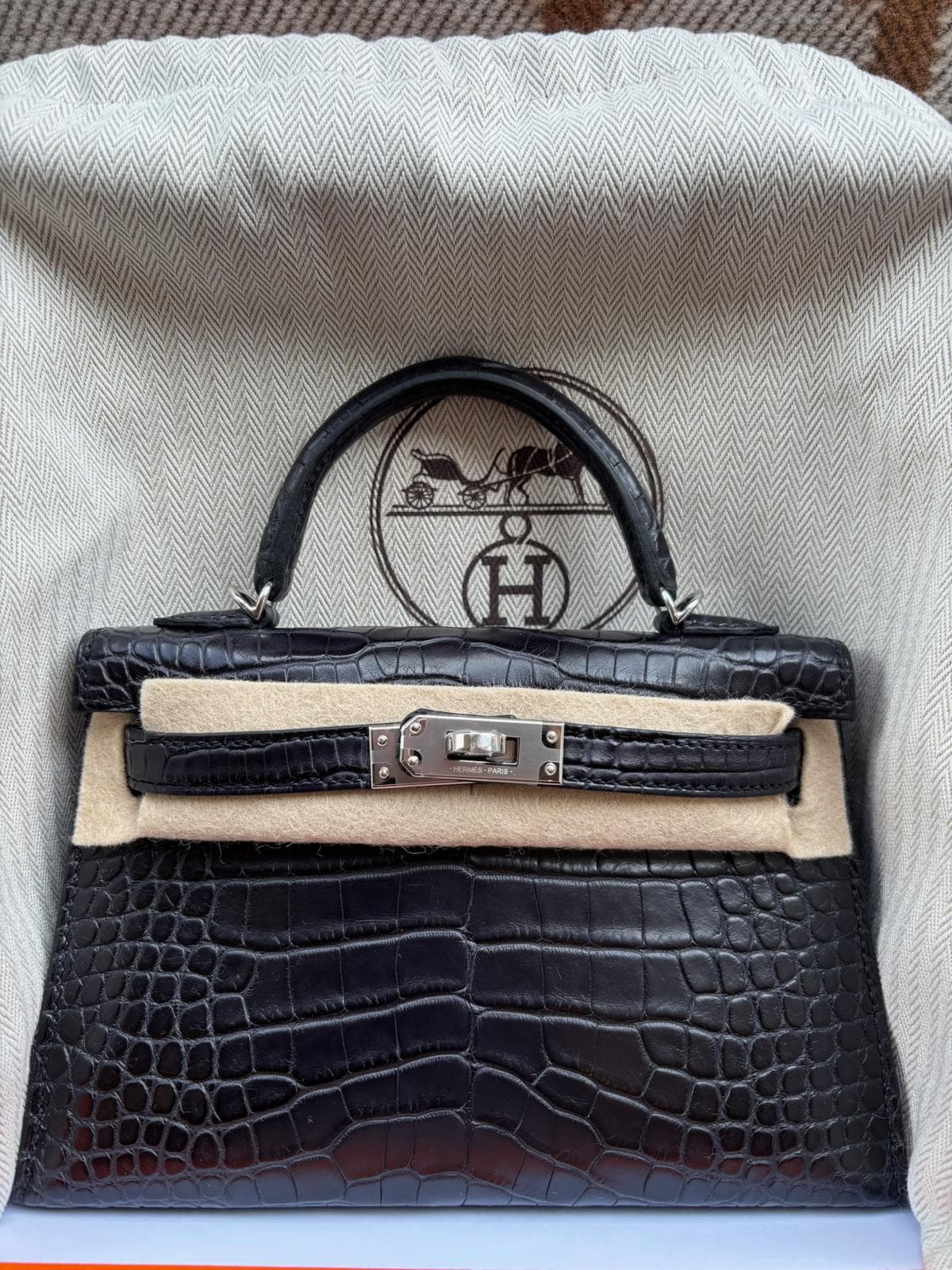
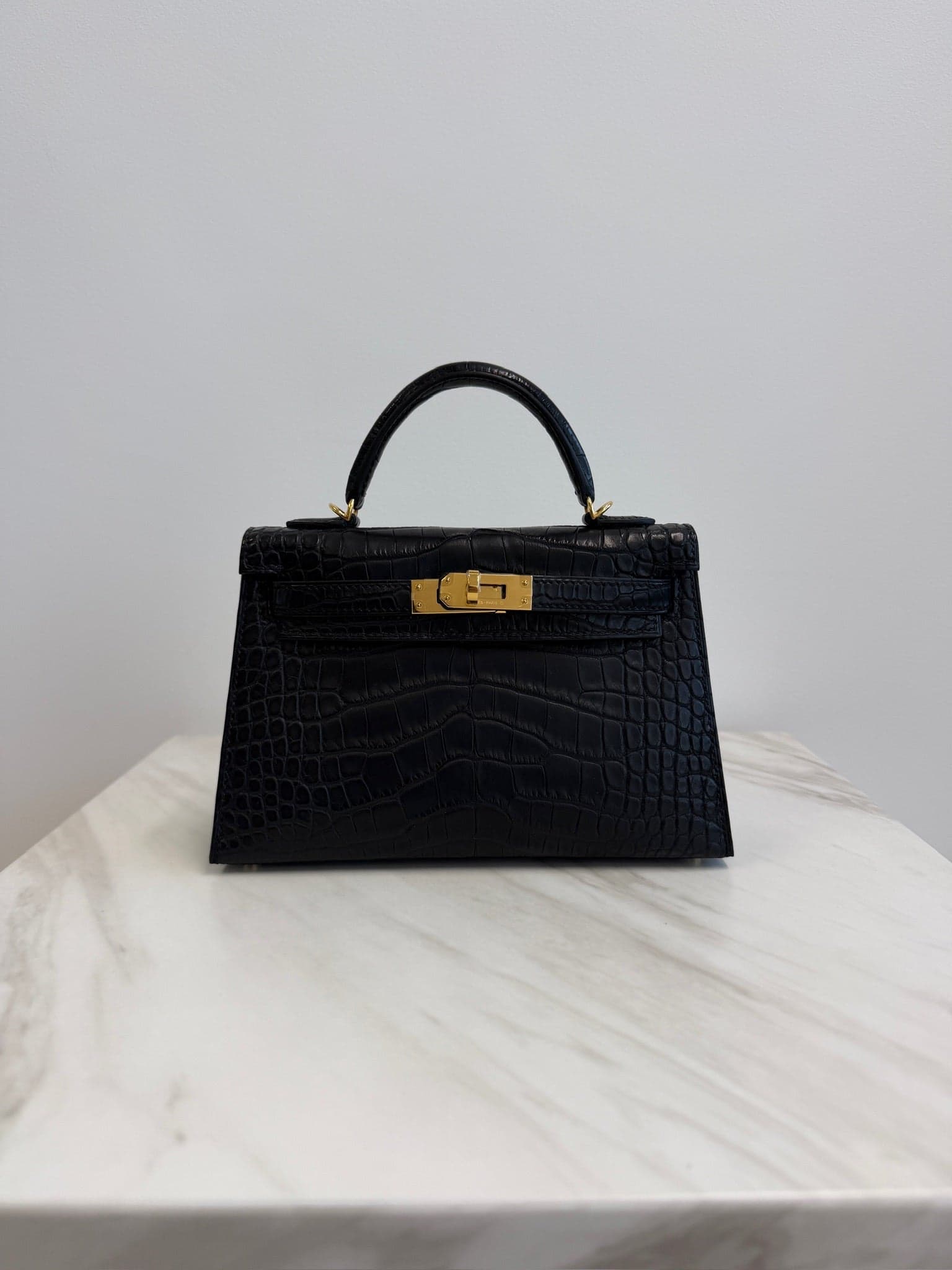
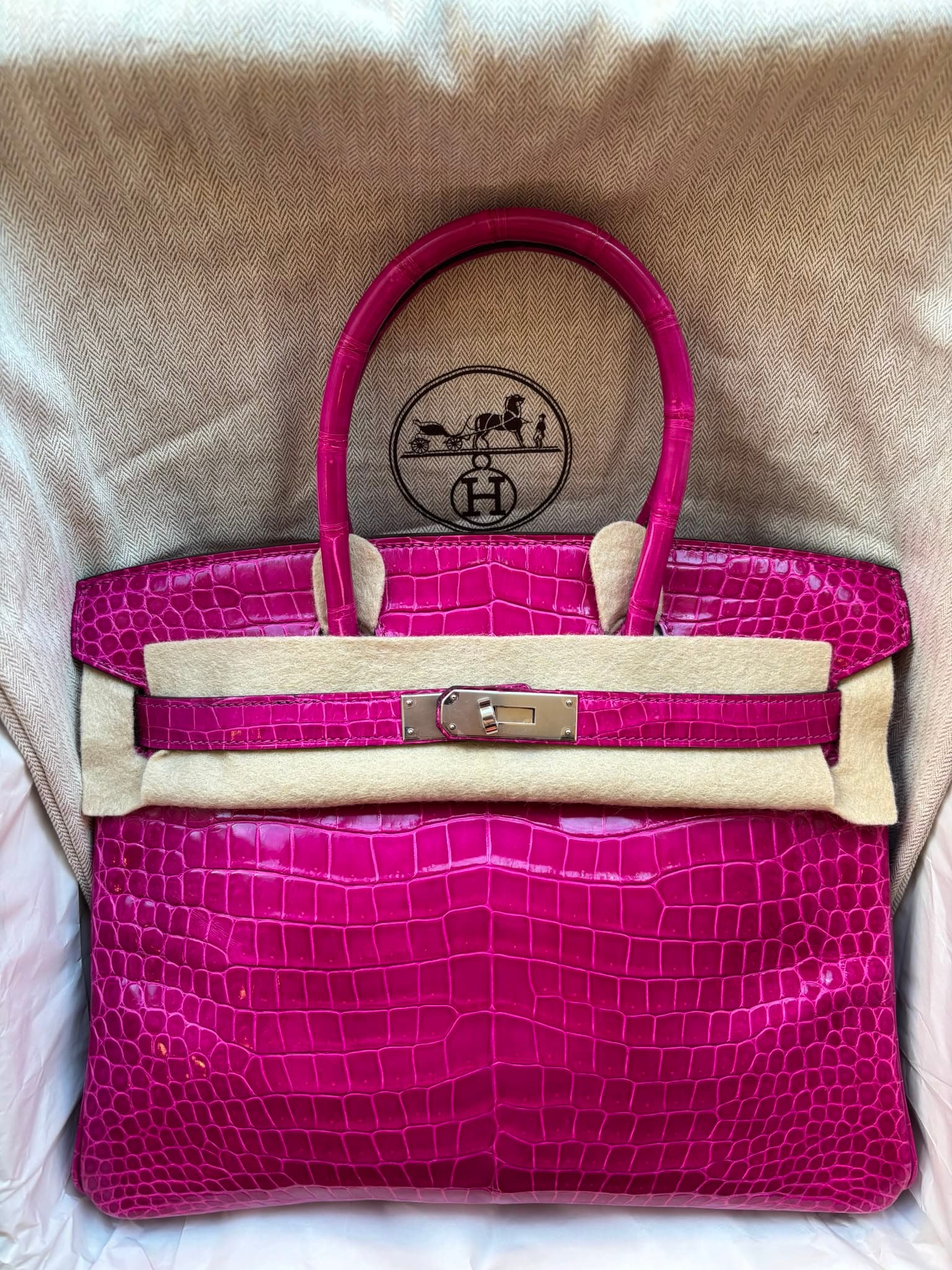
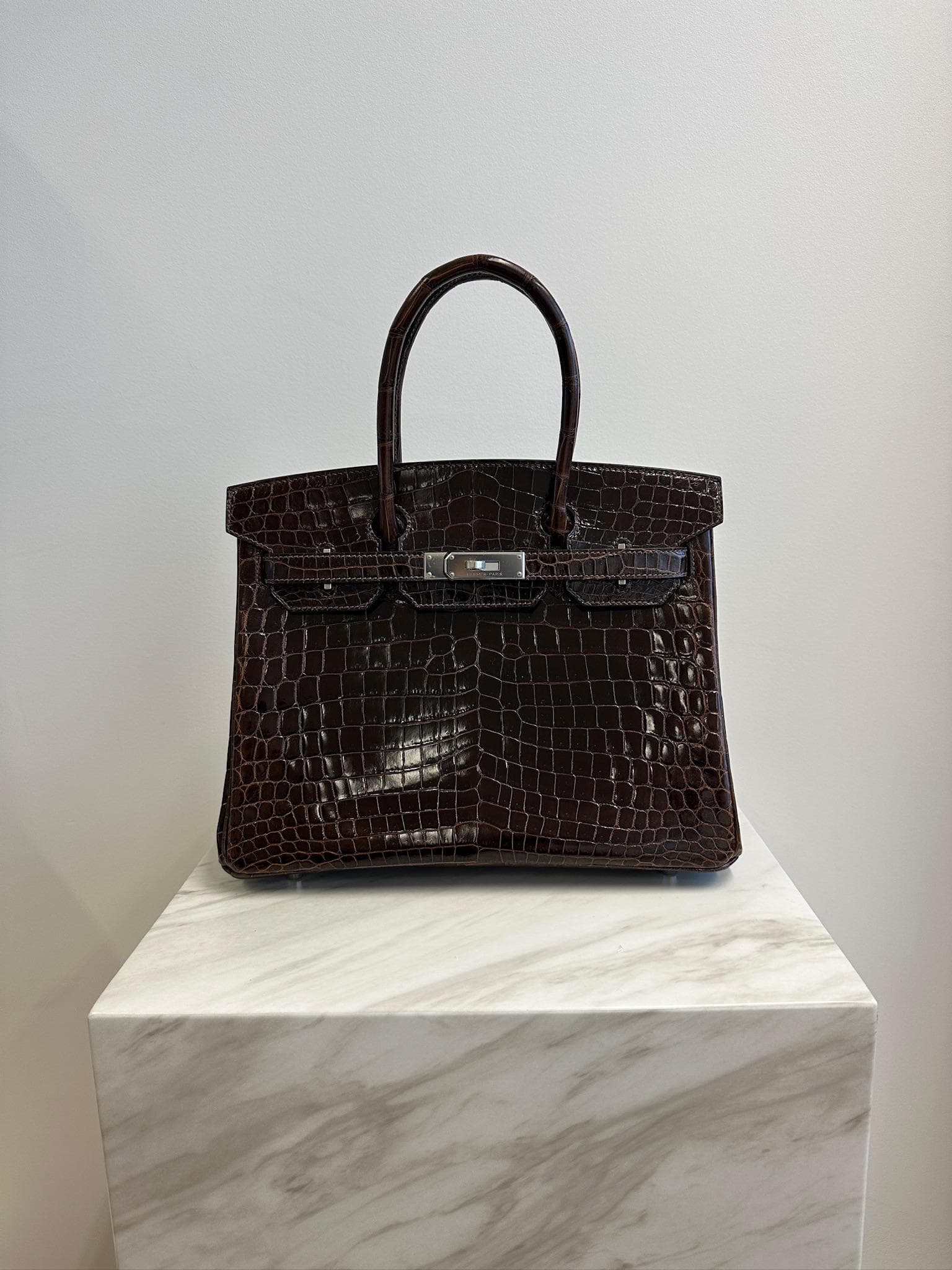
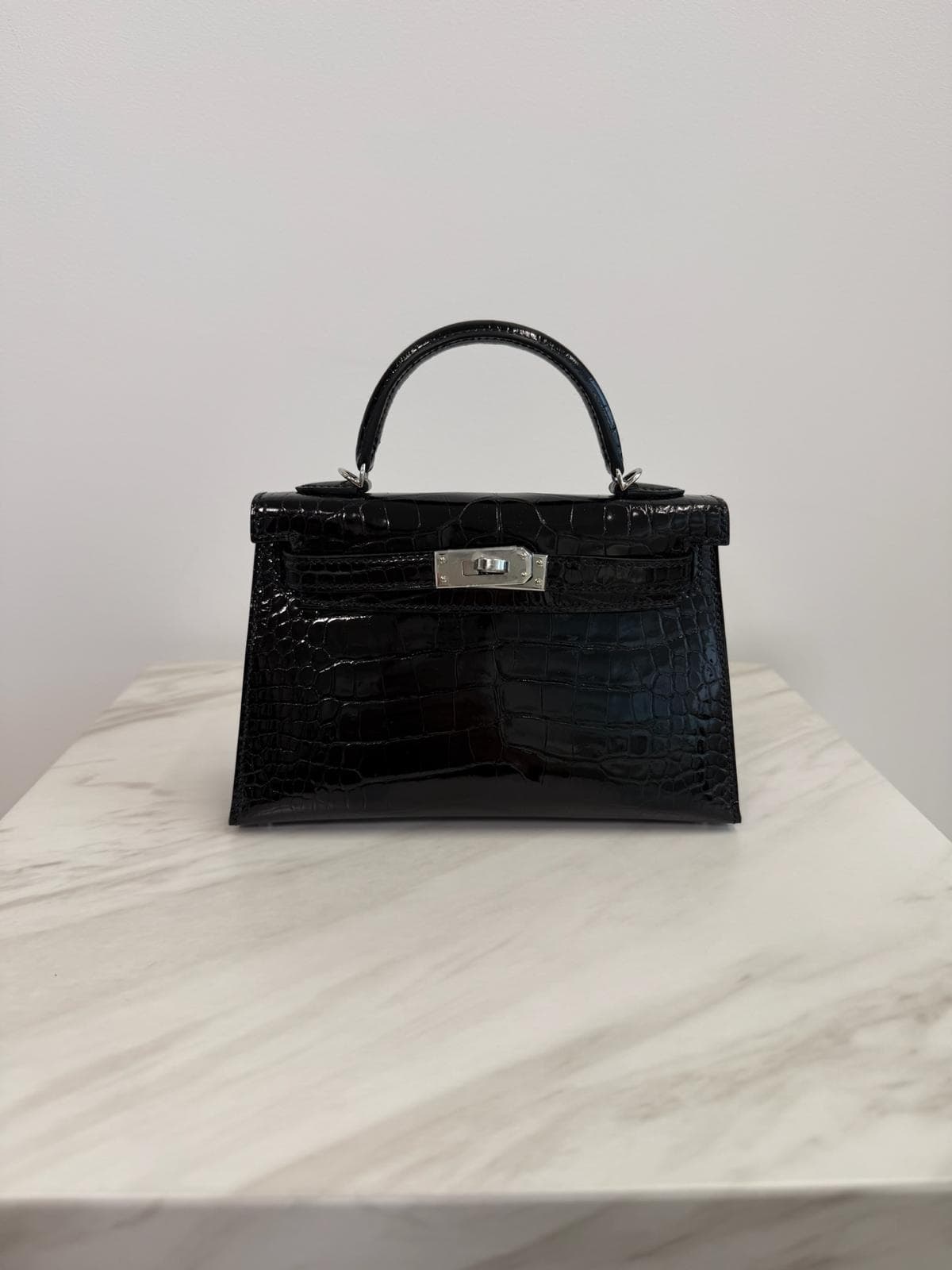
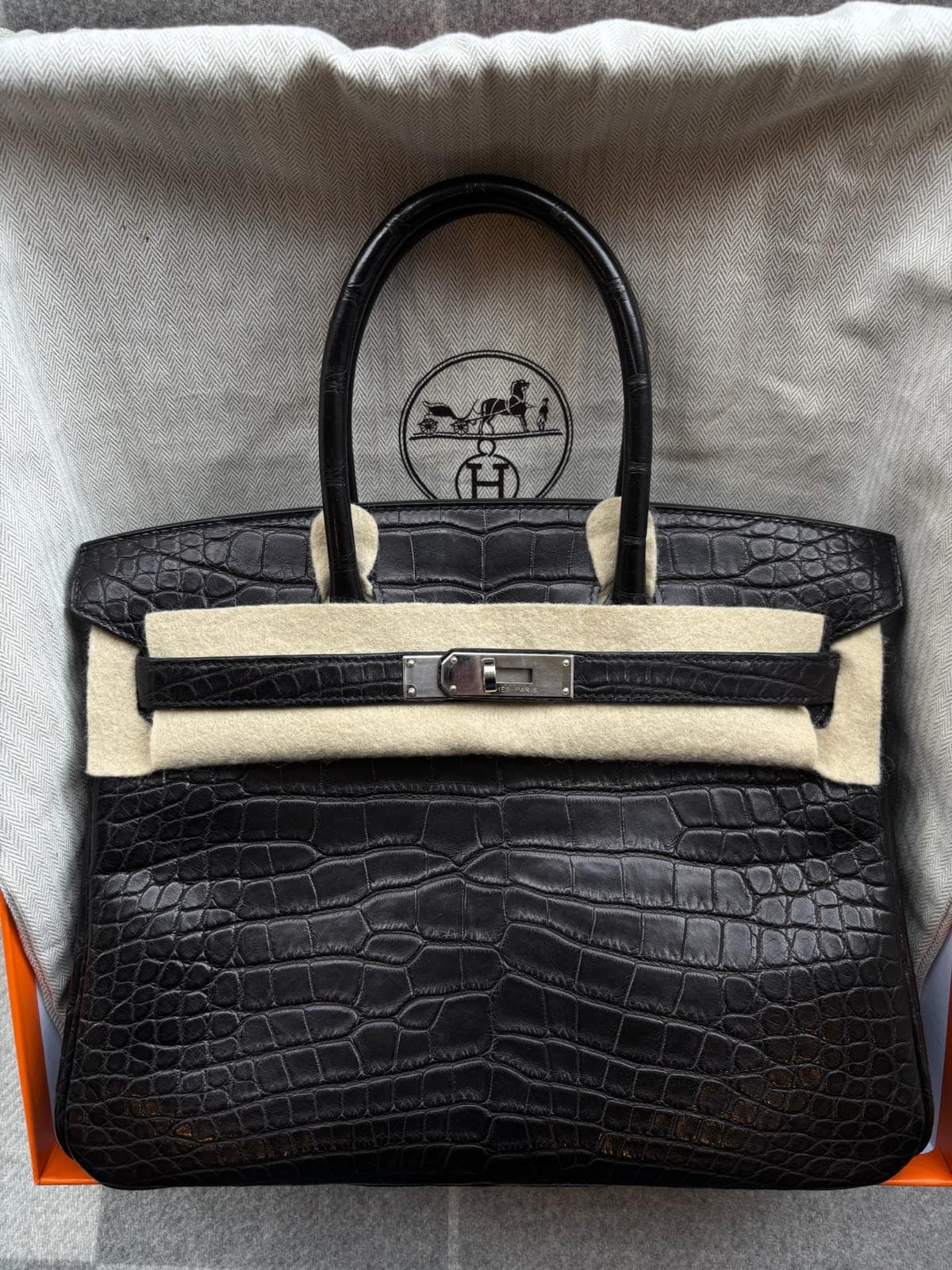
The three skins read differently once you know what to look for. Porosus carries the smallest, most regular scales of the three, with a visible pore in each scale — the trait that gives the species its name — and is generally considered the finest skin the house works with. Niloticus scales run slightly larger and softer in pattern; on a Birkin 30 they draw broader, calmer lines across the front panel. Alligator has no pores at all and slightly squarer tiling, and Hermès reserves it mostly for smaller pieces and jewel-like colours.
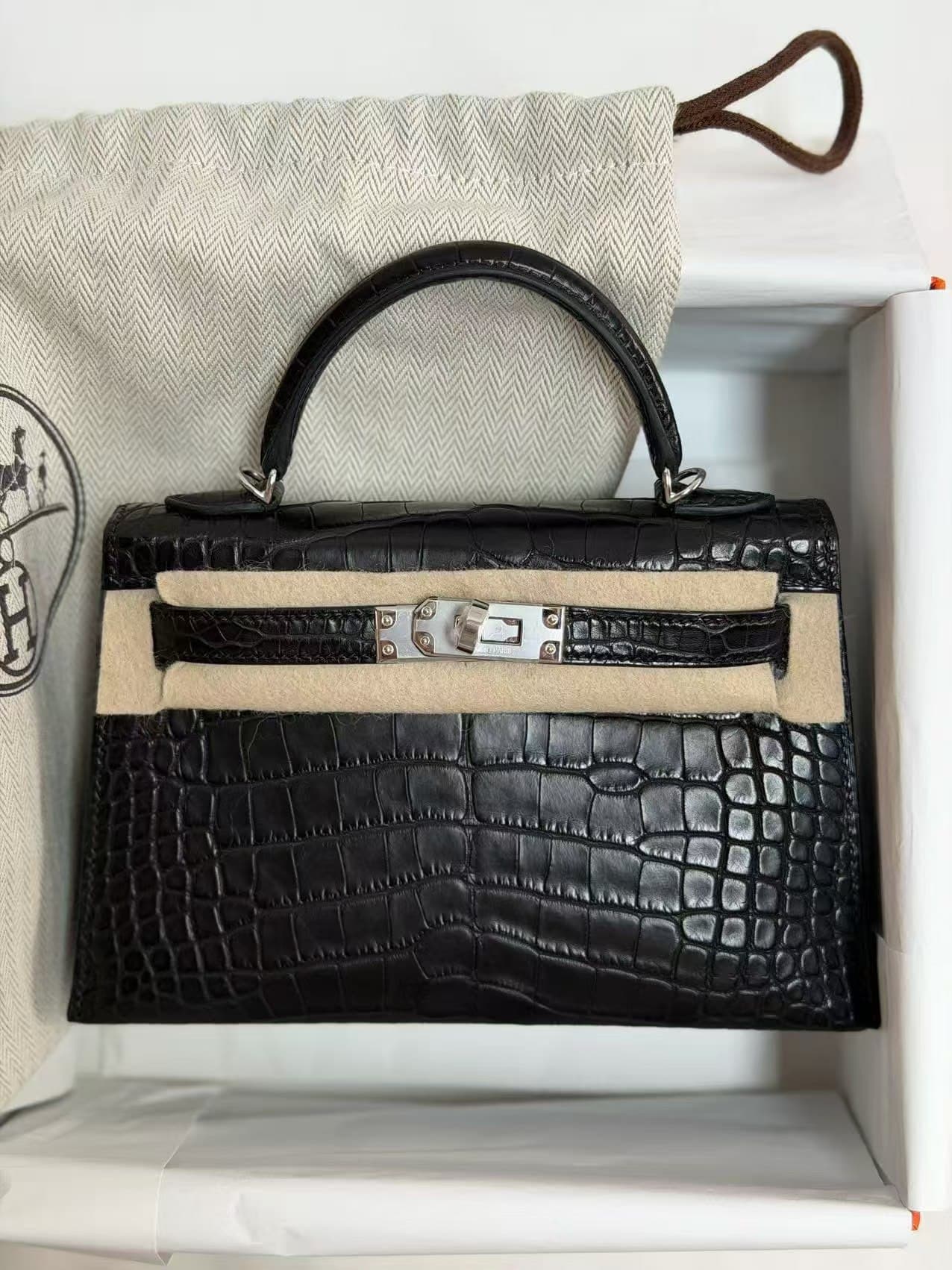
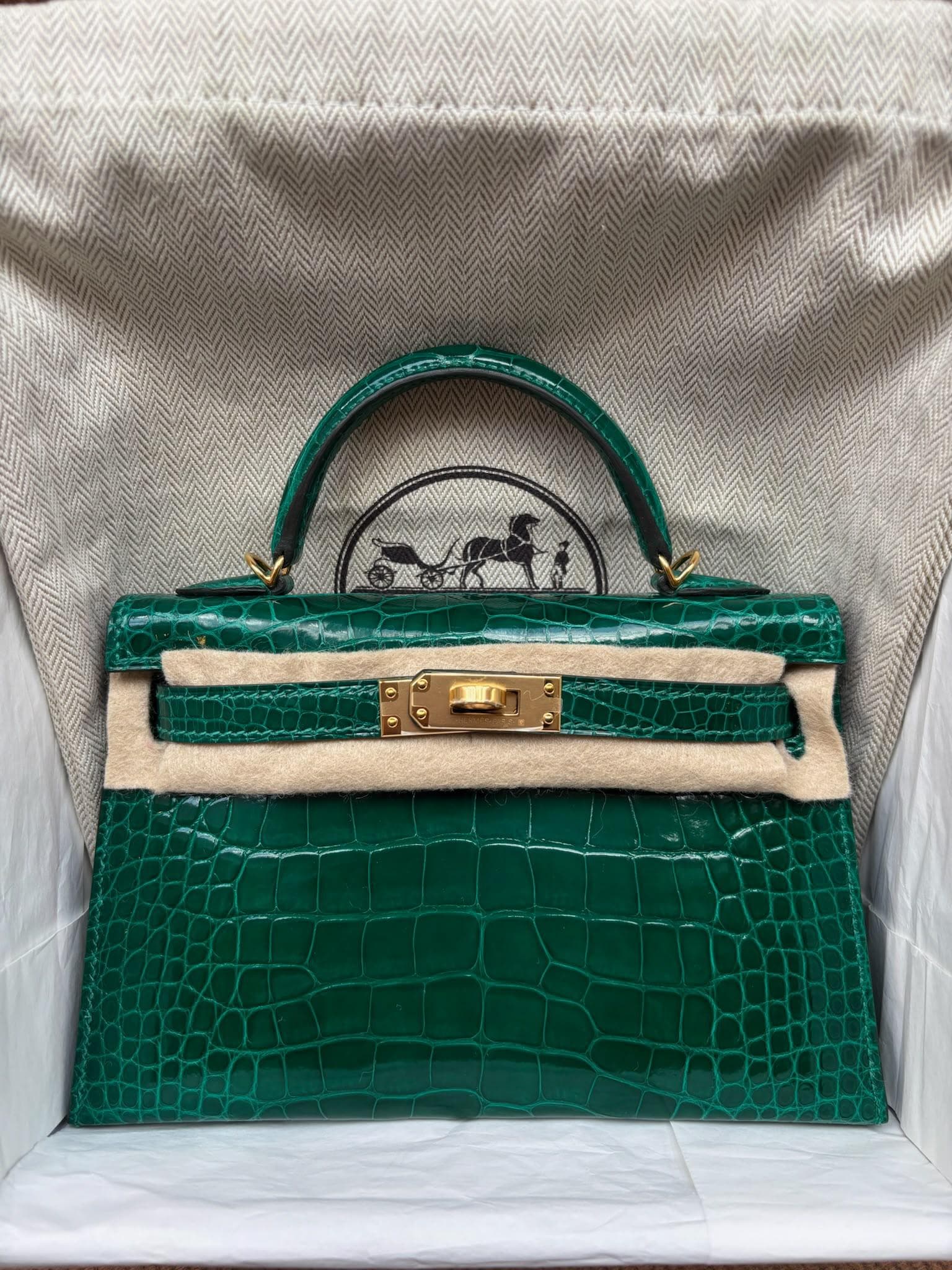
Then there is the finish. Lisse — shiny — crocodile is polished with an agate stone until the scales take on lacquer-like depth; it is the classic evening surface and photographs like glass. Matte crocodile is finished to a soft, chalky touch that reads far more casual and daytime, and has grown into the connoisseur's default over the last decade. The same bag in the same colour can feel formal in shiny and almost discreet in matte — worth deciding before you choose, and a good reason to see both in person.
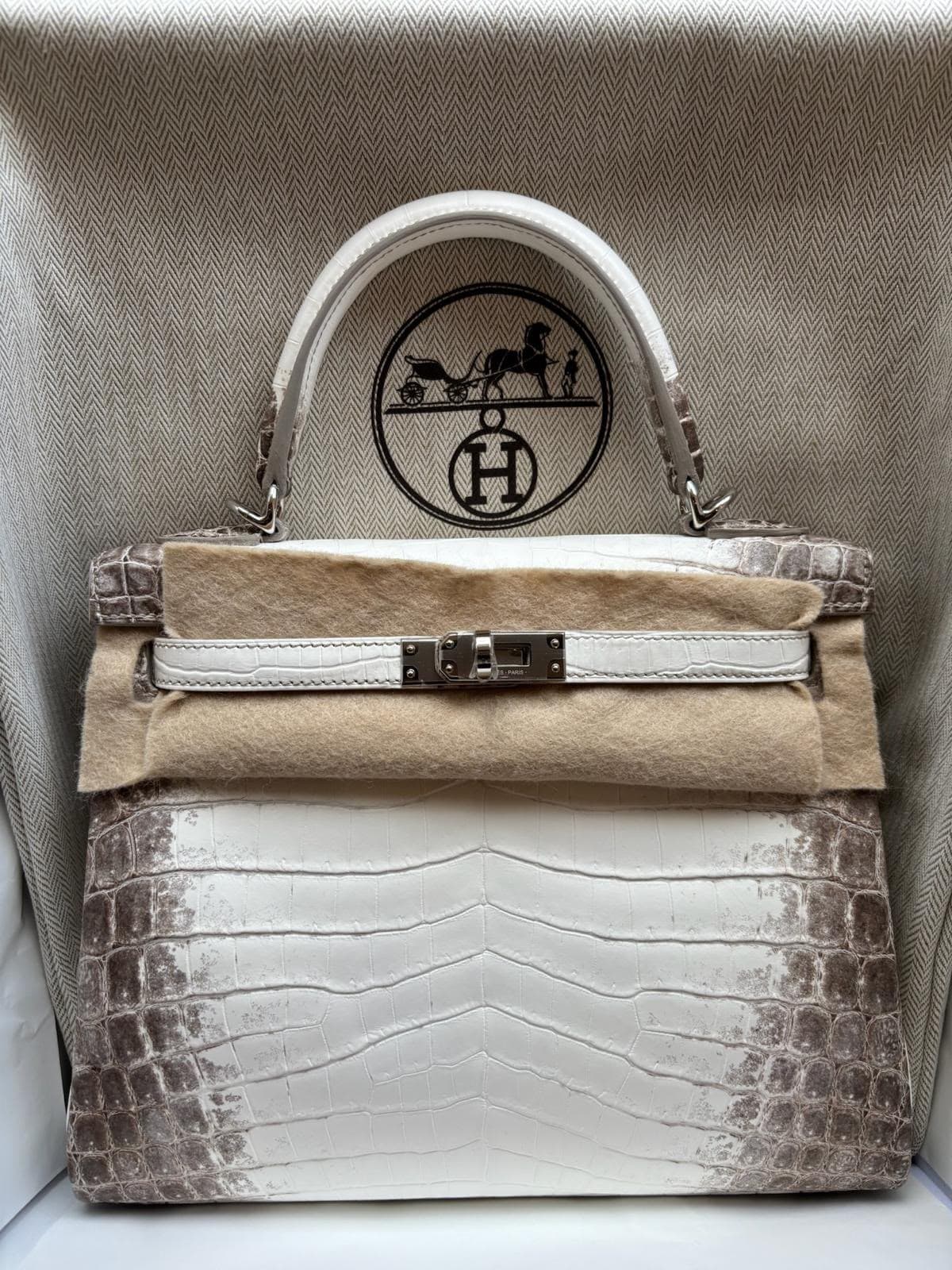
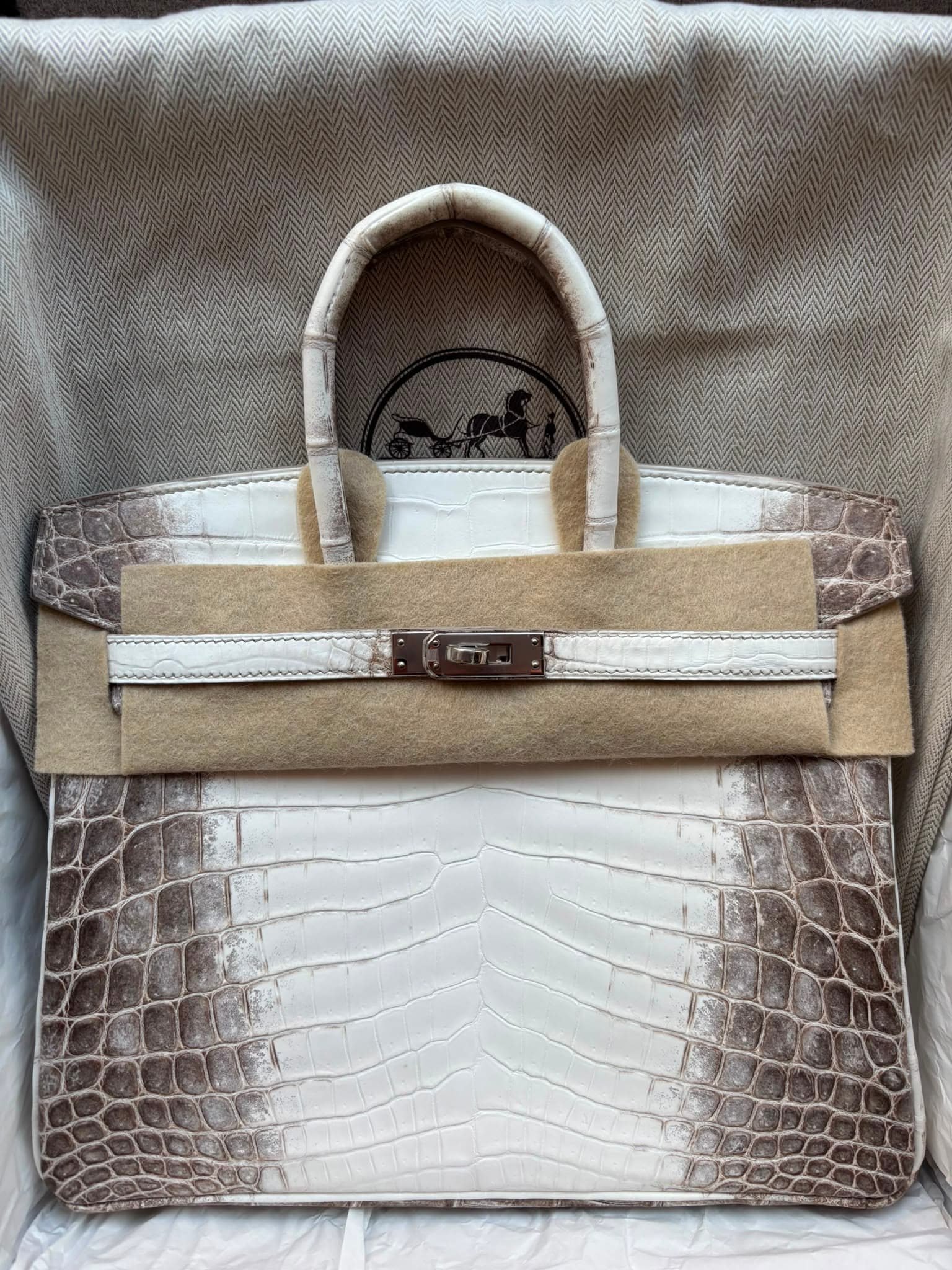
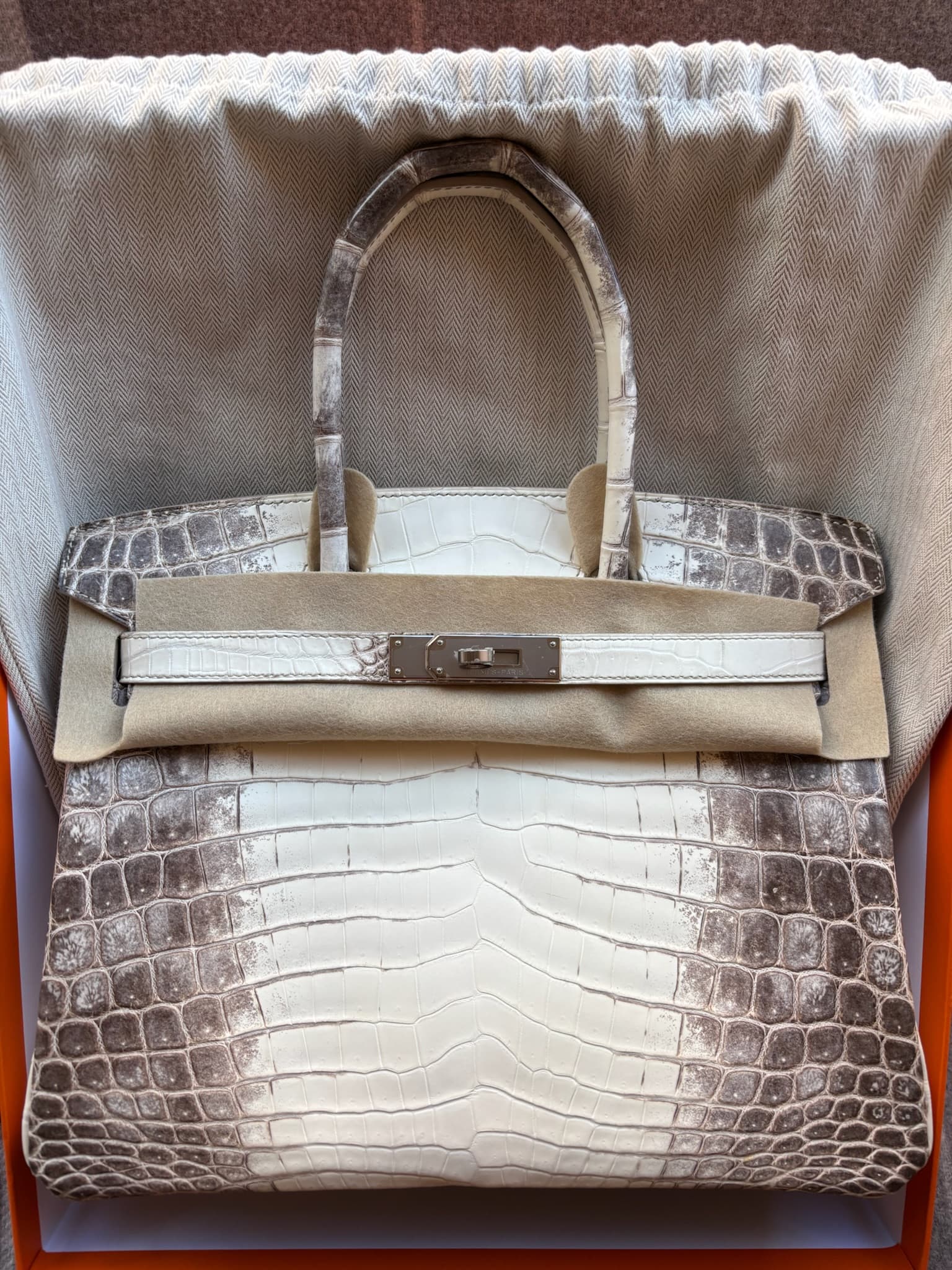
The Himalaya — Niloticus crocodile dyed in a smoky gradient from grey into white, named after the mountain light it mimics — is the most photographed expression of the craft. Its rarity is real: the dye work tolerates no correction, so few skins qualify. When a Himalaya piece passes through our stock it rarely stays long, but the quieter colours — deep greens, blues and blacks in matte — are where collectors who wear their bags tend to land.
Crocodile ages differently from calfskin, and honestly. The scales themselves are remarkably durable, but the finish asks for respect: shiny surfaces mark under water droplets if left to dry on their own, and matte skins polish subtly at friction points over years of use. None of this should discourage carrying the bag — these pieces were built to be worn — but it is why we photograph every panel of every crocodile bag before sale and note the finish condition plainly in the listing.
Provenance matters more with exotics than with anything else we sell. Farmed crocodile and alligator move internationally under CITES, the convention governing trade in protected species, and a bag travelling across borders needs the right export paperwork. We handle that side for our clients: where a piece requires permits for international delivery, we arrange them and tell you the realistic timeline before you commit, not after.
Because crocodile is the top of the range, it is also where fakes work hardest. Printed calf embossed to imitate scales is the common shortcut — the giveaway is repetition, because real scales never repeat their pattern, and pressed ones do. Our inspection covers the scale field under magnification, the species symbol, the stamp typography, hardware weight and engraving depth, and the stitch line where hand-sewing shows its irregular, saddle-stitched truth.
If you are choosing between crocodile and the house's other exotics, see them side by side: ostrich with its quill-dot geometry, lizard with its beaded micro-scale, and crocodile with its architecture of tiles. Each carries a different presence on the arm. Our exotic gallery holds the full range, and a London appointment is the honest way to feel the difference — send us the model and colours you are circling and we will have the right pieces on the table.
Questions, answered
How do I know which species my Hermès crocodile bag is?
Look beside the Hermès Paris stamp. Two small dots mean Niloticus crocodile, a caret symbol means Porosus, and a small square means American alligator. Hermès has used these marks for decades, and they are the fastest reliable way to identify the skin. Every listing on our site states the species and shows the stamp in the photo set.
What is the difference between shiny and matte crocodile?
Shiny (lisse) crocodile is polished with an agate stone to a deep gloss and reads formal — it is the classic evening finish. Matte crocodile has a soft, chalky surface that reads casual and contemporary. Neither is better; they age differently, with shiny showing water marks more readily and matte polishing slightly at friction points.
Is a Himalaya Birkin really crocodile?
Yes — the Himalaya is Niloticus crocodile dyed in a gradient from smoky grey to pearl white. The dyeing is unforgiving, which is why so few are made. It is widely considered the rarest regular expression of the Birkin and Kelly.
Do crocodile bags need special paperwork?
For international shipping, yes. Crocodile and alligator are covered by CITES, so a bag crossing borders needs export documentation. We arrange the permits for international deliveries and give you the realistic timeline before purchase. Within the UK no permit is needed to buy or own the bag.
How can I be sure a crocodile bag is genuine?
Real crocodile scales never repeat their pattern — embossed imitations do. We inspect the scale field under magnification, verify the species symbol and stamp typography, weigh and examine the hardware, and check the saddle stitching by hand in our London workroom before any exotic piece is listed.
Can I see crocodile pieces in person before buying?
Yes — viewings are by appointment in London. Tell us which models and colours you are considering and we will prepare the pieces, alongside comparable ostrich or lizard bags if you want to feel the differences before deciding.
Can’t find it? We’ll source it.
Tell us what you’re looking for — model, colour, leather, size — and our team will find it for you, usually within days.
Start a Search