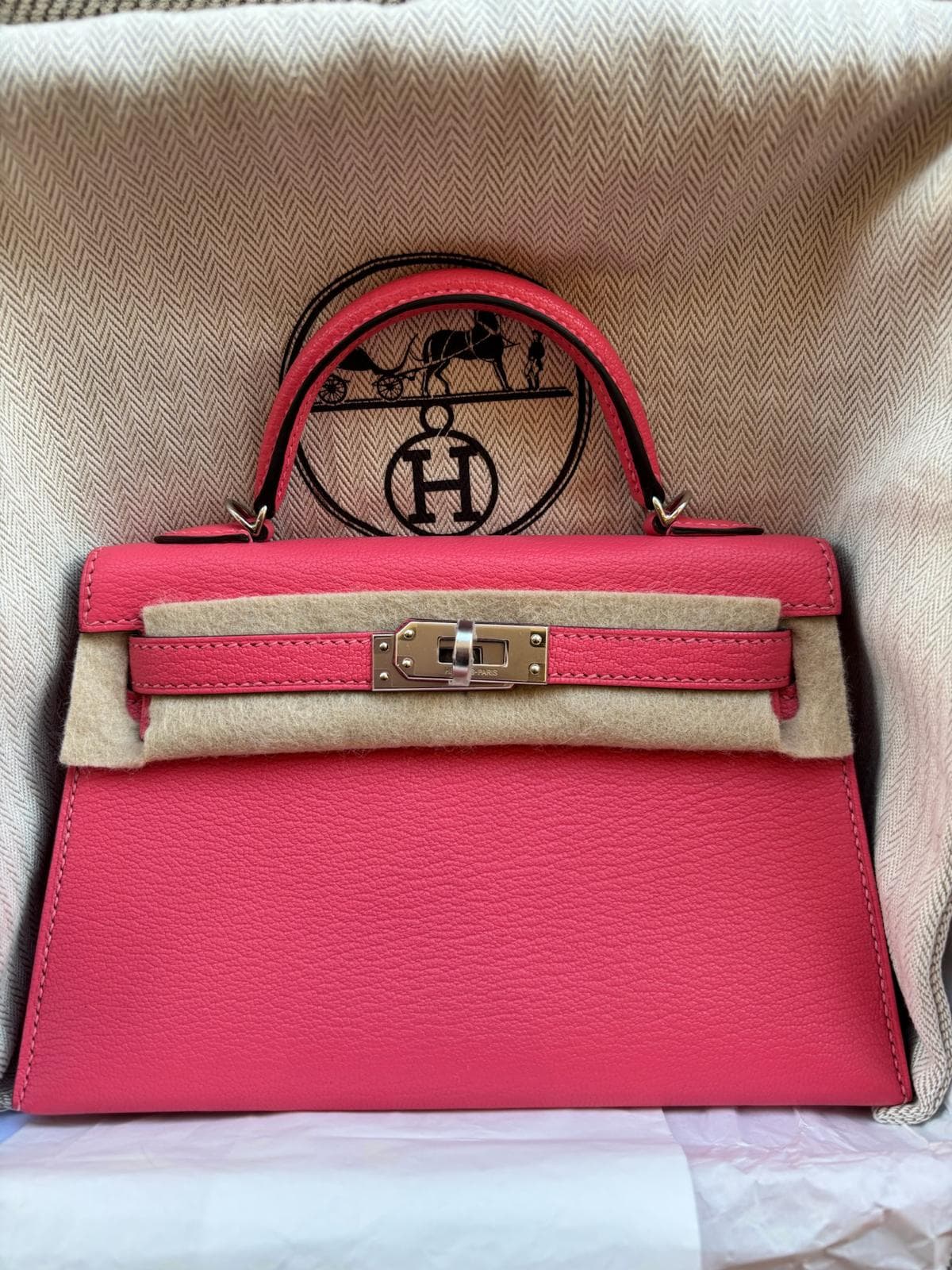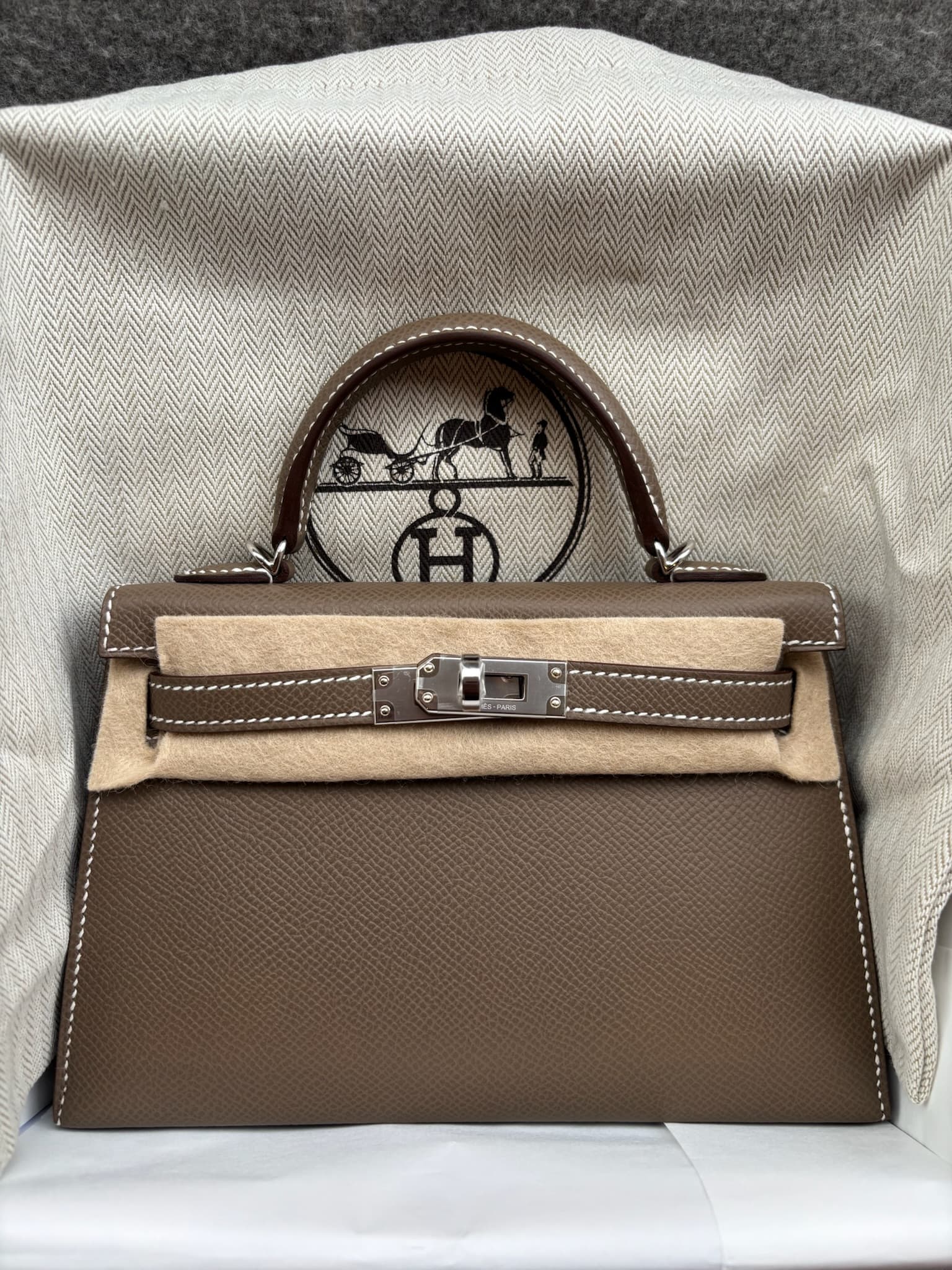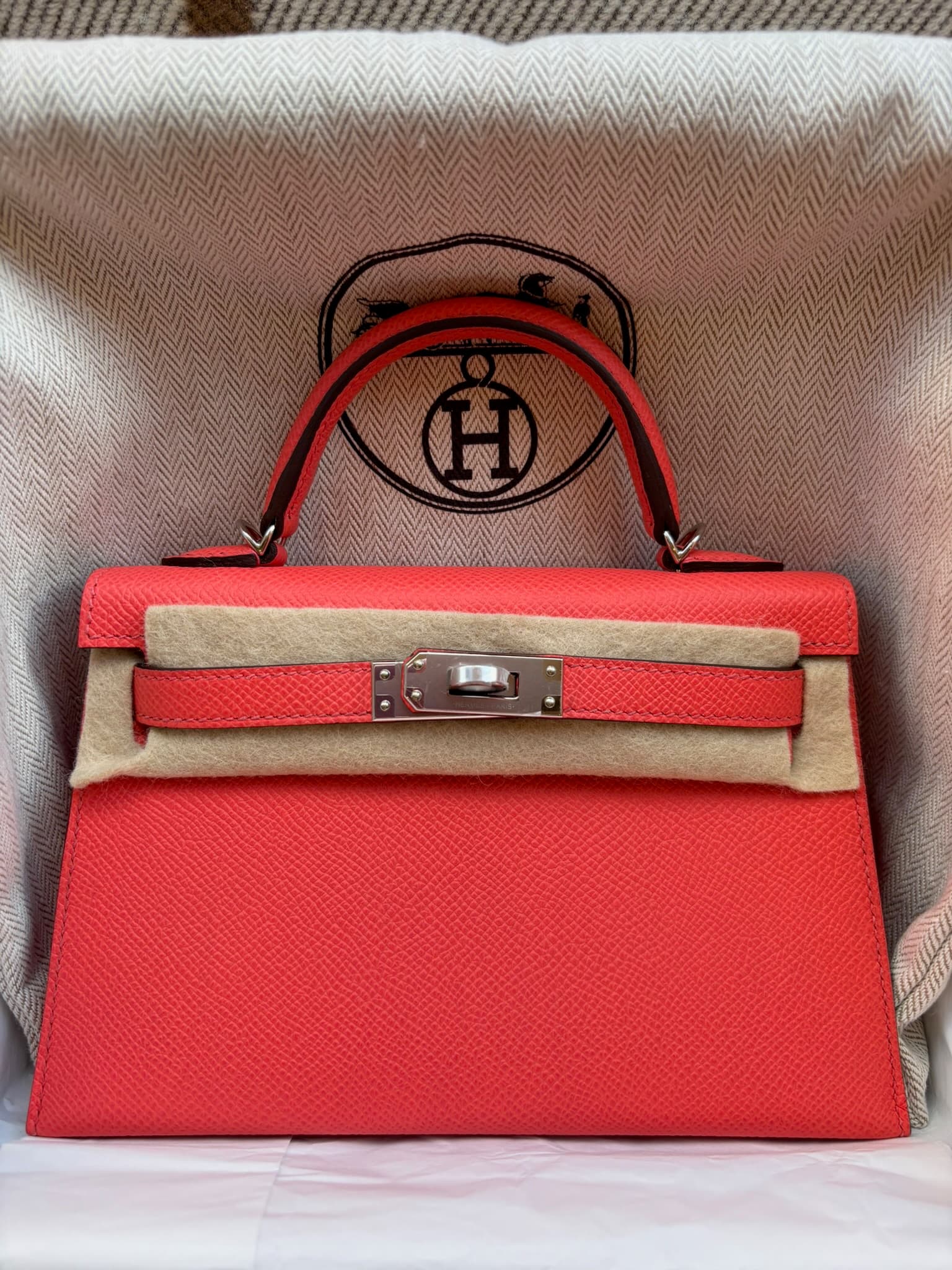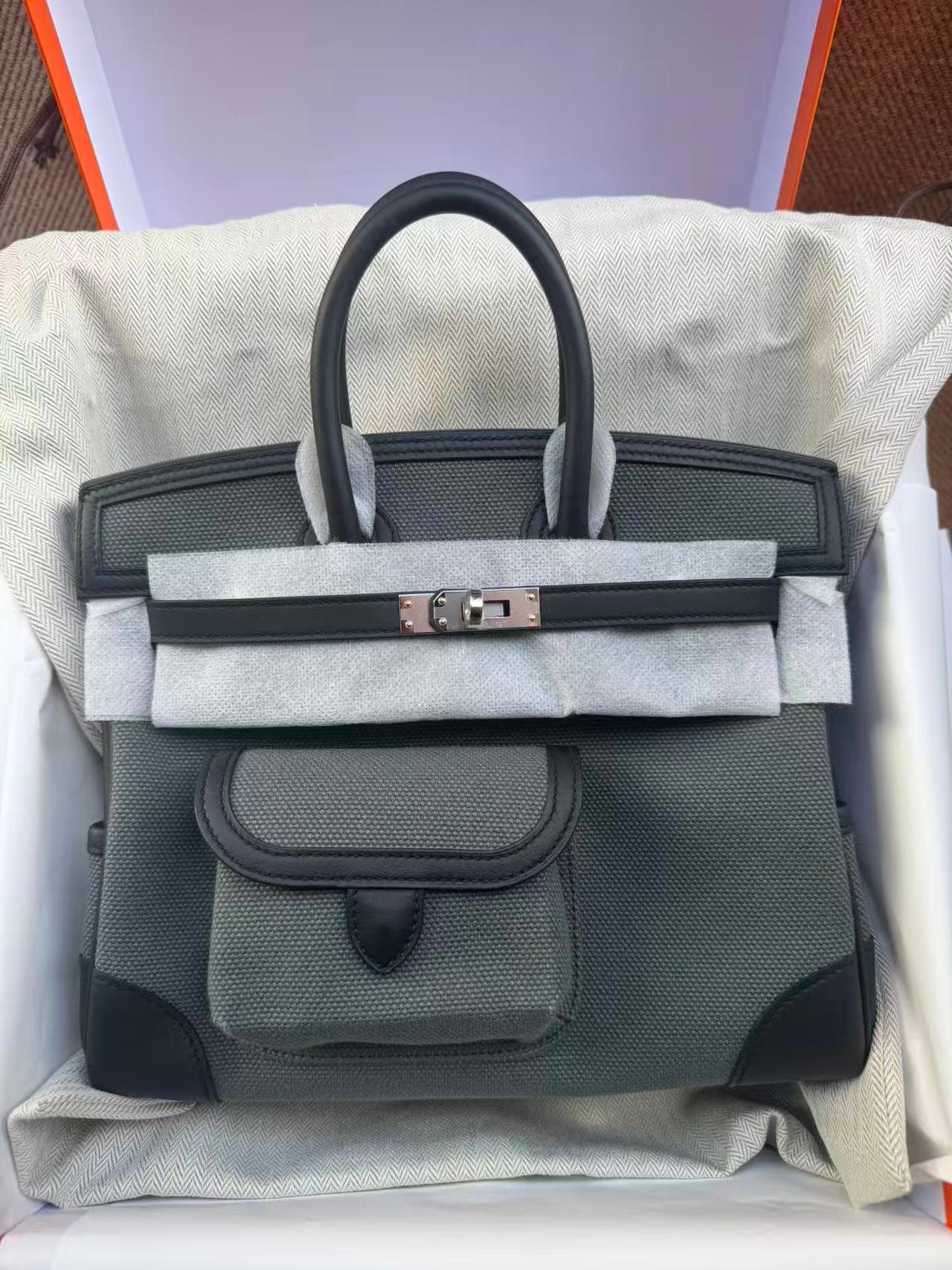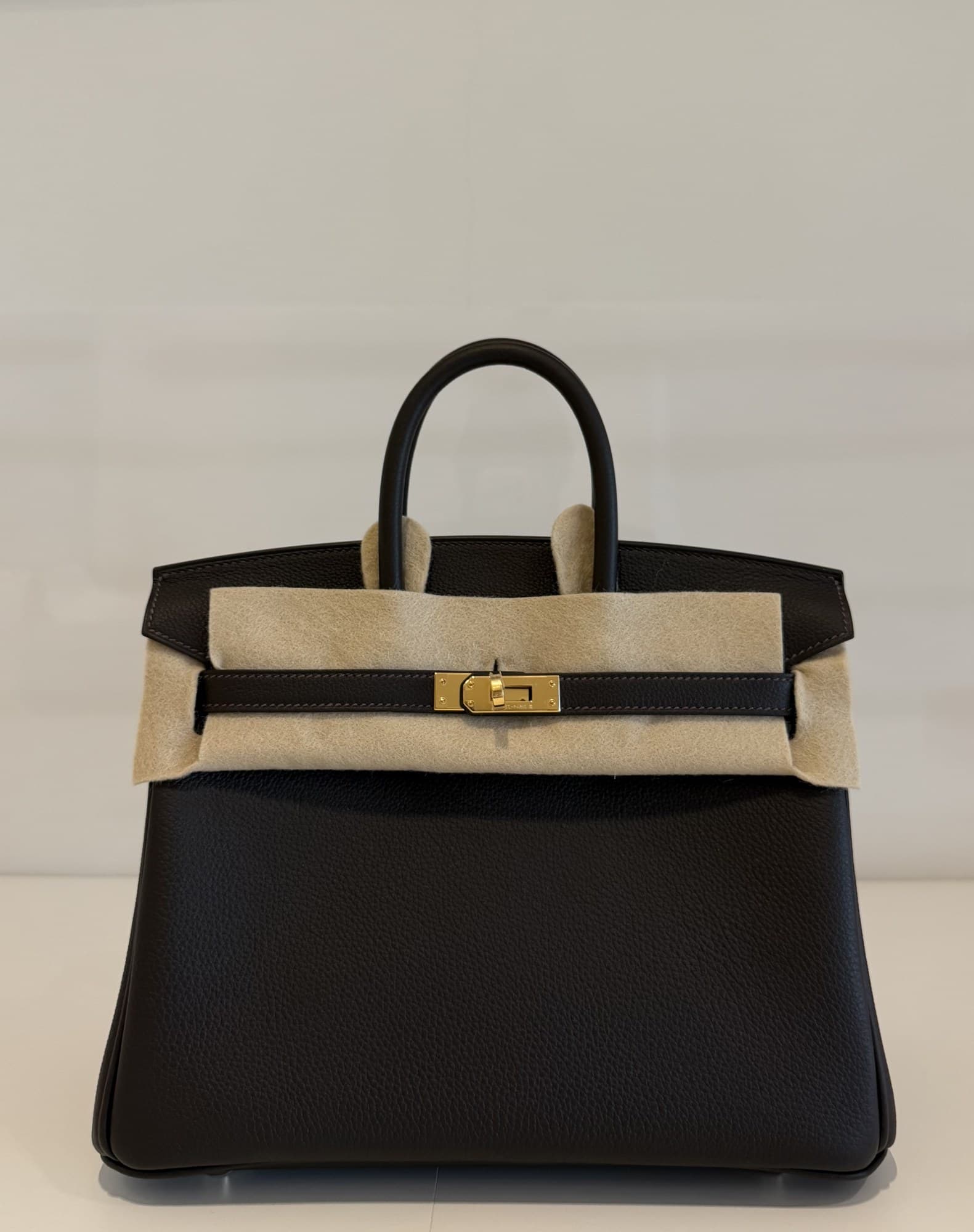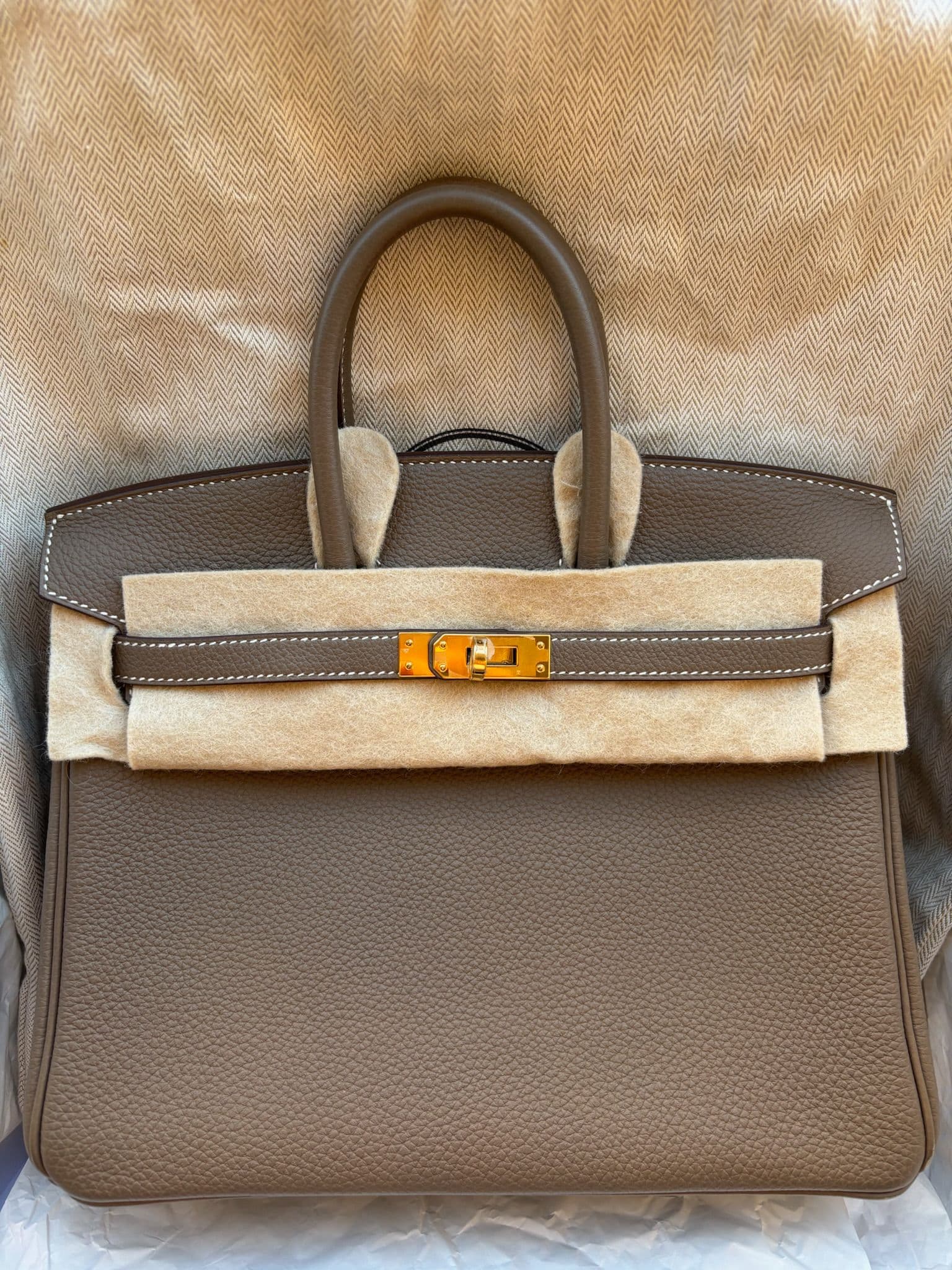
Here is a sentence that has saved buyers millions and cost counterfeiters the same: Hermès does not issue authenticity cards, and Hermès bags do not carry serial numbers. If a seller hands you a Birkin with a glossy certificate of authenticity tucked in the pocket, you are not holding extra reassurance — you are holding the single loudest red flag in the entire secondary market. This guide explains what Hermès actually provides, what the fakes invent, and how real verification works.
The short answer, expanded
No Hermès handbag — not a Birkin, not a Kelly, not a Constance, not anything — has ever come with an authenticity card, a certificate, a hologram sticker or a serial number. The house’s position is quietly aristocratic: the bag is its own certificate. Every element — the saddle stitching, the hardware, the heat stamp, the leather itself — is the authentication, legible to anyone trained to read it. Paper can be printed by anyone; forty hours of a craftsman’s handwork cannot. Counterfeiters, who can absolutely print paper, love nothing more than an official-looking card, because it reassures exactly the buyers who have not read this article.
What a real Hermès bag actually comes with
The legitimate accompaniments, none of which is a certificate: the orange box and its ribbon; the dust bag in its era-correct fabric and logo; the care booklet — a small pamphlet about leather care, often mistaken for documentation, which carries no bag-specific information at all; the rain cover with many models; spare hardware such as the clochette, lock and keys on Kellys and Birkins; and, for boutique purchases, a till receipt naming the item. For exotic skins there is one genuine document: the CITES paperwork governing crocodile, alligator, lizard and ostrich — a legal requirement for crossing borders, and the only certificate an Hermès bag legitimately travels with, as our exotic skins guide details.
The blind stamp: what exists instead of a serial number
What the internet calls a serial number is actually the blind stamp — a small embossed code, historically on the strap or near the stamping, more recently inside — recording the year of production and workshop information. Two crucial points. First, it is a date stamp, not a unique serial: thousands of bags share the same letter. Second, it is one clue among dozens, not a verification in itself — counterfeiters emboss blind stamps too, sometimes correctly. Reading them is genuinely useful for dating a piece, and our blind stamp guide teaches the full alphabet, from the old circles and squares to the modern unframed letters. But a correct blind stamp proves only that the counterfeiter did their homework; an incorrect one proves everything.
Why the confusion? Blame Chanel
The authenticity-card myth persists partly because the other great house did issue them: Chanel shipped authenticity cards with matching internal stickers for decades, then replaced the system with embedded microchips. Buyers who learned luxury through Chanel arrive at Hermès expecting paperwork, and counterfeiters manufacture exactly what those buyers expect. The houses simply chose different philosophies — Chanel documents the bag, Hermès embodies the authentication in the object. Since we stock both houses, we verify both daily, each by its own rules; the comparison runs deeper in Hermès vs Chanel.
What the fakes include, and what it tells you
A field guide to fraudulent reassurance. The laminated authenticity card: disqualifying, instantly. A serial number printed on a leather tab or metal plate: no such thing exists — disqualifying. QR codes or NFC tags claiming to verify the bag on a website: an invention of the counterfeit industry, and the website is theirs. Certificates from third-party authentication services included by the seller: not disqualifying, but worth precisely the rigour of whoever issued them — treat as a seller’s opinion, not a fact. Receipts: genuinely useful when real, and the most forged document of all; a receipt should support a bag that already checks out, never rescue one that does not. The pattern is consistent — counterfeit sellers over-document because the bag cannot speak for itself.
How real authentication actually works
Professionals read the object. The stitching: hand-sewn saddle stitch at the stress points, angled and slightly irregular in the living way machine stitching never is. The heat stamp: font, spacing, depth and placement, correct for the era the blind stamp claims. The hardware: weight, plating, engraving depth, the turn of the lock. The leather itself: Togo’s grain, Epsom’s emboss, Box’s sheen — each with a hand the fakes approximate but do not match. The proportions, the interior construction, the details counterfeiters miss. Our team does this in-house for every piece before it lists, and the process is documented in how to authenticate an Hermès bag. No single tell decides; the verdict is the accumulation.
What to ask a seller, given all this
Skip the does-it-come-with-papers question — you now know the answer proves nothing either way. Ask instead: who authenticated this bag, and is that person accountable to me? Are the photographs of the exact item? What does the blind stamp read, and does the claimed year match the hardware and stamp style of that era? What is the written guarantee if the piece is ever proven inauthentic? At JULL the answers are structural: in-house authentication before listing, exact-item photography including the stamp, and a published policy under which an inauthentic piece would be refunded in full. The wider vetting checklist lives in is it safe to buy Hermès online.
Buying without a receipt: perfectly normal
A final reassurance, because the question follows naturally: most pre-owned Hermès bags trade without their original receipt, and this is entirely normal — receipts name buyers, buyers value privacy, and paper survives neither house moves nor decades. A bag’s authenticity is in the bag. We buy and sell exceptional pieces with no paperwork at all, verified entirely on the object, and if you are selling to us, a missing receipt will not move the valuation. The orange box is nice; the bag is the point.
How the myth spread — and why it will not die
The authenticity-card myth has three parents. The first is the wider luxury industry: Chanel’s cards, watch papers, jewellery certificates — buyers reasonably assume documentation scales with price, and Hermès sits at the top of the price ladder. The second is the counterfeit industry itself, which has shipped official-looking cards for decades precisely because they close sales; every fake sold with a card teaches its buyer, and everyone that buyer advises, that cards are what real ones come with. The third is the resale platforms’ own language — comes with papers — which flattens Chanel norms onto every house. The result is a feedback loop in which the least documented great bag in the world is the one buyers most expect paperwork for. Breaking that loop is worth doing loudly: knowledge of this single fact filters out a remarkable share of fraud before any expert is needed.
The five-minute desk check anyone can do
Before any professional opinion, an armchair audit catches the crude fakes. One: search the seller — registered company, published number, human contact, per the checklist in choosing a reseller. Two: demand exact-item photographs — stamp, hardware engraving, stitching close-ups — and refuse catalogue images. Three: read the blind stamp and check the claimed year is even possible for the model and hardware style; a 2005-stamped bag with 2020s hardware is a fiction. Four: price sanity — a Birkin at half market is not a bargain, it is a confession; calibrate against Hermès prices 2026. Five: the paperwork tell you now own — any authenticity card, serial plate or verification QR code ends the conversation. Five minutes, no expertise, most fraud gone. What survives the desk check then deserves the professional inspection.
What we do at intake, piece by piece
For transparency, the JULL process every bag passes before listing. Physical inspection first: stitch work under magnification, hardware weight and engraving, stamp typography against era references, leather hand and grain, interior construction and hidden finishing — the accumulation-of-evidence method from our authentication guide. Then documentation of the piece itself: the exact-item photography that becomes the listing, blind stamp recorded, condition graded honestly, spa history and CITES paperwork noted where they exist. Only then does a bag reach the shelf. No certificates are printed at the end of this — deliberately. The listing is the dossier, the policy is the guarantee, and the bag remains, as the house intended, its own best proof.
Case notes from the intake desk
Patterns worth sharing from bags offered to us. The card-equipped Birkin arrives weekly: often a heartbreaking story — an inheritance, a gift, a marketplace bargain — and the card is almost always accompanied by a bag whose stitching settles the question inside a minute. The over-papered bag: receipt, third-party certificate, printed provenance letter — and a blind stamp from a year the model did not exist; documentation stacked precisely where the object is weakest. The naked masterpiece: no box, no dustbag, no paper, one magnificent and entirely genuine Kelly — bought decades ago, lived with properly, worth every pound of a full valuation. And the honest surprise: owners convinced their genuine bag is fake because it lacks papers, delighted to learn the absence is the norm. The desk teaches one lesson on repeat — paper correlates with fraud, the object correlates with truth. Buy the bag, not the folder, and sell to people who assess the same way.
The one-sentence rules to remember
If this page had to compress into a pocket card, it would read: no card, no serial, no registry — ever; the blind stamp is a date, not an ID; the only legitimate certificate is CITES on exotics; paperwork stacked high is a warning, not a comfort; the receipt is optional history, not proof; and the bag itself, read by accountable experts, is the only authentication that exists. Commit those six lines to memory and you are better armed than most of the market — and better armed than every buyer the counterfeiters are counting on. The deeper training, marker by marker, is in the authentication guide.
Frequently asked questions
Is there any way to verify an Hermès bag by a number online?
No — no database, no registry, no lookup exists, official or otherwise. Any website offering serial verification for Hermès is part of the problem it claims to solve.
Do new boutique purchases come with any proof at all?
A till receipt naming the item — useful, personal, and routinely absent from pre-owned bags decades later. Its absence is normal, not suspicious.
Do Hermès bags come with authenticity cards?
No — never, in any era, for any model. A bag accompanied by an authenticity card is accompanied by proof of forgery.
Do Hermès bags have serial numbers?
No. They carry a blind stamp — a date-and-workshop code shared by thousands of bags — not a unique serial. Anyone offering to check the serial number of an Hermès bag is improvising.
How do I check what year my Hermès bag is?
Read the blind stamp against the year table in our blind stamp guide. Letter shapes and their surrounds map to specific years.
My bag came with a certificate from an authentication service — is that bad?
Not bad, just secondary. Third-party opinions vary in rigour; the object outranks the paperwork, always.
Does the original receipt increase a bag’s value?
Marginally at most, and mainly as provenance garnish on exceptional pieces. Condition, colour, leather and model do the real work.
What paperwork should an exotic Hermès bag have?
CITES documentation — the one legitimate certificate in the Hermès world, legally required for crocodile, alligator, lizard and ostrich when crossing borders. Every exotic we sell ships with it.
Can Hermès authenticate my bag for me?
The house famously declines to authenticate as a service. The practical equivalent: the spa quietly accepts only genuine pieces — our Hermès spa guide explains.