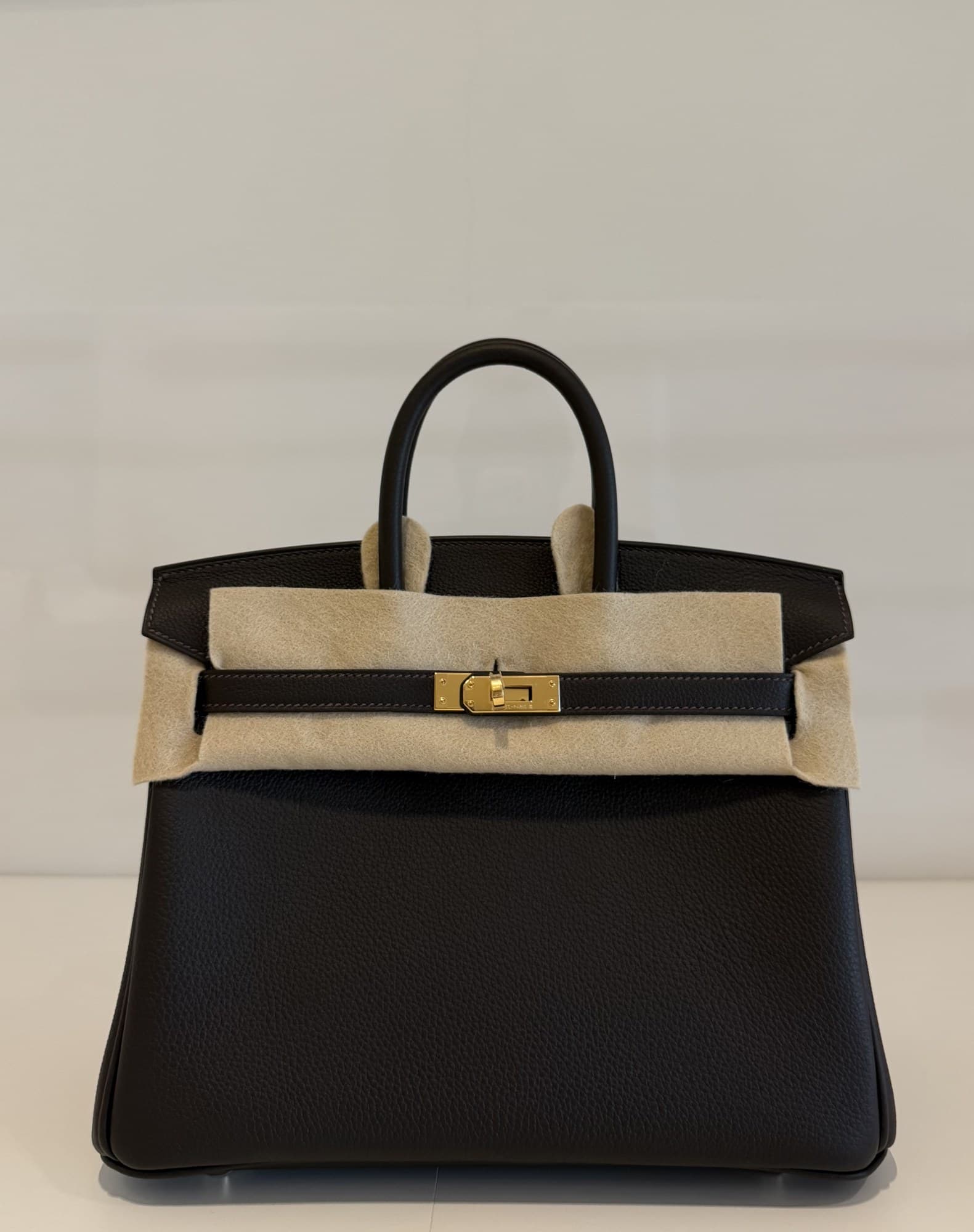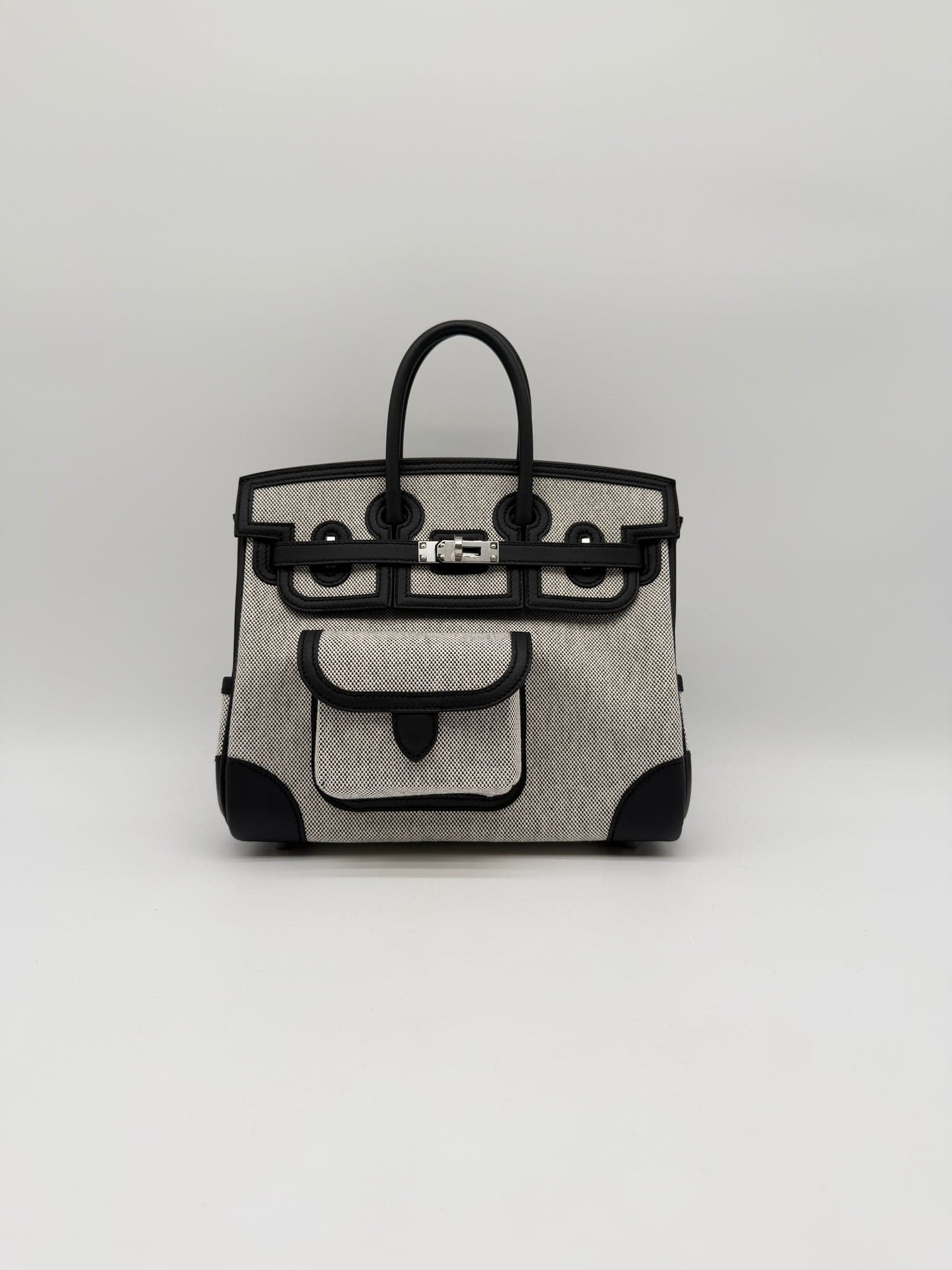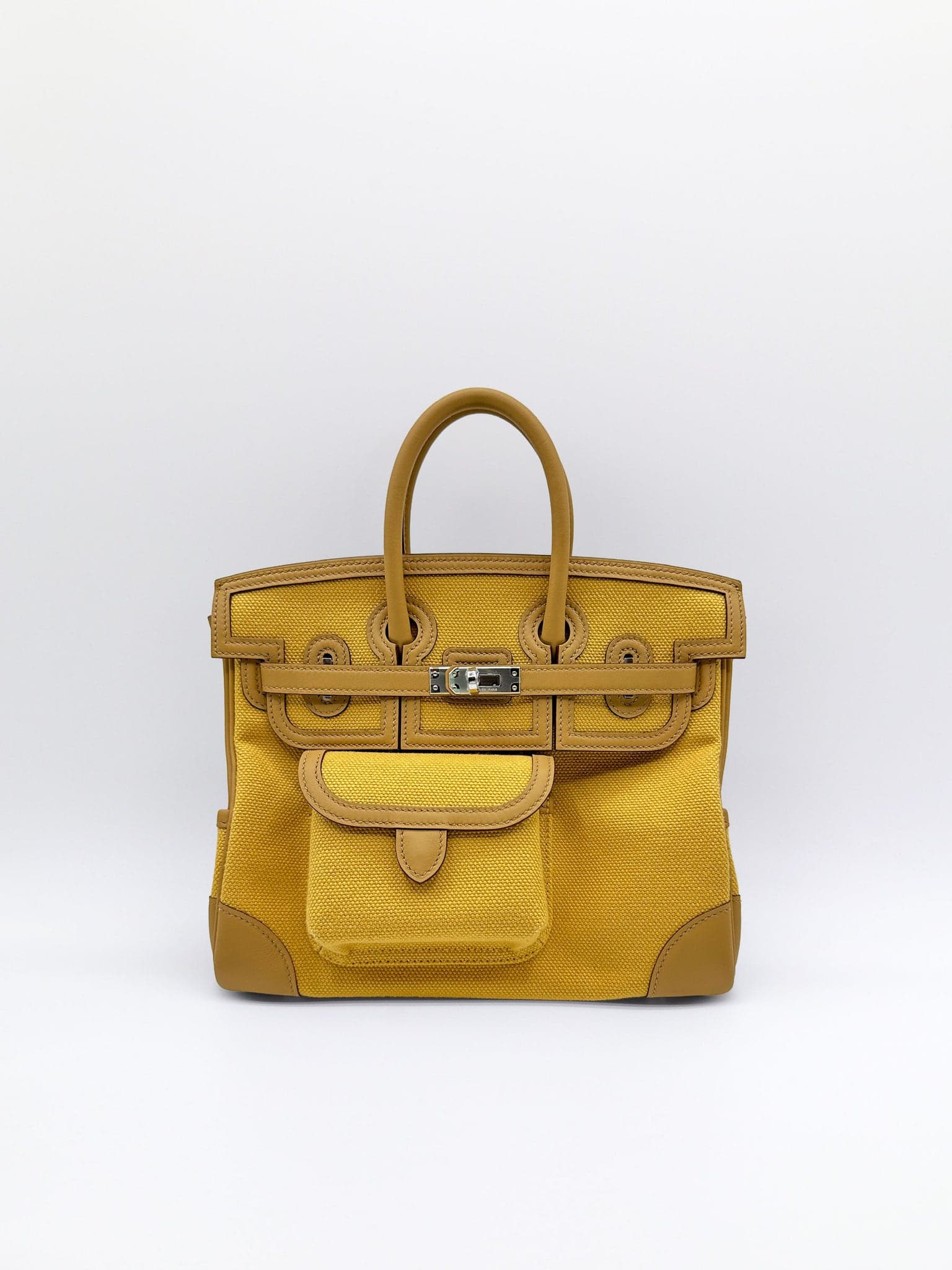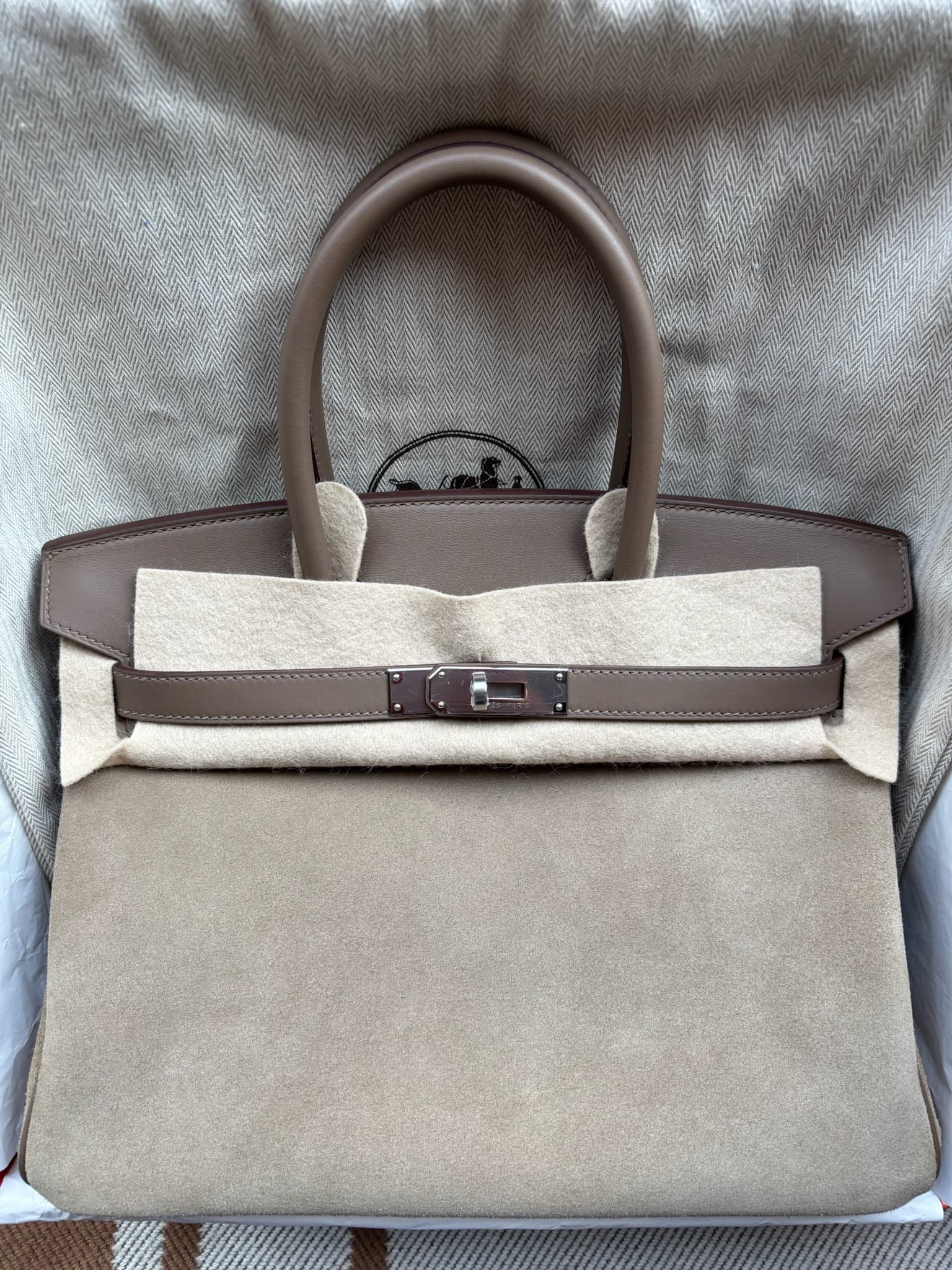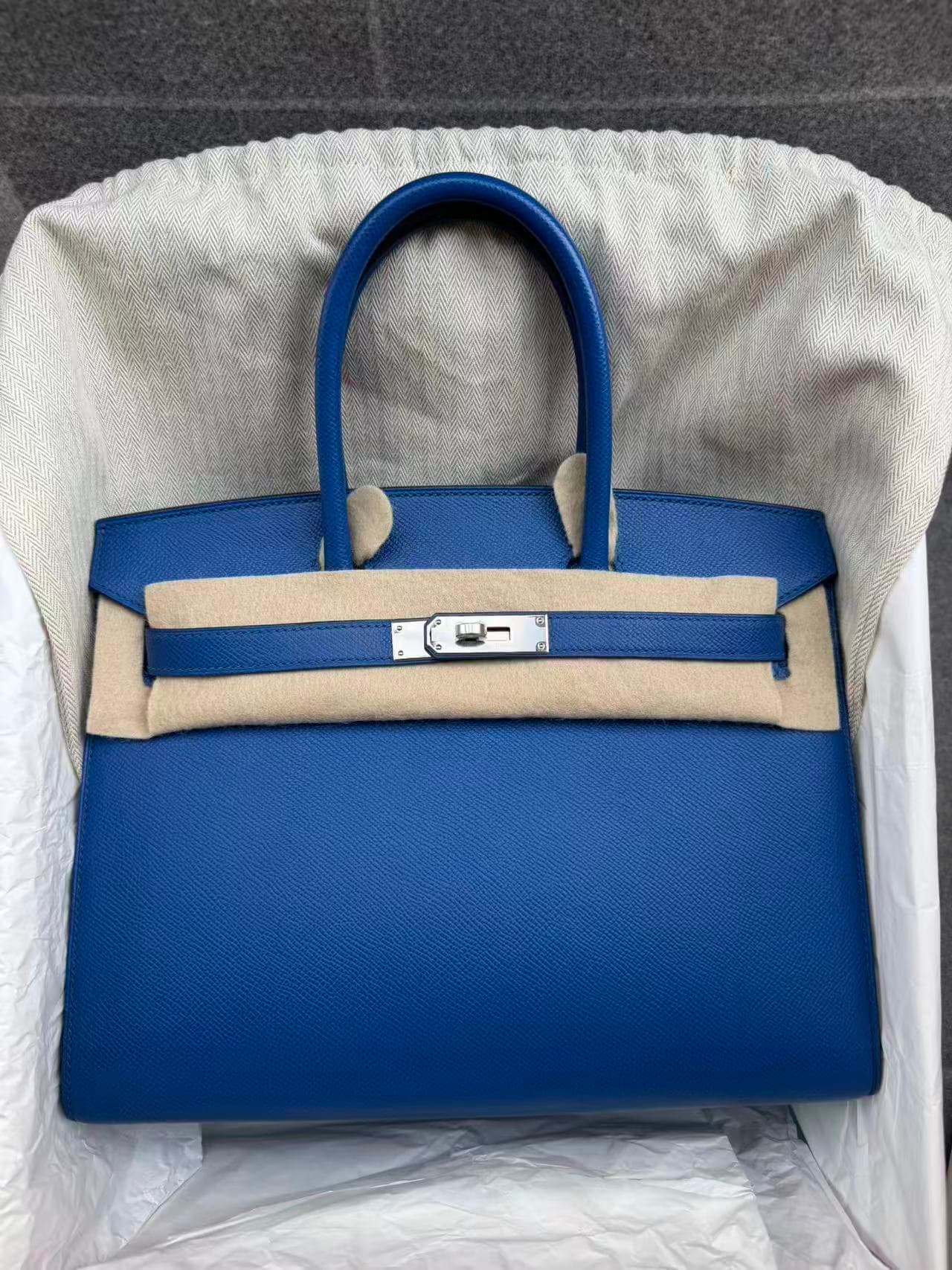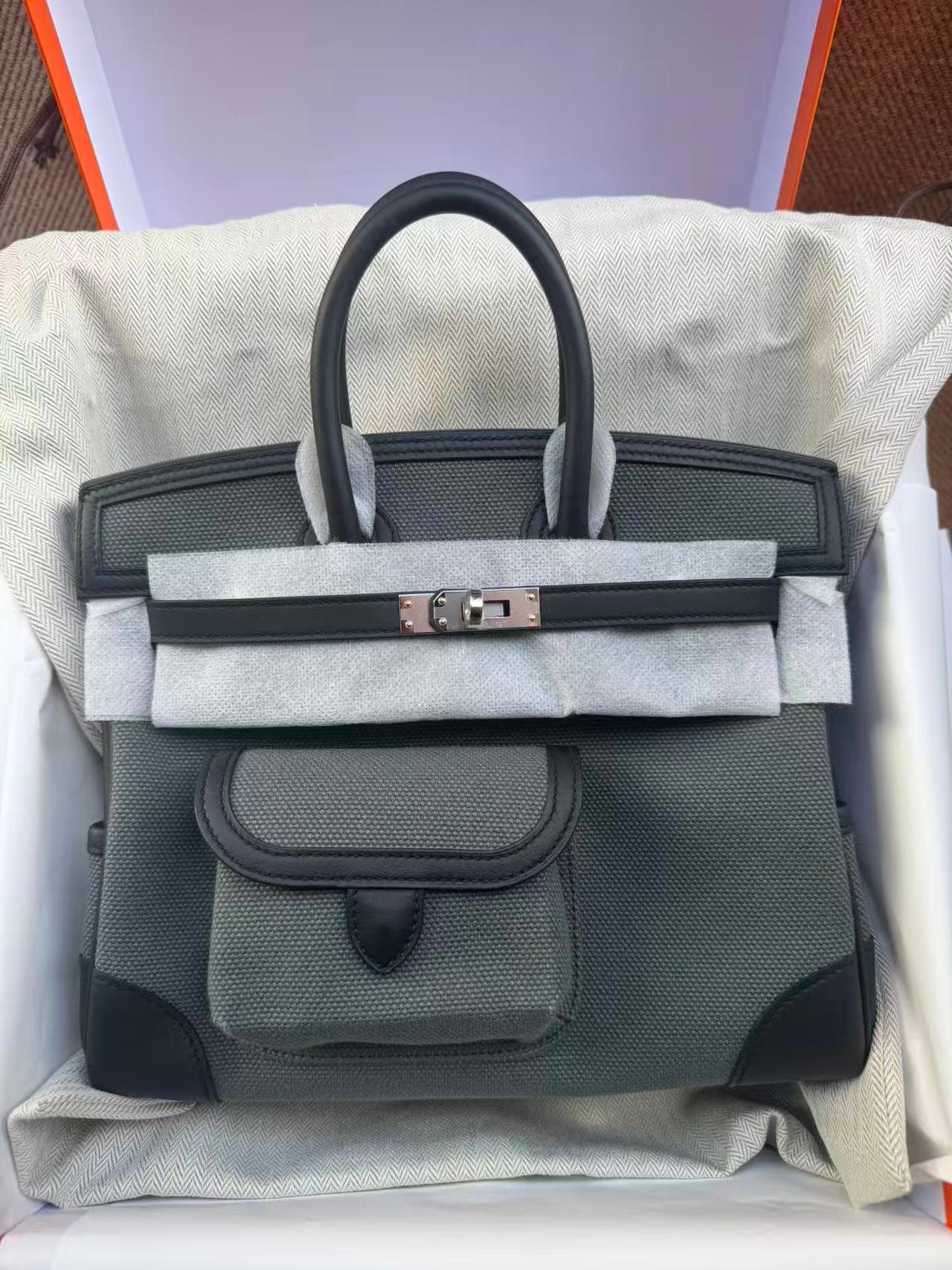
Forty-two years after Jean-Louis Dumas sketched a bag on an Air France sick bag for the actress in seat 3B, the Birkin remains the most famous handbag on earth — and the most misunderstood purchase in luxury. Half the internet believes there's a waitlist (there isn't). Half believes it doubles in value automatically (it doesn't). Nearly everyone underestimates how learnable the real rules are.
This is the complete 2026 guide from a London specialist who handles Birkins daily: the history that matters, every current size with honest advice, real UK prices at retail and on the secondary market, the leather decision, and — the part nobody prints — how people actually get one.
1984: The Sketch That Built an Empire
The story is true, which is the remarkable part. Jane Birkin, upgraded next to the Hermès chairman on a Paris–London flight, spilled her straw basket and complained that no bag suited a young mother's life. Dumas sketched a solution on the nearest paper: a Haut à Courroies — the house's 1890s saddle trunk — made wider, shorter, softer. She carried the prototype for a decade, sold it for charity, and in July 2025 that exact bag sold for $10.1 million, the most expensive handbag transaction in history.
What began as a practical tote became, by the 2000s, the definitive scarce object of modern luxury — the case study every business school teaches about manufactured scarcity that isn't manufactured at all: every Birkin still takes one artisan roughly 18–25 hours of saddle-stitched handwork, and Hermès simply refuses to scale faster than it can train craftsmen.
Sizes: 25 to 40, With Honest Advice
| Model | Dimensions (cm) | Character | 2026 status |
|---|---|---|---|
| Birkin 25 | 25 × 20 × 13 | Compact, polished | The most-requested; strongest resale |
| Birkin 30 | 30 × 22 × 16 | The classic all-rounder | Best value-to-wearability |
| Birkin 35 | 35 × 25 × 18 | The original Jane proportion | Comeback via vintage + men |
| Birkin 40 / HAC | working/travel scale | Statement luggage | The men's wave pick |
Honest advice we give daily: the 25 photographs best and resells best but carries least — a wallet, phone and sunglasses fill it. The 30 is the answer for anyone who asks "which one bag"; it holds real life without losing the silhouette. The 35 — Jane's own size — was unfashionable for a decade and is now the connoisseur's value play, helped by the men's market. Cabin-scale 40s and HACs are their own conversation entirely.
UK Prices 2026: Retail vs Reality
| Spec | UK boutique (approx.) | Secondary, excellent |
|---|---|---|
| Birkin 25, Togo/Epsom | ~£10,000 | £20,000–£24,500 |
| Birkin 30, Togo | ~£10,800 | £16,000–£24,000 |
| Birkin 35, classic leathers | ~£11,500 | £15,000–£20,000 |
| Birkin 40, classic leathers | ~£12,500 | £18,000–£30,000+ |
| Exotics (croc, gator, ostrich) | by allocation | £29,000–£95,000 |
| Himalayan | by invitation | £95,000–£160,000+ |
Two truths behind the table. First, the retail column is largely theoretical for newcomers — see allocation below. Second, the premium column has normalised: after the pandemic-era froth, average Birkin premiums compressed to ~1.4–1.5x retail while Kelly premiums held higher — which makes 2026, counterintuitively, one of the better buyer's markets for standard-spec Birkins in years. Full price architecture in our Birkin price guide.
What a Birkin 30 and Birkin 35 Cost at JULL, October 2026
The table above is the market in general. This is the floor at Chelsea Harbour on 8 October 2026, so you can price a specific bag rather than a category. Of the Birkin 30s in stock, eight are in classic leathers — black, Gold and Étoupe Togo and one Gold Epsom — with palladium, gold, rose-gold or permabrass hardware, from £18,300 to £23,500. A black Togo 30 with its full set sits between £22,700 and £23,500 whichever hardware you choose; the Gold Epsom at £18,300 is this month’s entry point. The Birkin 35 is thinner on the ground, as it has been all year: a Horseshoe-stamp special order in Étain Clémence with brushed palladium at £17,990, and a black toile 35 at £41,000. Beyond those, fourteen 30s and 35s in exotic skins and Doblis suede are priced individually — up to £88,000 for a Tilleul Doblis 30 — and we send the current list on request. Every piece is authenticated by hand, its blind stamp read by us before it is listed, and can be seen seven days a week before any deposit is taken. Prices move as pieces sell, so the Hermès Birkins for sale in London always carries the live figure.
The Leather Decision: Togo vs Epsom vs the Rest
Eighty per cent of the decision is one question: Togo or Epsom? Togo — grained, matte, supple — is the default Birkin leather: forgiving of scratches, soft-structured, ages beautifully. Epsom — embossed, rigid, lighter — holds the architectural silhouette and suits the 25 especially, at the cost of corner wear that cannot be massaged away. Clémence is Togo's slouchier, heavier sibling; Swift takes colour best and scratches easiest; Box calf is the vintage aristocrat. The full comparison — including weight differences by size — is our most-read piece: Togo vs Epsom vs Clémence.
Colour follows the market's oldest rule: Black, Gold, Étoupe and Craie are the liquidity kings; strong reds are honorary neutrals; everything else buy for love, not exit price (colour index). Hardware: gold edges palladium at resale on classic specs.
How People Actually Get One
There is no waitlist — there is allocation: purchase history at one boutique, a relationship with one sales associate, months to years of patience, and an offer that may not match your dream spec. First Birkin offers famously skew larger and bolder than requested. The complete machinery — podium, profiles, prespend, the seven mistakes that kill your chances — is in that explainer, and it is required reading before you spend a pound at a boutique with a Birkin in mind.
The other door is the secondary market: exact spec, this week, at the premiums in the table above. In 2026's compressed-premium environment, the fully-costed gap between a multi-year boutique campaign and simply buying the bag has never been narrower — the arithmetic is in our London vs Paris vs Dubai comparison. Our current stock — 25s to 40s, Togo to Himalayan — is in the Birkin gallery, every bag authenticated and viewable in Chelsea Harbour.
Outside London, we deliver insured across the UK and have written separate guides for buyers in Manchester, Birmingham, Leeds and Yorkshire and Edinburgh and Scotland.
Is the Birkin Still a Good Investment?
The honest 2026 answer: yes, with discipline. The decade-long numbers remain exceptional — retail up ~44% since 2016, secondary values far ahead of that — but the market has matured into two tiers: rare and provenance pieces appreciating like art, commodity specs holding steady above retail with thinner premiums than the frenzy years. The disciplined play: 25s and 30s in liquid neutrals, full sets, excellent condition — or genuine rarities with stories. The undisciplined play: paying 2021 premiums for a common spec because it's "a Birkin." The full ten-year analysis: Birkin investment 2026.
Authentication: The Non-Negotiable
The most valuable handbag franchise on earth is also the most counterfeited, and modern superfakes defeat casual inspection. The professional checklist — stamp typography, blind stamp placement, stitch angle and count, hardware engraving and weight, zipper behaviour — is in our authentication guide, and every one of them is worth running before money moves. The rule that never fails: buy from someone who lets you inspect in person and documents what they sell.
Frequently Asked Questions
How much does a Birkin cost in 2026? UK boutique from roughly £10,000–£12,500 for standard leathers — if allocated. On the secondary market, £16,000–£24,500 for excellent standard specs, from £29,000 for exotics, and £95,000+ for Himalayans.
How do you buy a Birkin from Hermès? Through allocation: sustained purchase history at one boutique, a genuine sales-associate relationship, and patience measured in years. There is no waitlist to join. Most first-time owners buy their exact spec on the secondary market instead.
Which Birkin size is best? The 30 for one-bag versatility, the 25 for elegance and the strongest resale, the 35 for capacity and current value, the 40 for statement or travel. When in doubt: 30.
Is a Birkin a good investment in 2026? Standard specs hold comfortably above retail with normalised premiums; rare pieces appreciate strongly. It remains the most value-retentive product in fashion — but buy the bag first and the asset second.
Togo or Epsom for a Birkin? Togo for daily use, durability and the classic slouch; Epsom for structure, lightness and crisp colour — accepting corner wear risk. For a first Birkin used often, Togo is the safer answer.
What is the rarest Birkin? The Himalayan Niloticus crocodile — and above it, one-offs and provenance pieces like Jane Birkin's own prototype, sold for $10.1 million in 2025. The Himalayan explained here.
---
JULL is a specialist Hermès personal shopping service in Chelsea Harbour, London. We source new, unworn and pre-owned Birkin, Kelly, Constance and rare Hermès pieces through a private network of collectors and boutique clients — every bag authenticated and available to view at our Chelsea Harbour showroom. Browse the Birkin gallery or get in touch.